Arcane
getarcaneapp (community project)
Portainer CE
Portainer.io
Arcane is a newer Docker management UI built in Go with a SvelteKit frontend, and it ships free role-based access control and OIDC single sign-on. Portainer CE is the long-established open-source option, and it covers more ground overall (it adds Kubernetes support Arcane doesn't have), but Portainer keeps RBAC, LDAP/OAuth, and GitOps automation behind its paid Business Edition. If you run Docker or Swarm only and want access control without paying, Arcane is the more complete free tool. If you need Kubernetes support in the same pane, Portainer CE covers it, though without user roles.
Quick verdict · Depends on your orchestrator and access-control needs
Winner: Depends
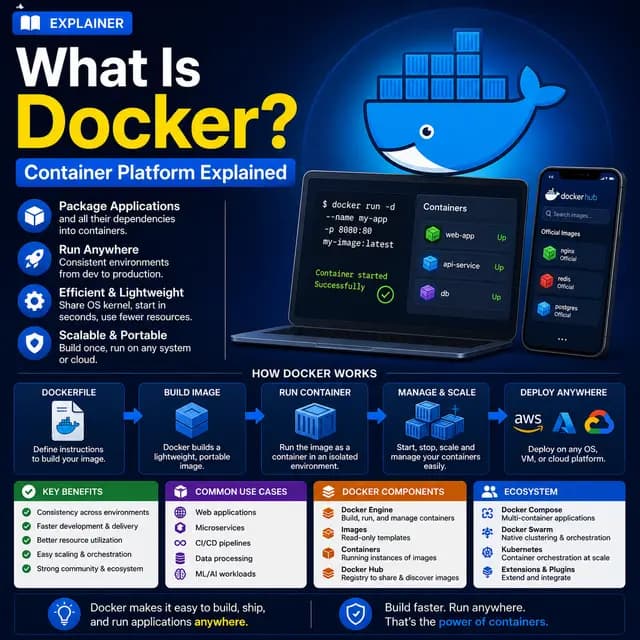
Arcane and Portainer CE both run as a single free container and manage Docker resources through a web UI. Arcane adds Swarm support, free RBAC, OIDC SSO, and GitOps sync, all in its open-source build. Portainer CE adds Kubernetes support and a larger app-template library, but its access control, SSO, and GitOps automation are Business Edition only.
Choose Arcane if
Choose Portainer CE if
Rule of thumb
Scorecard
Arcane wins on access control and modern auth for zero cost. Portainer CE wins on orchestrator breadth and ecosystem maturity. Scores reflect what ships in each tool's free build, not paid tiers.
| Criterion | Arcane | Portainer CE | Winner |
|---|---|---|---|
| Orchestrator support | 6/10 | 9/10 | Portainer CE |
| Access control (RBAC) in the free build | 9/10 | 3/10 | Arcane |
| SSO / external authentication | 8/10 | 2/10 | Arcane |
| Ease of deployment | 8/10 | 8/10 | Tie |
| Ecosystem and community maturity | 5/10 | 8/10 | Portainer CE |
| GitOps / automated deployment | 7/10 | 3/10 | Arcane |
| Resource footprint | 8/10 | 7/10 | Arcane |
| Support model | 5/10 | 6/10 | Portainer CE |
Head-to-head
Which container orchestrators does each tool manage?
Portainer CEThe most basic scope question: what can you actually point each tool at.
Arcane
Arcane connects to a Docker host over the socket or a socket proxy and manages containers, images, volumes, networks, and Compose projects. It also has a dedicated Swarm section covering cluster nodes, services, and stacks, per its own documentation. Arcane has no Kubernetes support: independent reviews note this explicitly as a scope limitation, not a missing feature that's coming.
Portainer CE
Portainer CE manages Docker, Docker Swarm, and Kubernetes environments from one interface, as stated on the official Portainer GitHub repository and documentation site. This makes CE the broader tool by orchestrator count, even though its Kubernetes feature depth is limited compared to Portainer Business Edition.
Verdict
Does the free version include role-based access control?
ArcaneWhether more than one person can get a separately scoped login without paying.
Arcane
Arcane's documentation describes native RBAC with six predefined roles plus support for custom roles and per-environment permission scoping. This ships in Arcane's normal open-source build, with no separate paid tier gating it off.
Portainer CE
Portainer's own features page lists role-based access control and team creation explicitly under Business Edition, not Community Edition. Portainer CE has a basic user system without that role granularity.
Verdict
How does each tool handle single sign-on?
ArcaneExternal identity provider support without a paid license.
Arcane
Arcane's docs cover OIDC-based SSO, letting you point it at Keycloak, Authentik, Okta, or any standards-compliant provider. It supports group-claim-to-role mapping, with local login kept as fallback.
Portainer CE
Portainer's features page lists LDAP and OAuth authentication, Active Directory sync, and pre-configured SSO templates under Business Edition. Portainer CE does not include external authentication provider support in its free build.
Verdict
What does GitOps-based deployment look like in each tool?
ArcaneDeploying and updating stacks straight from a Git repository.
Arcane
Community technical writeups describe a GitOps Sync service that automatically synchronizes Compose projects and Swarm stacks with a remote Git repository, including directory sync and environment variable resolution.
Portainer CE
Portainer's features page places GitOps automatic updates and webhooks under Business Edition. Community Edition supports basic stack deployment from a Git repository, without the automated update layer.
Verdict
How mature is each project's community and ecosystem?
Portainer CETutorials, templates, and how long each tool has been battle-tested.
Arcane
Arcane is the newer project. GitHub shows an active repository with thousands of commits and over 7,000 stars, and multiple independent writeups from 2025 and 2026 describe it as fast-moving but still young.
Portainer CE
Portainer's own documentation states Community Edition has over half a million regular users. It has years of accumulated tutorials and a large app-template library.
Verdict
What does each tool cost as you scale users and nodes?
ArcaneWhat stays free and what starts costing money.
Arcane
Arcane has no paid edition. Its BSD-3-Clause license permits commercial use, and independent reviews confirm there is no feature reserved for a hypothetical enterprise tier as of this writing.
Portainer CE
Portainer CE itself is free with no node limit stated on Portainer's pricing page. But once you need RBAC, SSO, or GitOps automation, the path is Business Edition, free for up to 3 nodes, then priced from $105/month for 5 nodes, per Portainer's official pricing page.
Verdict
Feature matrix
| Feature | Arcane | Portainer CE | Winner |
|---|---|---|---|
| Docker container/image/volume/network management · Core | Full web UI over the Docker API. | Full web UI over the Docker API. | Tie |
| Docker Swarm management · Core | Dedicated Swarm section: nodes, services, stacks. | Swarm supported alongside Docker and Kubernetes. | Tie |
| Kubernetes management · Core | No Kubernetes support; Docker/Swarm only by design. | Manages Kubernetes manifests, Helm charts, and workloads. | Portainer CE |
| Role-based access control · Security | Six predefined roles plus custom roles, free. | Listed as a Business Edition feature. | Arcane |
| OIDC / LDAP / OAuth SSO · Security | OIDC with group-to-role mapping. | LDAP/OAuth listed under Business Edition. | Arcane |
| Authentication / activity logging · Security | - Not independently verified for this comparison. | Listed under Business Edition on Portainer's features page. | Depends |
| GitOps stack sync (Compose/Swarm) · Deployment | Automated Git sync per DeepWiki's code overview. | CE supports basic Git-based stack deploys; automated updates and webhooks are Business Edition. | Arcane |
| App template library · Deployment | Project templates exist but the library is smaller and newer. | Long-established app template library, widely referenced in tutorials. | Portainer CE |
| Built-in image update checks · Operations | Watchtower-style update checks described in independent reviews. | - Not independently verified for this comparison. | Depends |
| Vulnerability scanning · Security | Integrated vulnerability scanning per DeepWiki's code overview. | - Not independently verified for this comparison. | Depends |
| Remote/multi-environment management · Operations | Manager/Agent architecture with direct or edge agents. | Manage multiple environments from one UI. | Tie |
Pricing
Arcane's full feature set, including RBAC and OIDC, is free under BSD-3-Clause with no paid tier. Portainer CE itself is also free, but RBAC, SSO, and GitOps automation require Portainer Business Edition, which is free for up to 3 nodes and then starts at $105/month (Starter, 5 nodes) according to Portainer's official pricing page.
| Arcane | Portainer CE | |
|---|---|---|
| Model | Free and open source (BSD-3-Clause), single build, no paid tier | Free open-source CE, paid node-based subscription for Business Edition (free up to 3 nodes) |
| Starting price | - | $105 |
Pricing is mixed (checked August 31, 2026).
Arcane has no listed price anywhere: it is simply free. Portainer's pricing is fully public for Business Edition (Starter from $105/month for 5 nodes, or $1,045/year); Scale and Enterprise are quote-based. There's also a non-commercial Home & Student plan at $155/year for up to 15 nodes.
Best for each use case
| Use case | Pick | Why |
|---|---|---|
| Homelab with a single Docker or Swarm host · Homelab operators | Arcane | Arcane covers everything a homelab needs and adds RBAC/SSO if you ever want to share access, at no cost.If you're already comfortable with Portainer's larger template library, switching isn't mandatory. |
| Small MSP managing several clients' Docker/Swarm hosts with different technician access levels · MSPs and small IT teams | Arcane | Free RBAC lets you scope technician access per environment without paying for Portainer Business Edition.Verify Arcane's audit/activity logging depth for your compliance needs; it wasn't independently confirmed for this comparison. |
| Team running Kubernetes alongside Docker/Swarm · Teams with mixed Kubernetes and Docker infrastructure | Portainer CE | Arcane has no Kubernetes support at all, so Portainer CE is the only option here between the two.If you also need RBAC for Kubernetes, Portainer CE alone won't give you that; Business Edition would. |
| Regulated or compliance-sensitive environment needing audit logs and SSO · Compliance-conscious IT teams | Depends | Arcane offers OIDC SSO for free but its audit-logging depth isn't independently verified here. Portainer's audit and activity logging is a documented Business Edition feature.Confirm current audit-log capabilities directly with each project's docs before committing. |
| Learning Docker for the first time · Docker beginners | Tie | Both provide a graphical alternative to the CLI with similar core container operations; either is a reasonable starting point.Portainer's larger tutorial base may make troubleshooting easier as a first-timer. |
Pros & cons
Arcane
- Strengths
- Free, built-in role-based access control with six predefined roles plus custom roles
- Free OIDC SSO with group-to-role mapping, usable with Keycloak, Authentik, or Okta
- GitOps sync for Compose and Swarm stacks included in the open-source build
- Lightweight Go backend, reported around 124 MB image size with low idle resource use
- Trade-offs
- No Kubernetes support at all: Docker and Swarm only
- Smaller community and ecosystem than Portainer, being a newer project
- Smaller app-template library than Portainer's long-established one
- Some advanced features have documentation gaps, per independent reviews
Arcane trades ecosystem maturity and Kubernetes support for free RBAC, SSO, and GitOps automation that most competitors reserve for paid tiers.
Portainer CE
- Strengths
- Manages Docker, Swarm, and Kubernetes from a single UI
- Large, mature ecosystem with a documented base of over half a million CE users
- Extensive app-template library and years of community tutorials
- Clear upgrade path to Business Edition without data migration, per Portainer's own FAQ
- Trade-offs
- No role-based access control, LDAP, or OAuth in the free Community Edition
- No GitOps automatic updates or webhooks in CE; only basic Git-based stack deploys
- No authentication or activity logging in CE, per Portainer's own features page
- Portainer's marketing steers most visitors toward the paid Business Edition rather than CE
Portainer CE covers more orchestrators and has by far the bigger ecosystem, but access control and automation are deliberately withheld to the paid Business Edition.
Decision guide
Choose Arcane when
- You manage Docker or Swarm hosts only, with no Kubernetes in the picture
- You want free, built-in RBAC and OIDC SSO without paying for a Business Edition-style tier
- You want GitOps-based Compose/Swarm stack sync out of the box
Choose Portainer CE when
- You need Kubernetes management alongside Docker and Swarm
- You want the largest available library of community tutorials and app templates
- You expect to eventually pay for Business Edition support and want a smooth upgrade path
Choose neither when
- You're running a large multi-cluster Kubernetes environment needing enterprise fleet governance; Portainer Business Edition or a Kubernetes-native tool would fit better than either free option here
Start from your orchestrator needs, then layer on access control. If Kubernetes is anywhere in your infrastructure, Portainer CE is the only one of these two that reaches it. If you're Docker/Swarm only, Arcane's free RBAC and SSO give you more for nothing.
Migration — Both work directly against the standard Docker Compose file format, so Compose projects themselves are portable between the two; tool-specific settings (roles, templates, notification config) are not documented as portable.
Security & compliance
Both tools require direct or proxied access to the Docker socket, which is a well-known privilege boundary: misconfiguration can allow container escape or host compromise, as independent technical reviews of Arcane point out explicitly. Beyond that shared risk, the two diverge sharply on access control: Arcane documents native RBAC and OIDC SSO in its free build, while Portainer's own features page places equivalent controls under Business Edition.
Neither project's official materials reviewed for this comparison document formal compliance certifications for their free/community builds. Teams with formal compliance requirements should verify current certification status directly with each project rather than assume either qualifies.
Performance & scalability
Neither project publishes independent, methodology-transparent benchmarks comparing the two directly, so performance claims here stay qualitative. Independent writeups describe Arcane's Go backend as fast and lightweight; Portainer is also widely described as lightweight, but a direct side-by-side benchmark was not found.
Portainer's architecture is documented for managing large fleets, especially at the Business/Industrial tiers. Arcane uses a Manager/Agent model for multi-environment and Swarm-node coverage, per its own documentation, but published scale limits for large fleets were not found for this comparison.
Alternatives
Dockge · louislam (community project)
A minimal, Compose-focused stack manager, often mentioned alongside Arcane in homelab writeups.
Why consider — Simpler scope than either Arcane or Portainer, if you only need to manage Compose stacks.
Portainer Business Edition · Portainer.io
Portainer's paid tier, free for up to 3 nodes, adding RBAC, SSO, GitOps automation, and audit logging on top of CE's orchestrator coverage.
Why consider — Combines Portainer CE's orchestrator breadth with the access control Arcane offers, at least up to the 3-node free limit.
VisitRancher · SUSE
A Kubernetes-focused management platform, mentioned by third-party reviewers as a better fit than Arcane for Kubernetes-native workloads.
Why consider — Purpose-built for Kubernetes fleet management, unlike either tool in this comparison.
Frequently asked questions
Does Arcane support Kubernetes?
No. Arcane manages Docker and Docker Swarm only. Independent reviews and Arcane's own documented feature scope confirm there is no Kubernetes support, so teams running Kubernetes need a separate tool such as Portainer or a Kubernetes-native option.
Is RBAC really free in Arcane, with no paid tier?
Yes, per Arcane's own documentation. Role-based access control, including predefined and custom roles, ships in Arcane's standard open-source (BSD-3-Clause) build. There is currently no separate paid edition of Arcane.
Does Portainer Community Edition include role-based access control?
No. Portainer's own features page lists RBAC, team-based roles, LDAP, and OAuth authentication under Business Edition. Community Edition includes only a basic user system without that role granularity.
Can I get Portainer's RBAC for free?
Portainer Business Edition is free for up to 3 nodes with no time limit, per Portainer's official pricing page, and that free tier includes the full Business Edition feature set, including RBAC. Beyond 3 nodes, pricing starts at $105 per month for the Starter plan.
Which tool is lighter on resources?
Independent reviews describe Arcane's Go-based image as around 124 MB with low idle resource use. Portainer is also widely described as lightweight in community writeups, but no directly comparable, methodology-transparent benchmark between the two was found for this comparison.
Can I migrate from Portainer CE to Arcane without losing my stacks?
Your underlying Docker Compose files remain portable since both tools work against the standard Compose format. However, tool-specific configuration such as user roles, templates, and notification settings has no documented automatic migration path between the two, so plan to recreate that part manually.
Does Arcane support single sign-on?
Yes. Arcane's documentation describes OIDC-based SSO, compatible with providers like Keycloak, Authentik, and Okta, including mapping identity provider groups to Arcane roles. Local login can be kept enabled as a fallback.
Is Arcane mature enough for production use?
Arcane is a newer, actively developed project. Independent reviewers describe it as fast-moving with some documentation gaps on advanced features, and note it is community-maintained without a formal commercial support option, so teams should weigh that against Portainer's longer track record for critical deployments.
Final verdict
Arcane and Portainer CE are both free, self-hosted, single-container Docker management UIs. Arcane covers Docker and Swarm and includes RBAC, OIDC SSO, and GitOps sync in its free, BSD-3-Clause build. Portainer CE additionally supports Kubernetes and has a far larger ecosystem, but its RBAC, SSO, and GitOps automation live behind the paid Business Edition, not Community Edition.
Pick based on orchestrator scope first, access control second: Portainer CE if you need Kubernetes, Arcane if you're Docker/Swarm only and want free per-user access control.
Arcane is best for
Portainer CE is best for