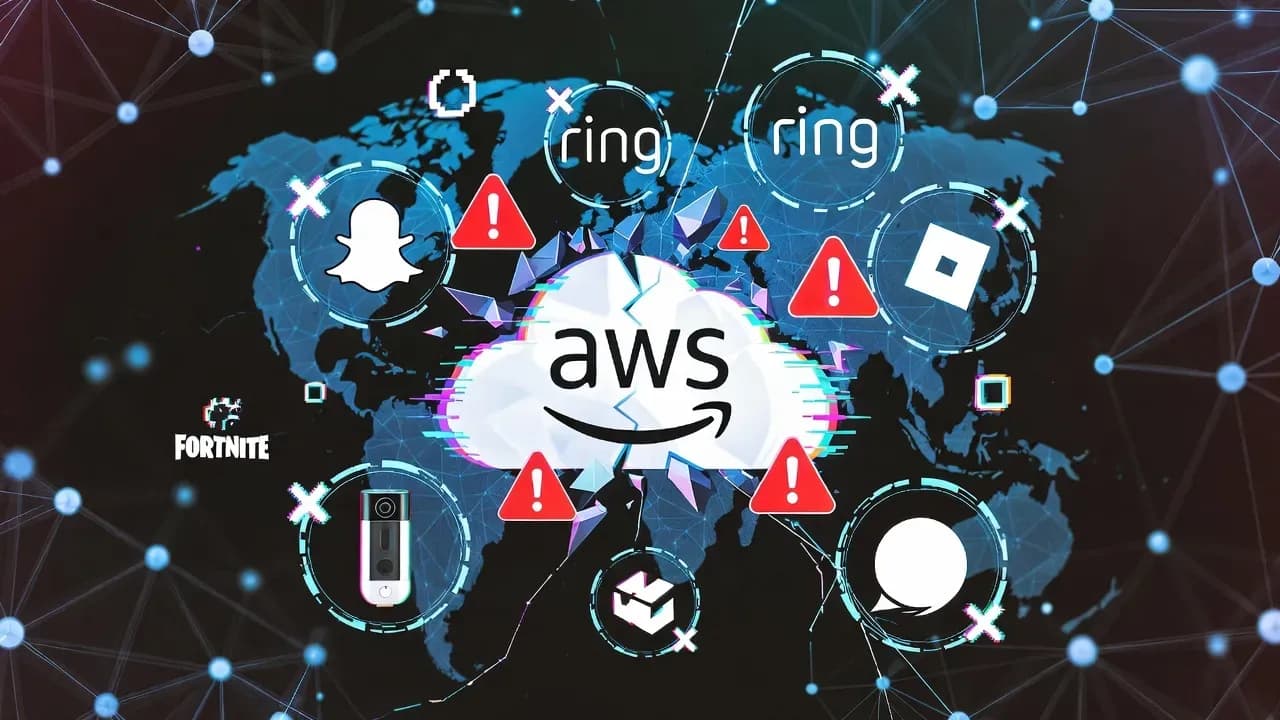
Amazon Cloud Outage Triggers Widespread Disruptions Across Consumer Platforms
A major AWS outage on October 20, 2025 disrupted 113 cloud services globally, affecting platforms like WhatsApp, Fortnite, Venmo, and major airlines. The incident, caused by a DNS error in the US-EAST-1 region, lasted approximately three hours and exposed critical dependencies on centralized cloud infrastructure.

Incident Overview
On October 20, 2025, Amazon Web Services (AWS) experienced a major outage that disrupted over 113 cloud services globally. The incident, which originated in AWS's largest data center in Virginia (US-EAST-1), cascaded across consumer platforms, enterprise applications, and critical infrastructure worldwide. The outage lasted approximately three hours before full service restoration, though message backlogs required additional processing time. This incident exposed the significant dependency of modern digital infrastructure on centralized cloud services.
Impact Analysis
Affected Services and Platforms
The outage impacted a wide range of consumer and enterprise services:
Communication Platforms
- WhatsApp, Signal, Zoom, and Slack experienced connectivity issues
- Users reported inability to send messages or join meetings
Gaming and Entertainment
- Roblox, Fortnite, and Xbox services went offline
- Apple Music and streaming platforms faced interruptions
Financial Services
- Venmo and Coinbase reported transaction failures
- Mobile banking apps dependent on AWS experienced downtime
Enterprise and Media
- Major news organizations including Associated Press, New York Times, and Wall Street Journal faced disruptions
- Delta and United Airlines reported booking system issues
Smart Home and IoT
- Ring security cameras and Alexa voice assistants became unresponsive
- Smart home devices lost connectivity
Retail and Food Services
- Starbucks mobile ordering went down
- Etsy and other e-commerce platforms experienced checkout failures
Technical Details
Root Cause Analysis
The outage originated from a technical update to DynamoDB's API in the US-EAST-1 region. The update introduced an error that affected the Domain Name System (DNS) resolution.
DNS Failure Mechanism
DNS functions as the internet's directory service, translating human-readable domain names into IP addresses. When the DNS error occurred, applications could not locate DynamoDB's API endpoints, causing a cascading failure across dependent services.
Race Condition Bug
Amazon later revealed that the root cause was a "race condition scenario" where two automated systems attempted to update the same data simultaneously. This conflict caused the systems to overwrite each other's work, snowballing into a region-wide failure.
Cascading Impact
Because US-EAST-1 hosts a disproportionate number of AWS services and serves as a dependency for many applications, the localized failure quickly propagated to affect 113 distinct AWS services.
Vendor Response
Amazon's Response
Initial Communication
Amazon acknowledged the issue within the first hour and provided regular updates through the AWS Status Dashboard and social media channels.
Recovery Efforts
Amazon's engineering teams deployed "multiple parallel paths to accelerate recovery." Full service restoration was achieved within approximately three hours of the initial incident, though processing backlogs required additional time.
Post-Incident Actions
Amazon announced several remediation measures:
- Bug Fix: Addressing the race condition scenario that caused the initial failure
- Enhanced Testing: Adding additional test suites for EC2 and related services
- Improved Monitoring: Implementing enhanced detection for similar DNS-related issues
- Documentation: Providing detailed post-incident analysis to affected customers
What Users Should Do
Recommended Actions
Immediate Steps
- Check AWS Status Page: Monitor status.aws.amazon.com for real-time updates during outages
- Enable Multi-Region Deployments: Distribute workloads across multiple AWS regions to reduce single points of failure
- Implement Circuit Breakers: Use circuit breaker patterns to gracefully handle downstream service failures
Long-Term Recommendations
- Multi-Cloud Strategy: Consider distributing critical workloads across multiple cloud providers (AWS, Azure, GCP)
- Local Caching: Implement local caching layers to maintain functionality during cloud outages
- Disaster Recovery Planning: Develop and regularly test DR procedures that account for cloud provider failures
- DNS Redundancy: Use multiple DNS providers and implement DNS failover mechanisms
- Monitoring and Alerting: Deploy independent monitoring systems that don't rely solely on the cloud provider being monitored
Resolution & Lessons Learned
Resolution Timeline
- 07:11 GMT: Initial reports of service degradation
- 07:50 GMT: Widespread outage confirmed; AWS acknowledges incident
- 09:00 GMT: Engineering teams identify root cause
- 10:11 GMT: Full service restoration announced
- Following hours: Message backlogs processed; normal operations resume
Key Lessons Learned
Infrastructure Dependency Risks
The incident highlighted the dangerous concentration of internet infrastructure on a single provider. With US-EAST-1 serving as a critical hub, a localized failure had global implications.
Importance of Resilience Planning
Organizations relying heavily on AWS learned the importance of:
- Multi-region architectures
- Cross-cloud redundancy
- Offline fallback capabilities
DNS as a Single Point of Failure
The DNS-related root cause demonstrated how foundational internet services can become critical vulnerabilities when not properly architected for resilience.
Economic Impact
While exact figures were not disclosed, analysts estimated the outage cost affected businesses millions of dollars in lost transactions, productivity, and customer trust.
Frequently Asked Questions
No. The incident impacted specific cloud components, but its effects were amplified due to the number of consumer platforms relying on those services.
Many consumer services share common cloud infrastructure layers. When those layers fail, multiple platforms can be affected simultaneously.
While cloud providers invest heavily in resilience, no infrastructure is immune to outages. Redundancy and diversification remain essential risk mitigation strategies.
Many consumer services share common cloud infrastructure layers. When those layers fail, multiple platforms can be affected simultaneously.