AI-Powered Android Click Fraud Malware Uses TensorFlow to Tap Hidden Ads in Stealth WebViews
Security researchers disclosed a new Android.Phantom malware campaign using TensorFlow.js to visually detect and tap ads in hidden WebViews. The malware spreads via Xiaomi GetApps and modded APK sites, turning infected phones into stealth ad-clicking bots with WebRTC remote control capabilities.

Named GetApps games (~155,000 downloads)
Trojanized update window
Mod site "Editor's Choice" infection rate
Telegram channel subscribers
Discord community subscribers
What happened: Android.Phantom blends click fraud with AI-driven visual interaction
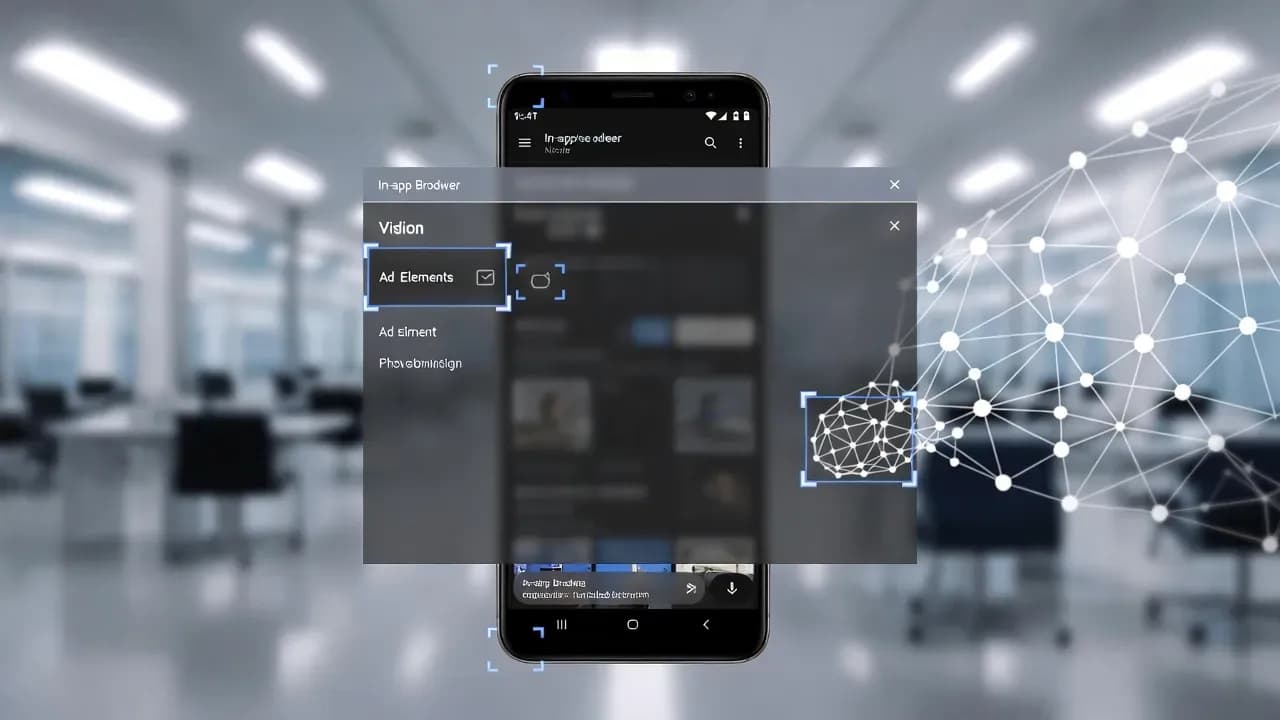
The activity was uncovered by Dr.Web researchers and centers on a trojan family tracked as Android.Phantom. The core capability is ad-click fraud, but the differentiator is how it achieves it. Rather than injecting static JavaScript routines that target DOM elements directly, the malware uses TensorFlow.js to load a trained model, capture screenshots of a hidden browser session, detect relevant visual components, and then tap the correct UI element. That shift is significant because modern ads are increasingly dynamic: they render in iframes, rotate creatives, and vary structure by geo, device, and timing. Visual recognition makes the fraud engine more durable against that variability.
From a security operations perspective, this is a strong indicator of where mobile abuse is heading. Ad fraud has always rewarded scale, and AI tooling reduces the cost of maintaining scale. Once the attacker has a model that can reliably identify and interact with ad components across multiple layouts, they can automate at volume without constantly rewriting click logic for each target site or ad provider.
Public reporting also highlights a second operating mode that goes beyond automation. In some cases, the malware can stream the hidden browser session to attackers and allow real-time interactive control. That blends "clicker trojan" economics with remote operator flexibility, which is an uncomfortable combination for mobile defenders because it increases adaptability under pressure and complicates detection based on fixed behavior signatures.
Distribution: Xiaomi GetApps trojanized games and a parallel pipeline of modded apps
Dr.Web attributes one major distribution channel to GetApps, Xiaomi's official app marketplace. The infected apps identified include several games that accumulated meaningful download counts. Critically, investigators indicate the earliest versions of these games were clean, and the malicious functionality arrived later via updates. That "trusted initial release, malicious later update" pattern is consistent with a common fraud playbook: build reputation and installs first, monetize later once distribution is entrenched.
The second distribution lane is broader and arguably more scalable: modded APKs and "premium unlocked" versions of popular apps pushed through third-party sites, Telegram channels, and Discord communities. This is not incidental. Users seeking Spotify, YouTube, Netflix, and other premium features for free create a stable demand pipeline for trojanized packages. Dr.Web's research describes a notable concentration on mod ecosystems and even reports that a significant portion of a popular mod site's curated listings were infected.
In operational terms, this campaign should not be framed as "Xiaomi users only." The GetApps vector matters because it involves an OEM marketplace, but the mod ecosystem is device-agnostic. Any Android user sideloading from Telegram, Discord, or APK hubs is within scope, and those channels often move faster than official takedown processes.
For enterprises, the distribution mechanics create a dual risk. First, BYOD and lightly managed devices are exposed to the same social dynamics as consumers. Second, even corporate-owned Android devices can be vulnerable when policy allows sideloading or when users can install alternative stores. In many organizations, mobile security posture is still weaker than endpoint posture, which makes click fraud malware an attractive low-risk, high-volume business for criminals.
Technical breakdown: "phantom" mode, "signaling" mode, and why WebRTC changes the threat model
Phantom mode: hidden WebView, virtual screen rendering, and TensorFlow-powered tapping
The malware's "phantom" mode uses a hidden WebView-based embedded browser to load a target page for ad fraud and execute a JavaScript component. The workflow described by researchers is deliberate: after the model is retrieved from a remote source, the hidden browser is placed on a virtual screen and screenshots are captured. Those images are then processed by TensorFlow.js to identify the correct UI element, and the malware simulates taps to reproduce user-like interactions.
This approach is harder to disrupt than classic click fraud for three reasons:
- It is less dependent on stable HTML structures, which are increasingly variable in ad delivery.
- It avoids brittle selector logic that breaks across device form factors and ad placements.
- It can adapt across different ad formats, including those involving iframes and media components.
From a defender's angle, the most actionable takeaway is that the fraud logic is "visual-first." Traditional defenses that look for web injection or predictable click scripts may miss a workflow that is effectively doing computer vision on a hidden browser session.
Signaling mode: WebRTC streaming and real-time attacker control
The second mode described by researchers is "signaling," where the trojan uses WebRTC to establish a live connection to stream the virtual browser screen to the attacker. In that mode, the operator can perform actions in real time, including tapping, scrolling, and entering text. This matters because it introduces an interactive control plane. If automation fails on a specific target site, an operator can intervene immediately. If the attacker wants to test new monetization paths, the same mechanism can be used without shipping a full new malware build.
WebRTC is widely used for legitimate real-time audio and video connectivity and data exchange. That ubiquity can complicate simplistic network blocking strategies. It also shifts response priorities: defenders need to think not only about preventing the initial infection, but also about identifying whether devices are being actively controlled during the infection window.
Modular evolution: droppers, additional trojans, and the potential for data exposure
Dr.Web's analysis also describes additional modules and related trojans involved in the ecosystem, including droppers and components that can download more payloads. Importantly, researchers reference a spyware-capable element that can collect device data such as phone number, geolocation, and installed apps list. That is a meaningful escalation beyond "just click fraud." Even if the campaign's primary monetization is ad abuse, the presence of recon and data collection components increases both privacy impact and the potential for follow-on targeting.
This is where many click-fraud campaigns evolve: once the operator controls a distribution channel and has a reliable stealth execution environment, adding a secondary payload is trivial from a business standpoint. The immediate click revenue funds operations, while data collection can enable higher-value monetization later.
Impact: who gets hurt and why click fraud is still a security problem
Click fraud is often dismissed because it does not look like credential theft or ransomware. That is a mistake. The impacts stack across multiple stakeholders:
- End users pay in battery drain, device wear, performance degradation, and potentially increased mobile data usage.
- Advertisers and ad networks absorb direct financial loss and distortion of campaign analytics, which can shift spend away from legitimate publishers.
- Organizations face mobile fleet noise, network costs, and an increased likelihood that unmanaged devices become a platform for further abuse.
Dr.Web also outlines secondary abuse scenarios that are worth taking seriously. If the malware ecosystem includes modules that can be used for illegal online activity, spam-like behavior, or participation in disruptive traffic events, the infected device becomes more than a passive fraud bot. Even when those outcomes are not the primary design goal, the infrastructure and access patterns can make them possible.
The other practical impact is trust erosion. Campaigns that rely on trojanized "working" mod apps thrive because users perceive value and see functionality. That perception reduces suspicion, extends dwell time, and increases the number of devices that remain infected long enough to monetize. For defenders, the lesson is consistent: user education alone rarely defeats a strong incentive structure. Policy enforcement and technical controls must do the heavy lifting.
How organizations and users can respond: concrete mitigation steps
For consumers and small businesses
- Prefer Google Play for installs and avoid "premium unlocked" mods, even when they appear functional.
- Remove third-party stores and APK installers that are not required.
- Review installed apps for unknown games or modded media apps, then uninstall anything suspicious.
- Enable Google Play Protect and keep Android OS and apps updated.
- If a device shows abnormal battery drain and data usage without explanation, treat it as an investigation trigger and run reputable mobile security scanning.
For enterprises managing Android fleets
- Enforce a managed app install path and block sideloading via MDM where possible.
- Restrict alternative marketplaces and unknown sources settings across corporate-owned and work-profile devices.
- Implement DNS and egress filtering to reduce connectivity to known suspicious domains and to limit outbound communications from mobile networks where feasible.
- Monitor for anomalies that correlate with click fraud behavior, such as unexplained data spikes, repeated background browser activity patterns, and persistent wake locks or high CPU usage from non-business apps.
- Create a rapid response runbook for mobile infections that includes isolation, credential hygiene for corporate apps, and device re-enrollment if integrity cannot be assured.
For OEM marketplaces and app ecosystem defenders
The GetApps distribution channel underscores the need for stronger controls on app updates, developer reputation scoring, and behavior monitoring for post-install activity. Trojanized updates are particularly damaging because they abuse the trust that users place in "already installed" software. Defensive focus should include:
- More aggressive behavioral analysis of updates, not just initial submissions
- Detection for hidden WebView automation patterns and suspicious remote model downloads
- Clearer user-facing warnings when apps begin exhibiting high background activity inconsistent with prior versions
Lessons learned: AI is now an accelerant for commodity fraud
The most important trend signal here is not that click fraud exists. It is that criminals are operationalizing visual ML to keep click fraud stable in a world where ads constantly change. TensorFlow.js makes that easier by allowing models to run in JavaScript contexts, including browser-like environments. Combine that with hidden WebViews and virtual screens, and you get a fraud engine that is both stealthy and adaptable.
The second trend signal is the fusion of automation and live operator control via WebRTC. That is a pragmatic design choice: automation provides scale, and interactive control provides agility. Expect more campaigns to adopt hybrid models like this, especially as criminals reuse components across multiple monetization strategies.
For security leaders, this is a reminder that mobile threats cannot be treated as secondary. Android remains a high-value surface because of its massive install base, inconsistent patch levels across devices, and the persistent demand for modded apps and alternative marketplaces. Any environment that depends on mobile trust, whether consumer fintech, enterprise identity, or regulated communications, should view campaigns like Android.Phantom as early indicators of broader capability maturation.
Closing
This AI-powered Android click fraud malware campaign shows how quickly commodity mobile crime adapts when machine learning becomes a cheap, reusable component. Android.Phantom's use of TensorFlow-based visual detection and hidden WebView execution makes click fraud more resilient, while its WebRTC "signaling" capability suggests a path toward more interactive and flexible abuse. The defensive priority is straightforward: reduce exposure to sideloaded and alternative-store apps, enforce strong mobile policy controls in enterprise environments, and treat abnormal battery and data usage as a security signal rather than a nuisance. As mobile platforms become a core part of enterprise and consumer trust chains, campaigns like this will increasingly serve as a staging ground for more serious follow-on activity.
Frequently Asked Questions
It uses a machine learning model to visually detect ad elements from screenshots of a hidden browser session and then taps the correct UI components. That is more resilient than hard-coded scripts because ad layouts and rendering methods change constantly.
Public reporting focuses on click fraud as the main function, but Dr.Web also describes related components that can collect device information. Even when theft is not the primary objective, infections increase risk exposure and can enable follow-on payload delivery.
GetApps is a major distribution channel for Xiaomi devices, and researchers observed trojanized games published through that marketplace. The broader campaign also spreads through modded APK sites and messaging communities, so risk extends beyond a single store.
Because the activity runs in hidden WebViews, visible symptoms can be minimal. Practical indicators include unexplained battery drain, higher mobile data usage, device overheating, and performance degradation.
Enforce MDM controls to block sideloading and alternative stores, constrain app installation to approved sources, monitor for abnormal device behavior, and treat suspicious mobile apps as an incident response issue rather than a helpdesk ticket.



Comments
Want to join the discussion?
Create an account to unlock exclusive member content, save your favorite articles, and join our community of IT professionals.
New here? Create a free account to get started.