Betterment Confirms Data Breach After Attackers Used Its Messaging Systems to Push a $10,000 "Triple Your Crypto" Scam
Betterment confirms a data breach after attackers leveraged its customer communications channel to distribute a high-pressure cryptocurrency scam. Customer PII was exposed through a compromised third-party platform.

Date unauthorized access occurred
Maximum crypto transfer requested in the scam message
Opening: Betterment data breach and crypto scam through trusted channels
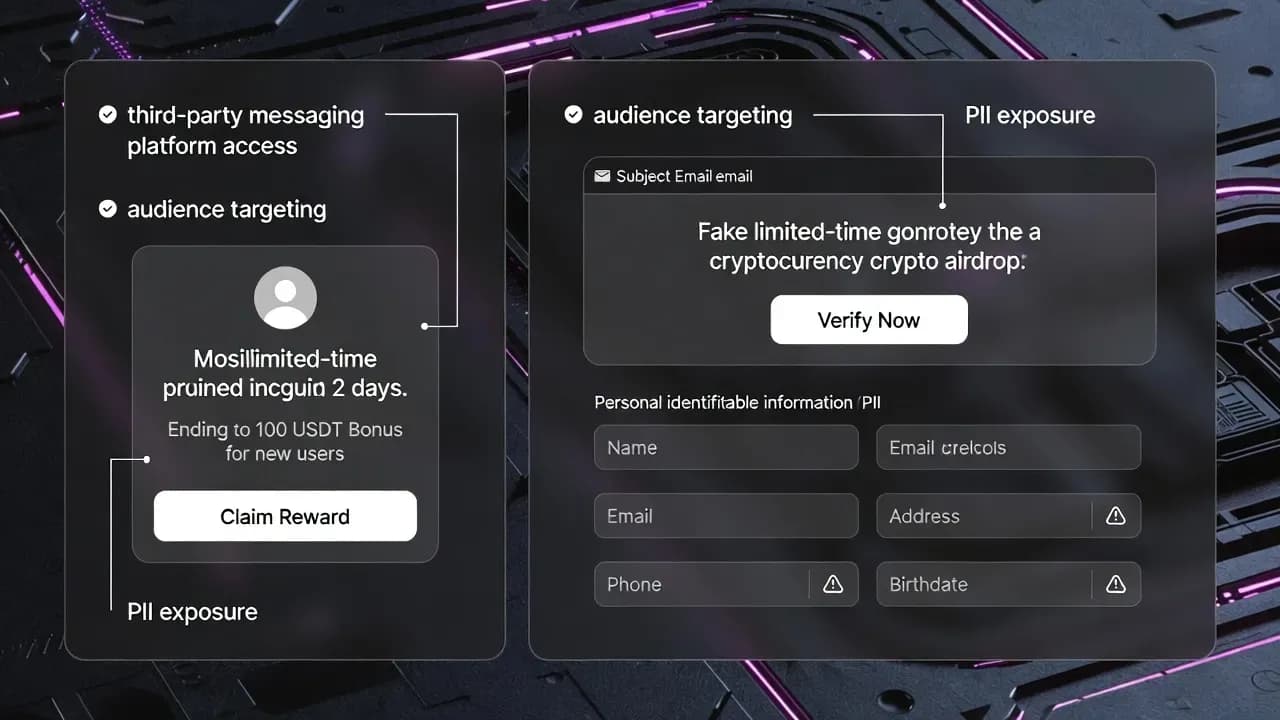
Betterment has confirmed a data breach after attackers leveraged its customer communications channel to distribute a high-pressure cryptocurrency scam that looked like an official promotion. The fraudulent message promised to "triple" Bitcoin and Ethereum deposits for a limited time and instructed recipients to send up to $10,000 in crypto to attacker-controlled wallets. What makes the incident strategically important is not the scam script itself, which follows classic guaranteed-return fraud patterns, but the fact that it was delivered through a channel users are conditioned to trust. In modern fintech security, compromising communications tooling can be almost as damaging as compromising an app, because a trusted sender identity can turn ordinary phishing into highly effective financial fraud.
What happened: a third-party communications workflow became the attacker's delivery system
The incident began on January 9, when an unauthorized individual gained access to certain Betterment systems through social engineering. Betterment's public updates indicate the intrusion did not involve a direct technical compromise of its core infrastructure. Instead, the attacker exploited third-party software platforms used to support marketing and operations, then used that access to send a fraudulent crypto-related message to a subset of customers. This is a textbook example of how a "side system" becomes a primary blast radius, because messaging platforms often have the power to send at scale, using legitimate domains, templates, and sender reputations.
Betterment says it detected the activity the same day, revoked the unauthorized access, and launched an investigation with support from an external cybersecurity firm. While these steps reflect a standard containment posture, the more difficult work is the follow-through: proving what the attacker accessed, determining what data was exposed through the compromised system, and rebuilding customer trust in official communications. When the channel itself is abused, every future legitimate message competes with the memory of the scam, which creates long-tail risk for customer support, fraud operations, and brand credibility.
The scam itself: "triple your crypto" and why it converts even on skeptical users
The fraud message was designed to bypass rational analysis through urgency, authority, and specificity. Instead of a vague "claim your reward," it presented a time-limited offer, a precise high-value amount ($10,000), and a clear action path that ended with funds being sent to specific wallets. This structure is effective because it narrows the decision space. Victims are pushed to act quickly and are given an apparently simple verification mechanism: send funds and receive more funds back.
Another conversion booster is channel legitimacy. When a scam arrives through a provider's genuine email or notification pipeline, it carries the strongest social proof available in digital communications: the sender looks real because it is real. That does not mean the provider's investment accounts were breached. It means the attacker successfully weaponized the trust relationship between Betterment and its customers. In financial services, that is often enough to produce real-world losses even if no passwords are stolen.
What information was exposed: personal data, not passwords, but still highly usable for fraud
Betterment's public statement indicates the attacker accessed certain customer information visible through the compromised system. The categories Betterment has disclosed include customer names, email addresses, physical addresses, phone numbers, and dates of birth. The company has stated that no customer accounts were accessed and that no passwords or other login credentials were compromised.
That distinction matters, but it should not be misread as "no risk." Identity datasets like these are operational gold for social engineering. Names, contact details, and birthdates enable credible impersonation, targeted SMS and email follow-ups, and account recovery fraud across unrelated services. In practice, the most common next step is not immediate access to Betterment accounts. It is follow-on scams that reference Betterment, mimic support interactions, or exploit the customer's heightened anxiety after hearing about the incident.
Why third-party communications platforms are becoming a preferred target
Attackers increasingly target third-party platforms because they offer leverage. A single compromised vendor account can provide broad outbound reach, high deliverability, and authentic-looking sender identity. For defenders, these tools often sit in a gray zone. They are "marketing systems," but they have production-like privileges and can influence customer behavior at scale. Many organizations also treat them as less sensitive than core banking or brokerage infrastructure, which can lead to weaker access controls, less monitoring, and slower governance.
There is also a structural asymmetry in detection. A malicious login into an investment platform may trigger strong anomaly detection and fraud controls. A malicious login into a marketing dashboard may not. If the attacker's objective is to steal money through persuasion rather than through technical account takeover, communications tooling is the shortest path from compromise to cash-out. In this incident, the attacker did not need to defeat Betterment's account security. They only needed to impersonate Betterment convincingly long enough to get victims to transfer crypto voluntarily.
Customer impact: what the breach changes for users right now
For most customers, the immediate financial risk is limited to whether they acted on the scam message. Anyone who sent crypto to the specified wallets should treat it as a fraud loss event and coordinate with law enforcement and their crypto exchange, understanding that recovery is often difficult. Even customers who did not send funds face a different risk profile: targeted phishing that references Betterment, and identity-based fraud attempts that use newly exposed personal data as credibility anchors.
Customers should also be prepared for "incident piggybacking." After public disclosure, other criminals often launch copycat campaigns, exploiting the news cycle to send fake follow-up emails such as "Claim your refund," "Confirm your account," or "Complete your security verification." The common feature is that the message will attempt to move you off-platform, collect additional data, or prompt a financial action. When your inbox becomes the battleground, the safest defense is to reduce reliance on inbound messages for account decisions.
How Betterment and similar fintechs can harden communications so this does not repeat
There are practical controls that materially reduce the chance that a compromised communications platform can be abused at scale:
1) Enforce phishing-resistant authentication for third-party tooling SSO with strong MFA should be mandatory for any platform that can message customers. If the vendor supports it, require device-bound or hardware-backed MFA for privileged roles. Reduce or eliminate shared accounts and remove persistent tokens where possible.
2) Treat outbound messaging as a privileged action with guardrails High-impact campaigns should require approvals, step-up authentication, or dual control. At minimum, enforce rate limits and anomaly rules that flag unusual templates, unusual destinations, or unusual send volumes. A marketing platform should not allow an attacker to blast a high-risk message with no friction.
3) Implement "safe-link" policies and destination controls If your outbound system can embed links, enforce allowlists for domains. Many high-conversion scams depend on sending users to attacker-controlled pages or to wallet addresses presented as text. Controls that require approved destinations can block entire classes of fraud.
4) Strengthen monitoring and incident telemetry Log access events, campaign creation events, template edits, and audience targeting changes. Alert on new admin creation, suspicious IP geographies, and atypical send-time patterns. These tools should be monitored with the same seriousness as production systems because they can trigger real-world money movement.
5) Build a customer-verification habit, not just a disclaimer "Betterment will never ask…" banners help, but they are not enough. Providers should centralize incident updates on a predictable page, encourage customers to verify promotions only inside authenticated sessions, and standardize a visible, consistent format for security notices. The goal is to make "verify via the app" the default customer behavior.
What to watch next: disclosure scope, post-incident review, and fraud aftershocks
Three follow-ups will determine the long-tail impact of this incident. First is the scope clarity: whether Betterment later discloses the number of affected customers and whether exposure was limited to the specific data categories already listed. Second is the promised post-incident review, which should be read for concrete control changes, not generic language. Third is the fraud aftershock: customers should expect waves of Betterment-themed impersonation attempts for weeks, because criminals understand that uncertainty is exploitable and that "security update" emails have unusually high open rates after a breach.
Closing
This Betterment incident is a clear signal that customer communications systems are now a frontline asset, not a peripheral tool. When attackers can send messages that truly originate from a trusted provider's infrastructure, the traditional advice to "check the sender" collapses, and fraud becomes a matter of persuasion rather than technical compromise. Betterment's statements that accounts and passwords were not accessed are important, but they do not erase the risk created by exposed personal data and a compromised trust channel. The durable lesson for fintech defenders is to treat outbound communications platforms as privileged infrastructure, apply strong identity controls and guardrails, and design customer verification workflows that survive even when the inbox is no longer trustworthy.
Frequently Asked Questions
Betterment states the attacker gained access through social engineering involving third-party platforms used for marketing and operations, rather than compromising its technical infrastructure. The company says no customer accounts were accessed and no passwords or login credentials were compromised.
Betterment's update indicates the attacker accessed certain customer information, including names, email addresses, physical addresses, phone numbers, and birthdates.
Receiving the message does not automatically mean your account was accessed. The primary risk is whether you acted on the message or provided information elsewhere. You should still review account security settings and be cautious about follow-on communications.
If you sent crypto, treat it as fraud and contact your exchange or wallet provider immediately, then file a report with relevant authorities. If you clicked but did not send funds, monitor for follow-on phishing, do not reuse passwords, and verify any security prompts by navigating directly to Betterment through the official app or website.
Use a verification workflow you initiate yourself. Open Betterment directly in a new session and check for notices inside your account, or confirm updates on Betterment's official customer update page. Avoid acting on links inside unexpected emails or notifications, especially those involving crypto transfers or urgent deadlines.

Comments
Want to join the discussion?
Create an account to unlock exclusive member content, save your favorite articles, and join our community of IT professionals.
New here? Create a free account to get started.