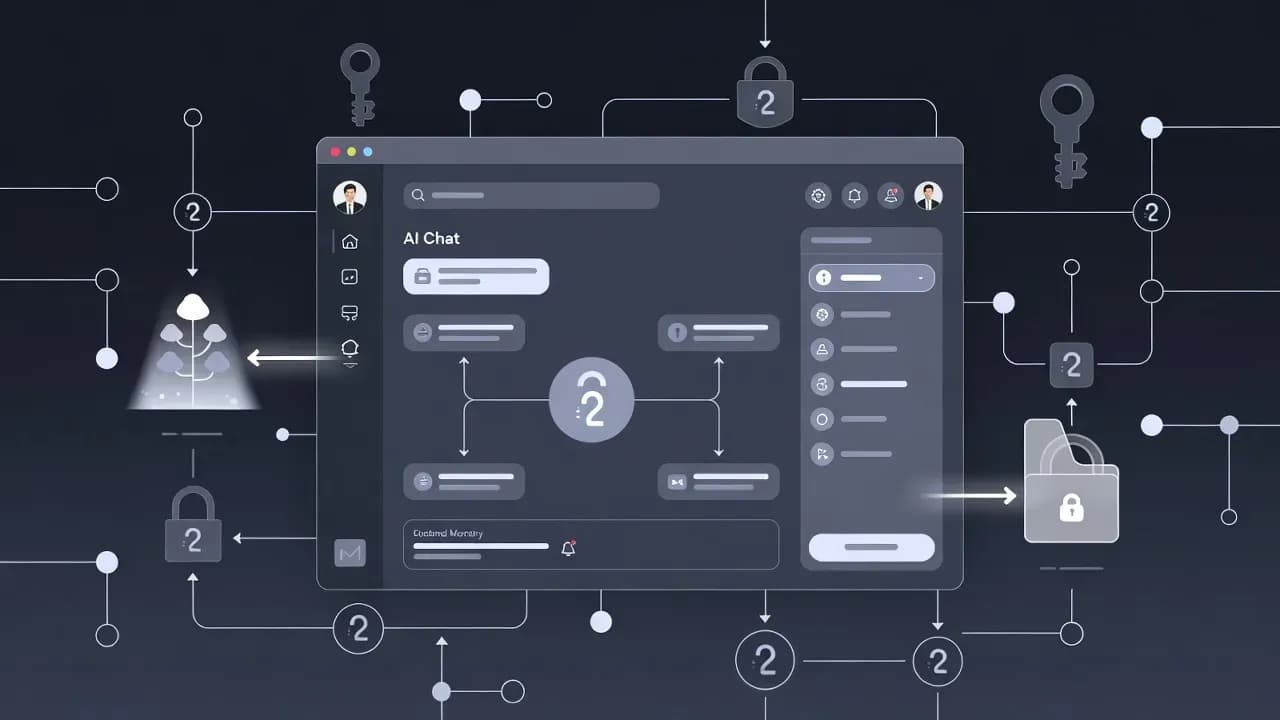
Chainlit "ChainLeak" Flaws Expose Server Files and Enable SSRF, Putting Cloud Secrets at Risk
Security researchers disclosed two high-severity Chainlit vulnerabilities that can enable arbitrary file reads and SSRF, potentially leaking cloud credentials and internal data from internet-facing AI applications. The flaws, dubbed "ChainLeak," were fixed in Chainlit 2.9.4.

CVE-2026-22218, CVE-2026-22219
Fixed version
Latest version on PyPI
Downloads last month
Why this matters for production AI apps
Chainlit is not just a developer toy. It is widely used to build conversational AI applications with a web UI, authentication, session handling, and common cloud deployment patterns. That makes it a high-value target because a single weakness in the framework can become a repeating weakness across many organizations.
"ChainLeak" is especially concerning because it attacks what most AI apps depend on: server-side secrets and internal connectivity. When an attacker can read files from the host or coerce the server into fetching internal URLs, the result is often the same: exposed credentials, exposed configuration, and a shortcut into the cloud control plane.
What was disclosed: ChainLeak in Chainlit
Researchers reported two vulnerabilities:
CVE-2026-22218: Arbitrary file read, allowing disclosure of files readable by the Chainlit service.
CVE-2026-22219: SSRF in deployments using the SQLAlchemy data layer backend, enabling outbound HTTP requests to internal services or metadata endpoints and storing the responses.
The issues can be chained to increase impact. File read primitives frequently expose environment variables, configuration files, database artifacts, and authentication secrets. SSRF primitives can be used to probe internal services and, in cloud environments, attempt access to metadata endpoints where temporary credentials and instance identity details may exist.
Technical overview in plain terms
CVE-2026-22218: Arbitrary file read
The framework's element handling can be abused so the server copies a file from an attacker-controlled path into a session-accessible artifact. If the target file is readable by the service account, it may be retrievable through standard element download functionality.
High-value targets for defenders to think about include:
- Environment variables and runtime configuration
- Source code and internal config files
- Local SQLite databases
- Authentication secrets and signing keys
- Cloud credentials, tokens, and API keys stored on disk
CVE-2026-22219: SSRF in SQLAlchemy-backed deployments
In deployments using the SQLAlchemy data layer, element creation logic can be coerced into fetching a user-controlled URL via an outbound request. The response content is then stored through the configured storage provider, which can make internal data retrievable via the application.
In practice, SSRF often becomes a bridge into:
- Private RFC1918 services
- Internal REST APIs
- Localhost-only admin services
- Cloud metadata endpoints that may return sensitive identity and credential material
Patch status and affected versions
| Status | Version |
|---|---|
| Affected | Chainlit versions prior to 2.9.4 |
| Fixed | 2.9.4 (released December 25, 2025 UTC) |
| Recommended | Upgrade to 2.9.4 or later, ideally the latest available version |
A key operational point: release notes initially referenced a "security vulnerability fix" without detailed public context, which is common in responsible disclosure. The important action is to verify versions in production and upgrade everywhere, including test stacks that may be internet accessible.
Defensive guidance: what to do right now
1) Upgrade and verify
- Upgrade Chainlit to 2.9.4 or later across all environments.
- Confirm the deployed container image or package version matches what is running in production, not just what is in source control.
2) Assume secrets may already be exposed if you were internet-facing
If your instance was reachable and had any path to attacker-controlled requests, treat this as a potential secrets exposure event:
- Rotate API keys, tokens, and credentials accessible to the Chainlit runtime.
- Review cloud audit logs for unusual access patterns, including new access keys, role assumption, or unexpected API calls.
3) Reduce blast radius with platform controls
- Apply strict egress controls so the application cannot freely reach internal networks or metadata endpoints.
- Enforce least privilege for the service identity running Chainlit.
- Use secrets managers instead of filesystem-based secrets where possible.
4) Add detection for exploit-like behavior
Even without a published exploitation campaign, defenders can monitor for suspicious patterns:
- Requests that interact with element update or download flows at unusual rates
- File path indicators that look like traversal or sensitive file access attempts
- Outbound HTTP requests to internal IPs or link-local metadata ranges from the app runtime
Affected Organizations
Enterprises running internet-facing Chainlit AI apps
Impact: Potential exposure of files and secrets leading to cloud credential leakage and lateral movement Industry: Enterprise | Severity: High
Academic and research deployments using Chainlit
Impact: Possible exposure of datasets, prompts, and internal configs in shared environments Industry: Education | Severity: Medium
Teams using Chainlit with SQLAlchemy data layer
Impact: Added SSRF risk, including potential access to internal services and metadata endpoints Industry: Tech | Severity: High
Closing
ChainLeak is a reminder that standard vulnerability classes have not disappeared in the AI era. They have migrated into the AI application layer where sensitive data, internal connectivity, and cloud credentials routinely coexist. If you run Chainlit in production, treat this as a priority patch, validate that your deployment model cannot leak secrets through file access, and harden egress and identity controls so that even a framework-level bug cannot become a cloud compromise.
Frequently Asked Questions
Public advisories describe the attacker as an authenticated client, but emphasize that the issues can be triggered without victim interaction. In practice, risk depends on how the AI app exposes access, authentication, and tenant boundaries.
AI app runtimes commonly have access to environment variables, tokens, and configuration that enable access to data sources and cloud services. Reading server files can expose those secrets and accelerate lateral movement.
The SSRF vulnerability is tied to deployments configured with the SQLAlchemy data layer backend. Organizations should still patch broadly because mixed configurations across environments are common.
Short-term mitigation focuses on reducing impact: lock down egress, block access to metadata endpoints, restrict the runtime identity permissions, and rotate secrets that the service can access.
If your Chainlit instance was internet facing and you cannot rule out malicious access, it is prudent to assume potential secrets exposure. Rotate credentials, review logs, and validate that no unauthorized cloud activity occurred.



Comments
Want to join the discussion?
Create an account to unlock exclusive member content, save your favorite articles, and join our community of IT professionals.
New here? Create a free account to get started.