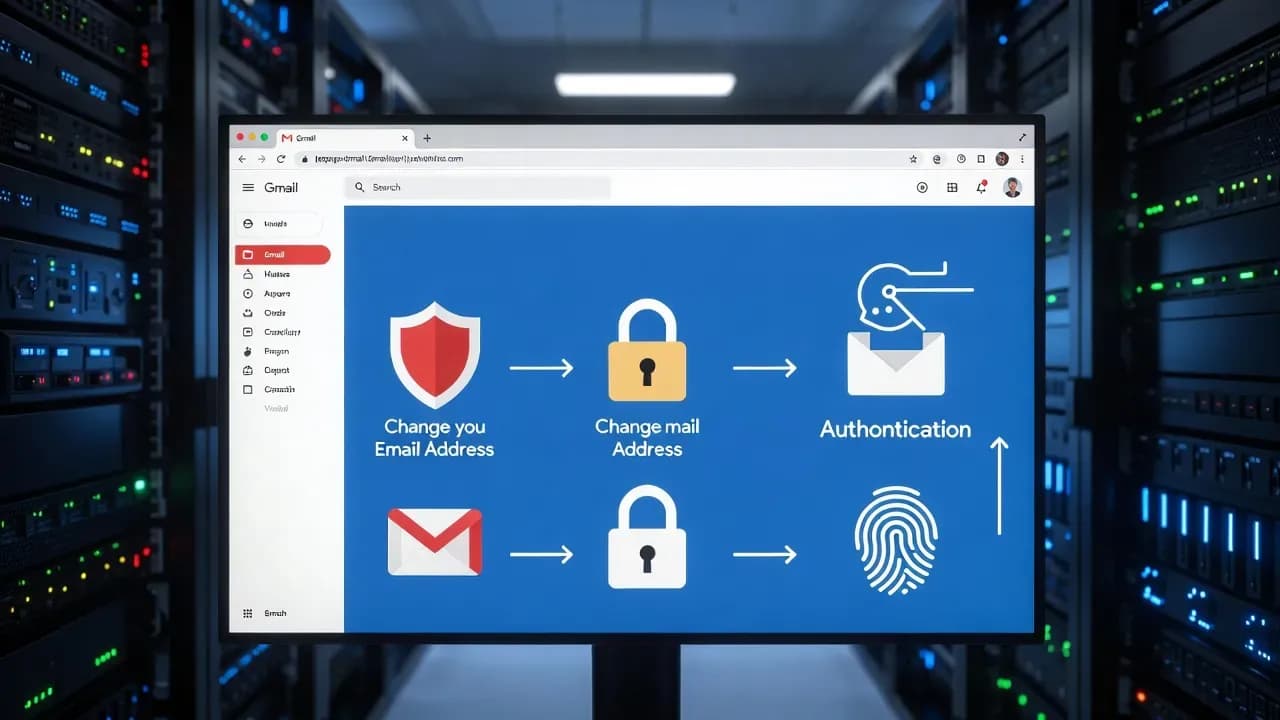
Google Will Finally Let You Change Your Gmail Address: Privacy & Security Implications
Google is rolling out the long-awaited ability to change your primary Gmail address. While this enhances user flexibility and account recovery, it also raises important considerations around identity management, phishing risk, and account security.

Introduction
Google has announced a major update to Gmail and Google Account management: users will be able to change their primary @gmail.com address without creating a new account. This update, first widely requested by privacy-conscious users and professional account holders, marks a shift in how email identity can be managed within the world’s largest free email ecosystem.
Traditionally, Gmail has tied a user’s identity irreversibly to a chosen @gmail.com prefix. Changing that meant creating a new account or using aliases - both imperfect solutions. Now, Google aims to provide flexibility while preserving the integrity and security of existing accounts.
What’s Changing and Why It Matters
This change allows users to revise their core Gmail username while keeping the same underlying Google Account, with all data, subscriptions, contacts, and security settings intact. For individuals and organizations alike, this means:
- A consistent account history despite name or identity changes
- Avoiding the need to migrate data across multiple accounts
- Greater control over digital identity as personal branding evolves
From a security perspective, this move also raises important questions about authentication, account recovery, and phishing exposure - areas that must be carefully managed to prevent misuse.
Privacy and Account Security Implications
Allowing changes to a primary email address could expand the attack surface for account-based impersonation. Cybercriminals routinely leverage slight variations in email addresses to deceive users and evade filters.
The new Gmail address change feature must therefore be paired with enhanced security mechanisms, including:
- Mandatory multi-factor authentication (MFA) flows for address changes
- Real-time phishing detection during address transition
- Verification of linked services and subscription access
Without these safeguards, attackers with access to compromised recovery methods could more easily reshape an account’s public identity to mask unauthorized access or social engineering attempts.
Technical Considerations for Enterprises
For corporate users and administrators managing Google Workspace deployments, the ability to change Gmail addresses alters traditional identity lifecycle workflows.
Key considerations include:
- Audit logging for address change events
- SSO integrations with external identity providers
- Provisioning systems that track alias relationships
- Service access continuity, especially for third-party services bound to an email identity
These changes require updates to IAM (Identity and Access Management) policies and internal auditing practices to ensure compliance and traceability.
User Experience and Adoption Dynamics
From a usability perspective, allowing Gmail address changes eliminates the friction of forced account creation and cumbersome data migrations. Users transitioning personal or professional identities can maintain continuity while adjusting their primary address to reflect evolving needs.
However, this functionality also introduces complexity: support teams and end users alike need clear guidance on the safe practices for updating account credentials without compromising security settings.
Phishing and Abuse Risks
Email address changes, if not closely monitored, can inadvertently facilitate phishing campaigns. Attackers often register look-alike domains or similar addresses to trick recipients into believing communications are legitimate.
Google’s implementation must therefore emphasize:
- Detecting suspicious email rename attempts
- Notifying linked contacts of primary address changes
- Flagging bulk changes in enterprise contexts
Organizations should prepare to educate users about verifying sender authenticity, especially when primary addresses are modified.
Recommendations for Users and Administrators
Users should:
- Enable multi-factor authentication on all accounts
- Review account recovery methods regularly
- Monitor email settings for unauthorized changes
Administrators (e.g., Google Workspace IT teams) should:
- Audit address change events in logs
- Review OAuth client permissions tied to the account
- Implement organization-wide phishing training campaigns
Conclusion
Google’s decision to allow primary Gmail address changes represents a significant evolution in account management. While it offers welcome flexibility for users, it simultaneously requires heightened awareness of security best practices. For individuals and organizations, balancing convenience with robust protections will be essential as this feature rolls out globally.
Related Incidents
View All Critical
ShadowLeak and ZombieAgent: Critical ChatGPT Flaws Enable Zero-Click Data Exfiltration from Gmail, Outlook, and GitHub
Security researchers have disclosed critical vulnerabilities in ChatGPT that allowed attackers to silently exfiltrate se...
 High
HighMicrosoft Enforces Mandatory MFA for Microsoft 365 Admin Center as Credential Attacks Surge
Microsoft is now actively enforcing mandatory multi-factor authentication for all accounts accessing the Microsoft 365 A...
 Medium
Cisco ISE XXE Vulnerability Exposes Sensitive Files to Authenticated Attackers After Public PoC Release
Cisco has patched a medium-severity XML External Entity (XXE) vulnerability in Identity Services Engine that allows auth...
Comments
Want to join the discussion?
Create an account to unlock exclusive member content, save your favorite articles, and join our community of IT professionals.
New here? Create a free account to get started.