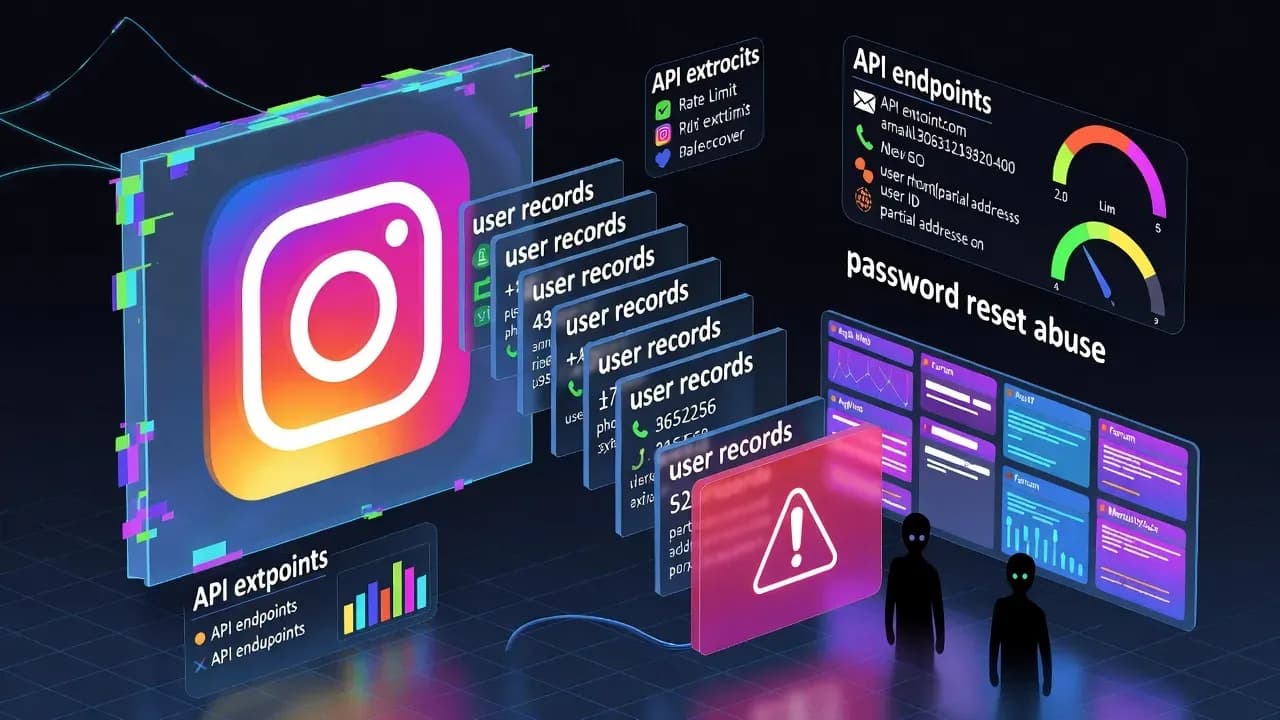
Instagram Data Leak Reportedly Exposes 17.5 Million Accounts as Attackers Pivot to Password Reset Abuse
A reported Instagram data leak is being treated by threat analysts as a "high leverage" exposure: not because passwords appear to be included, but because the dataset allegedly contains enough verified personal identifiers to industrialize account takeover attempts.

From "API Leak" to Mass Targeting Workflow
Instagram accounts reportedly exposed
The key detail that makes this incident strategically important is the suggested origin: an API-related exposure that allegedly occurred in 2024, but only became broadly actionable once packaged into a widely shared dataset. In practical terms, the timeline matters less than the attacker economics. When a dataset is presented as "ready to use" with structured fields, it lowers the barrier for mid-tier criminals who are not capable of scraping at scale themselves.
That shift expands the threat surface from a single actor to an ecosystem, where many groups can run parallel campaigns: credential harvesting, brand impersonation, or automated account recovery abuse. Even if the root cause is "scraping" rather than a deep compromise of Instagram's internal systems, the effect for users is similar because the dataset can be weaponized across multiple channels at once.
What Data Was Exposed and Why It Changes the Risk Profile
of phishing attacks succeed when personalized with leaked PII
The dataset is described as containing common identifiers that are individually low sensitivity but collectively high risk: usernames, names, email addresses, phone numbers, and partial physical addresses or location signals. This is the kind of information that enables confident impersonation.
A generic phishing email is easy to spot, but a message that knows the victim's Instagram handle, phone prefix, and partial address is far more convincing, especially when paired with a legitimate-looking password reset flow. The difference is not theoretical. Threat actors routinely combine leaked PII with OSINT and social engineering to tailor narratives.
If an attacker can convince a target to hand over a recovery code, click a spoofed reset link, or approve a fake support workflow, they can take control without ever brute forcing credentials. Separately, partial address or location data increases the danger of doxxing, stalking, and extortion attempts against high-visibility users.
Threat Actor Notes: The Marketplace Reality
Dataset publication date on hacking forums
The reporting around this leak attributes the dataset publication to an alias associated with forum activity. From a threat intelligence standpoint, attribution at this layer should be treated cautiously. Handles change, resellers rebrand, and datasets are frequently laundered through multiple brokers.
What is more reliable than the alias is the typical commercialization pattern: once a dataset reaches a well-known forum, it spreads quickly into Telegram channels, smaller marketplaces, and "combo list" repositories. This amplification is why "free" postings can be more damaging than paid ones—a paywall limits distribution while free access accelerates automation.
Another detail that stands out is the claim of scraping via public APIs and country-specific sources during late 2024. Whether accurate or exaggerated, it reinforces a broader industry trend: API surfaces are now a primary battleground for mass data extraction.
Practical Impact: Different Failure Modes
For everyday users, the most likely harm is targeted phishing and scam escalation. The volume of password reset notifications is itself a signal: attackers are often probing which accounts are active and which inboxes are monitored.
Creators, public figures, and brands face a higher-stakes variant: monetized takeover and reputational damage. High-following accounts can be used to run "trusted channel" fraud: fake giveaways, crypto promotions, paid partnership scams, or malicious link distribution.
How Organizations Can Respond
For security teams, the immediate goal is to reduce conversion. The dataset may exist, but success depends on victims completing the final step: handing over a code, approving a prompt, or entering credentials into a spoofed page.
Organizations can meaningfully reduce risk by hardening their social account operations:
- Require authenticator-based MFA for all corporate Instagram accounts
- Enforce unique passwords managed in an enterprise password manager
- Restrict admin access to managed devices
- Define who owns recovery actions and how to verify internal requests
- Establish a rule: password reset is initiated only by the account owner through the official app, never through emailed links under pressure
Frequently Asked Questions
Current reporting describes exposed identifiers such as emails and phone numbers, not passwords. However, account takeovers can still occur through recovery abuse and phishing. Treat unexpected reset prompts as a sign of targeting, not proof of compromise.
Attackers can trigger legitimate password reset workflows using known usernames and emails. They use the resets to confirm active accounts and pressure victims into clicking links quickly. The reset volume becomes a targeting mechanism.
Do not click embedded links out of urgency and do not share any codes. Open Instagram directly, verify login activity, change your password, and enable MFA with an authenticator app. Also secure the email account tied to Instagram because it is the real recovery anchor.
Creators and brands are high-value because their accounts can be used to scam followers at scale. Takeover impact includes reputational damage, fraudulent promotions, and malicious links. Business continuity depends on having a recovery playbook and protected admin access.
At the time of reporting, the incident is described as API-related exposure or scraping rather than confirmed internal compromise. Meta had not publicly confirmed scope or cause in the reporting. Defenders should focus on mitigating exploitation regardless of root cause.
Treat social accounts as privileged assets. Enforce MFA, password manager usage, least-privilege admin access, and a documented recovery process. Train staff to ignore urgent reset prompts and to validate any "support" outreach through official channels only.


Comments
Want to join the discussion?
Create an account to unlock exclusive member content, save your favorite articles, and join our community of IT professionals.
New here? Create a free account to get started.