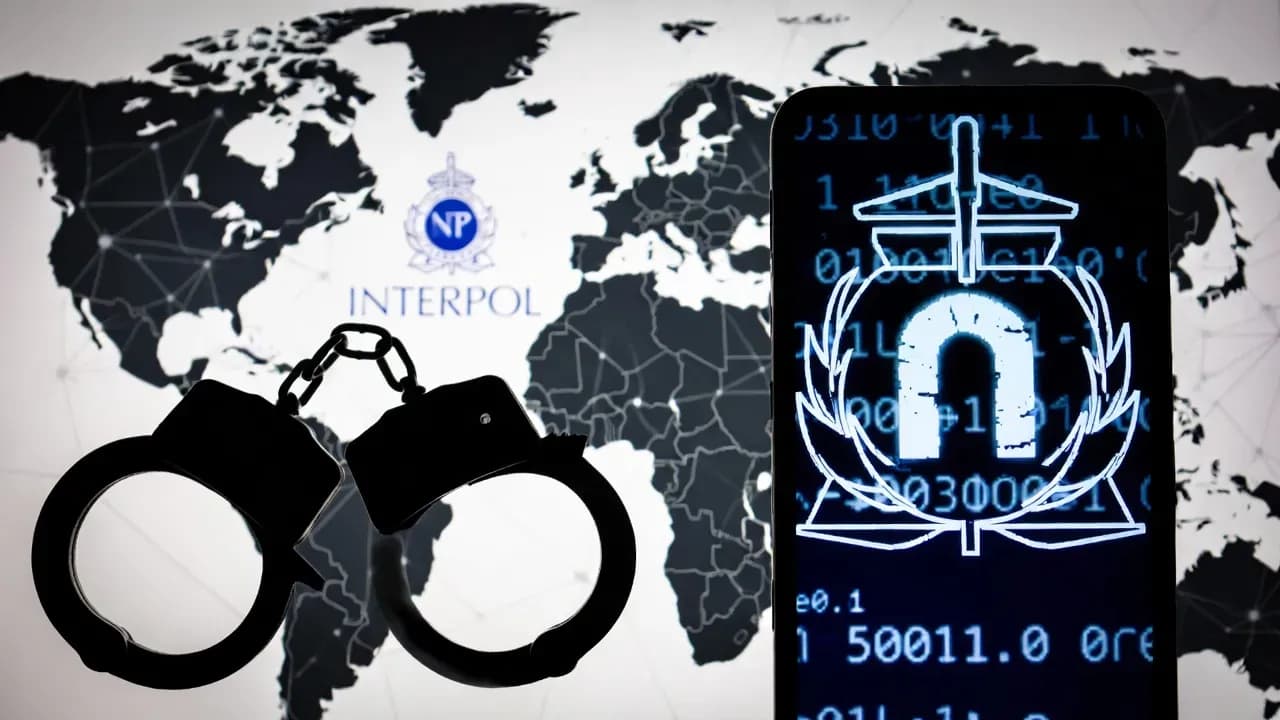
Interpol Operation Sentinel Cracks Six Ransomware Strains, Hundreds Arrested
Interpol-led Operation Sentinel dismantled major cybercrime infrastructure across 19 African nations, decrypting six ransomware variants, dismantling thousands of malicious links, and arresting 574 suspects in a landmark international action against extortion and fraud operations - highlighting the evolving global fight against ransomware and cyber extortion.

Executive Summary
In a coordinated international law enforcement action, Operation Sentinel overcame significant cybercriminal infrastructure by arresting 574 suspects across 19 African nations, decrypting six different ransomware variants, and dismantling thousands of malicious links used to facilitate extortion and fraud campaigns.
This landmark event underscores how collaborative efforts between Interpol and national security agencies are reshaping the global fight against ransomware, while also revealing persistent vulnerabilities in digital extortion ecosystems that continue to impact companies, institutions, and critical infrastructure.
What Was Operation Sentinel and Why It Matters
Operation Sentinel was a month-long initiative led by Interpol from October 27 to November 27, 2025, involving law enforcement agencies and partners across 19 African countries.
Focused on cyber extortion, business email compromise (BEC) and ransomware, the action targeted both the technical infrastructure and human networks driving these criminal schemes.
The scale of coordinated arrests and decryption efforts represents one of the most significant international cybercrime crackdowns of the year, demonstrating how shared intelligence and operational cooperation can disrupt sophisticated threat syndicates before they evolve into even larger, global threats.
Ransomware Decryption and Technical Impact
Among the operation’s most consequential technical successes was the ability to decrypt six previously active ransomware strains without paying attackers.
Decrypting ransomware serves two essential functions:
- Accelerating victim recovery without succumbing to extortion demands
- Reducing the economic incentive for ransomware deployment
While law enforcement has not publicly disclosed the specific names of the strains involved, the successful recovery of encrypted data signals an uptick in technical capabilities for collaborative decryption research and implementation.
Financial and Operational Disruption
Interpol reported that the criminal cases investigated were linked to financial losses exceeding USD 21 million.
The operation also disrupted over 6,000 malicious links associated with fraud, phishing, and extortion infrastructure - significantly limiting threat actor reach and revenue generation mechanisms.
The action recovered around USD 3 million in illicit funds, a notable reclaim given the challenge of tracking digital extortion revenue across borders and financial systems.
International Cooperation: A Force Multiplier
Operation Sentinel’s success is rooted in cross-border law enforcement partnerships, highlighting the power of shared intelligence, technical expertise exchanges, and synchronized action.
Participating countries included Benin, Ghana, Nigeria, South Africa, Kenya, Zambia, and others in the region.
Interpol’s strategy combines:
- Real-time information sharing
- Forensic analysis support
- Targeted arrests and asset seizures
- Decryption tool deployment
By dismantling both criminal infrastructure and leadership networks, the initiative reduced the operational capacity of organized threat actors and delivered meaningful deterrence.
Broader Implications for Cybersecurity
The outcomes of Operation Sentinel resonate beyond Africa’s borders. Ransomware and cyber extortion remain global threats, and this operation:
- Sets a precedent for multinational law enforcement effectiveness
- Encourages greater investment in decryption research and victim aid resources
- Signals that cybercrime ecosystems can be challenged systematically
- Highlights the importance of proactive partnerships between public and private sectors
For enterprises and security teams, this emphasizes the need to combine technical safeguards, incident response readiness, and legal cooperation channels with proactive threat monitoring.
Related Incidents
View All Critical
ShadowLeak and ZombieAgent: Critical ChatGPT Flaws Enable Zero-Click Data Exfiltration from Gmail, Outlook, and GitHub
Security researchers have disclosed critical vulnerabilities in ChatGPT that allowed attackers to silently exfiltrate se...
 High
HighMicrosoft Enforces Mandatory MFA for Microsoft 365 Admin Center as Credential Attacks Surge
Microsoft is now actively enforcing mandatory multi-factor authentication for all accounts accessing the Microsoft 365 A...
 Medium
Cisco ISE XXE Vulnerability Exposes Sensitive Files to Authenticated Attackers After Public PoC Release
Cisco has patched a medium-severity XML External Entity (XXE) vulnerability in Identity Services Engine that allows auth...
Comments
Want to join the discussion?
Create an account to unlock exclusive member content, save your favorite articles, and join our community of IT professionals.
New here? Create a free account to get started.