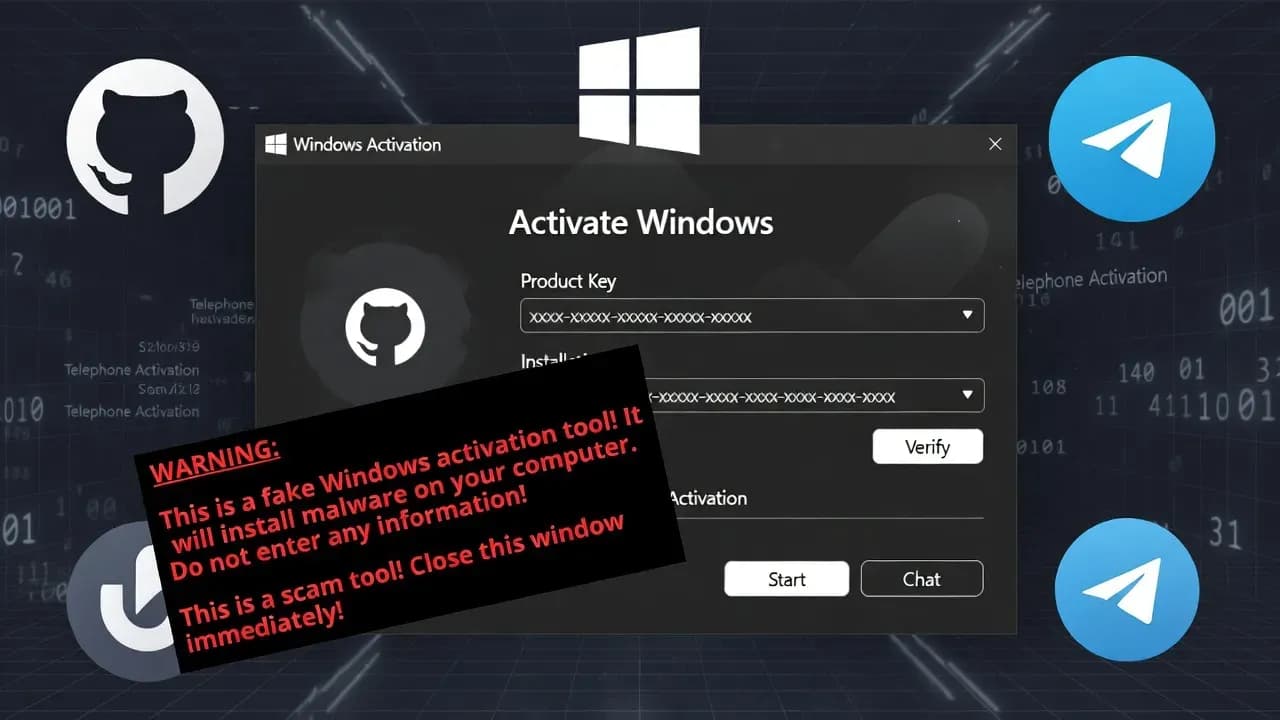
Hacker Arrested After KMSAuto Malware Hits 28 Million Downloads
A Russian man has been arrested for running a widespread malware campaign disguised as Windows activation software. Distributed via KMSAuto clones, the malware infected over 28 million systems and leveraged GitHub, Bitbucket, and Telegram to manage payloads. Law enforcement seized assets including cryptocurrency wallets and luxury vehicles.

Introduction
On December 27, 2025, Russian authorities arrested a 22-year-old man for orchestrating a massive malware distribution campaign that leveraged fake KMSAuto activator tools to infect millions of Windows users. The operation, which ran for at least three years, reportedly compromised over 28 million devices across multiple countries. The malware was embedded in pirated versions of widely sought-after software, using GitHub, Bitbucket, and Telegram as part of its delivery and command infrastructure. Authorities seized a significant trove of digital and physical assets tied to the operation, including cryptocurrency wallets, luxury cars, and hardware used in the campaign.
What happened
The suspect allegedly built and maintained a long-running malware delivery campaign by disguising malicious payloads as legitimate Windows activation tools - specifically clones of KMSAuto, a well-known unauthorized activator for Microsoft Windows and Office.
- Campaign duration: At least three years of sustained activity
- Infection scale: Over 28 million installations globally
- Initial lure: Fake KMSAuto tools offered as free software downloads
- Malware distribution channels: GitHub, Bitbucket repositories, and Telegram bots
- Seized assets: Cryptocurrency wallets, a BMW and Mercedes-Benz, smartphones, and computer hardware
The malware was hidden inside archives that users believed would activate Windows for free. Upon execution, these fake tools would deploy trojans and backdoors without user knowledge.
Technical details
The malicious campaign operated by embedding malware in archive files masquerading as KMSAuto or other activation utilities. These archives were widely distributed on piracy and warez websites. Key delivery techniques included:
- Hosting payloads on developer platforms: GitHub and Bitbucket were used to host malicious ZIP files, evading some detection tools due to platform legitimacy
- Command-and-control via Telegram bots: The malware received commands and exfiltrated data using Telegram-based APIs, providing a flexible infrastructure
- Multistage infection chains: Some samples included droppers that would fetch additional payloads after initial execution
While specific malware strains are not named in the arrest disclosures, researchers at Doctor Web previously identified the use of dangerous backdoors, stealers, and trojan downloaders hidden in similar fake activators. These payloads often had capabilities including:
- Keylogging and credential harvesting
- Cryptocurrency wallet theft
- Remote code execution
- Persistent system compromise via registry changes
Who is affected and why it matters
This incident affects individual users and enterprises alike, particularly those who have attempted to bypass Microsoft software licensing using unauthorized activation tools. The scale of 28 million infections suggests broad impact in both consumer and potentially enterprise environments.
- Users seeking pirated tools are most at risk, particularly in regions where software costs are prohibitively high.
- Organizations with lax software policies may unknowingly host infected systems.
- Developers and IT professionals using open-source platforms like GitHub must be cautious of cloned or spoofed repositories.
Even after the arrest, malware variants seeded through these channels may still be active in the wild - particularly on mirrored sites or through bot-distributed links.
Active exploitation and threat actors
The campaign was reportedly operated by a single individual, although full attribution is still ongoing. The use of public developer platforms and encrypted messaging services made the infrastructure resilient and hard to detect. Notably:
- The malware infrastructure was actively maintained, with file updates and Telegram bot interactions observed as recently as late 2025.
- Security firm Doctor Web reported on similar campaigns in 2022 and 2023, suggesting the actor evolved techniques over time to avoid antivirus detection.
The suspect is currently in pre-trial detention. Russian authorities have not disclosed whether international agencies such as Interpol or Europol are involved in broader investigations.
Recommended mitigations and workarounds
Although the actor behind this specific campaign has been arrested, similar threats remain prevalent. Users and IT administrators should take the following actions:
- Avoid pirated software and unofficial activators - these are frequent malware delivery vectors.
- Audit systems for unauthorized tools like KMSAuto, especially in unmanaged environments.
- Scan for known IOCs associated with fake activation tools and Telegram-based malware.
- Block or monitor traffic to GitHub, Bitbucket, and Telegram APIs where appropriate.
- Educate users about the risks of using pirated software and social engineering tactics.
Security teams can reference previous malware reports by Doctor Web and other antivirus vendors for detection signatures and behavioral indicators tied to this malware family.
Vendor and security community response
Although no direct vendor advisory was issued, the malware has been previously documented by:
- Doctor Web: Alerted on KMSAuto-based malware campaigns involving information stealers
- Kaspersky: Tracked similar backdoors distributed via pirated software bundles
- Microsoft: Frequently warns against third-party activation tools, labeling them as high-risk
Russian authorities conducted searches and seized several digital assets linked to the campaign. The Ministry of Internal Affairs released photos showing confiscated vehicles, cash, smartphones, and computer equipment.
Why this incident matters
This case highlights the evolving sophistication of "malware-as-a-service" style campaigns operated by individuals, not just organized groups. By leveraging popular tools (like KMSAuto), free hosting platforms, and encrypted messaging APIs, the attacker created a resilient infrastructure without relying on dark web marketplaces.
It also underscores how piracy and cybersecurity intersect - users seeking free software access often become unwitting malware victims. Even IT-savvy users are at risk if they bypass official software channels.
Conclusion
While the arrest marks a significant law enforcement win, the malware seeded through fake KMSAuto activators may persist in the wild for months or years. Organizations and individuals should audit their systems, remove unauthorized tools, and prioritize endpoint protection. Future campaigns may adopt similar distribution methods, making education and visibility key defenses.
Frequently Asked Questions
KMSAuto is an unauthorized software tool used to bypass Windows and Office activation. Modified versions often contain malware that compromises user systems.
The attacker used trusted platforms like GitHub and Telegram to distribute and control payloads, which helped bypass traditional antivirus checks.
Immediately scan your system with a reputable antivirus tool. Remove unauthorized tools and reset credentials. If compromised, contact a cybersecurity expert or IT admin.
Related Incidents
View All Critical
ShadowLeak and ZombieAgent: Critical ChatGPT Flaws Enable Zero-Click Data Exfiltration from Gmail, Outlook, and GitHub
Security researchers have disclosed critical vulnerabilities in ChatGPT that allowed attackers to silently exfiltrate se...
 High
HighMicrosoft Enforces Mandatory MFA for Microsoft 365 Admin Center as Credential Attacks Surge
Microsoft is now actively enforcing mandatory multi-factor authentication for all accounts accessing the Microsoft 365 A...
 Medium
Cisco ISE XXE Vulnerability Exposes Sensitive Files to Authenticated Attackers After Public PoC Release
Cisco has patched a medium-severity XML External Entity (XXE) vulnerability in Identity Services Engine that allows auth...
Comments
Want to join the discussion?
Create an account to unlock exclusive member content, save your favorite articles, and join our community of IT professionals.
New here? Create a free account to get started.