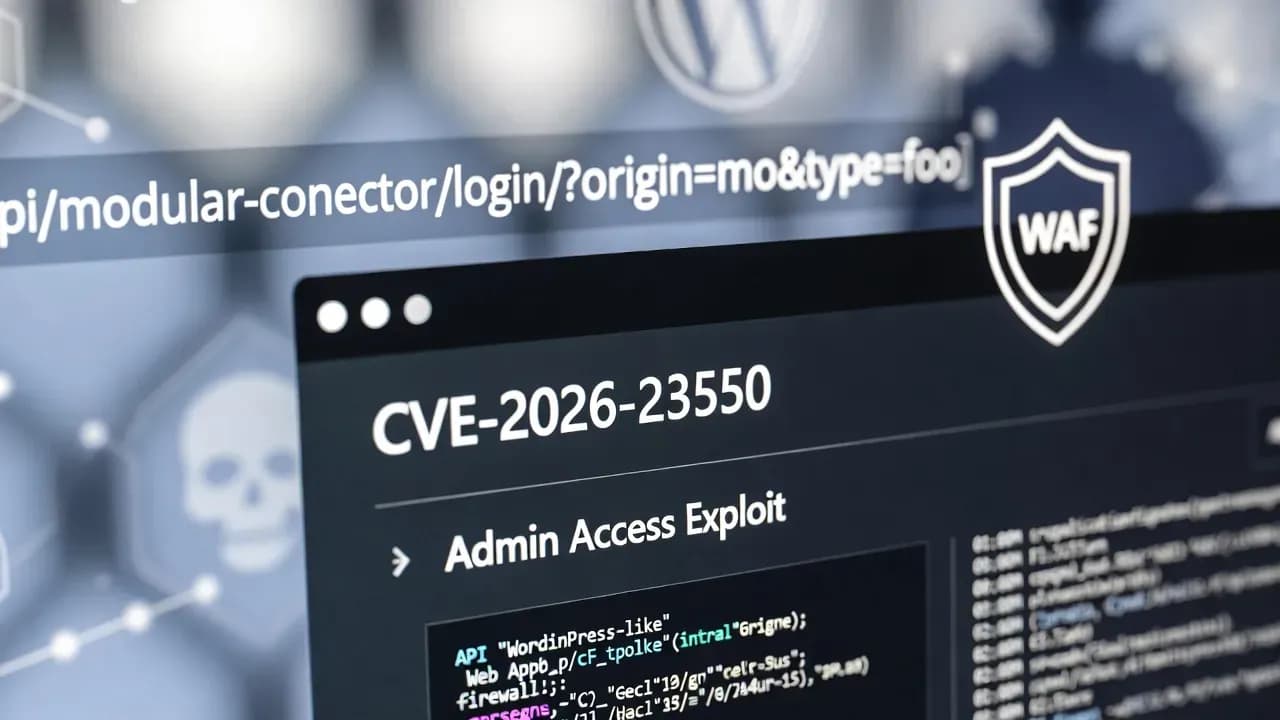
Modular DS WordPress plugin vulnerability (CVE-2026-23550) exploited to gain admin access
The Modular DS "Modular Connector" WordPress plugin is being exploited via CVE-2026-23550, a critical authentication-bypass and privilege-escalation chain that can auto-log attackers into wp-admin as an administrator. The flaw affects all versions up to 2.5.1 and is fixed in 2.5.2. Because Modular DS is a remote site management tool, compromise can quickly turn into full site takeover and downstream credential theft.

The Modular DS WordPress plugin vulnerability now tracked as CVE-2026-23550 is not a typical "update when convenient" WordPress issue. It is a critical, unauthenticated pathway to administrator access that attackers can weaponize within seconds once a vulnerable site is reachable. In practical terms, that means a single crafted request can turn into a wp-admin session, new admin user creation, and full control of the site's content, plugins, and database without ever needing a password.
What makes this incident more serious than the average plugin bug is the plugin's purpose. Modular DS (distributed via the "Modular Connector" plugin) is built for remote management of multiple WordPress sites, including features that streamline administration and login workflows. That convenience creates a high-value target: once an attacker becomes admin, they can install backdoors, inject skimmers on checkout pages, redirect traffic for SEO spam, or quietly harvest credentials. If you manage WordPress fleets for clients, the risk is operational and reputational, not just technical.
What happened: technical breakdown of the CVE-2026-23550 Modular DS WordPress plugin vulnerability
At its core, CVE-2026-23550 is an access control failure that turns an "internal routing" design assumption into an external exploit primitive. Patchstack's analysis explains that Modular DS exposes a Laravel-like routing layer under an /api/modular-connector/ prefix, and sensitive endpoints are intended to be protected by authentication middleware. The flaw is that attackers can steer route selection and activate a permissive "direct request" mode that effectively bypasses the expected authentication path.
This "direct request" mode is not subtle. The research describes that sending requests with an origin parameter set to mo and including a type parameter can flip the code into a mode where authentication checks are bypassed. Combined with permissive route matching in vulnerable versions, an attacker can reach a login-related route and trigger logic that automatically logs the requester into WordPress admin. The dangerous design detail here is the fallback behavior: if no user is specified, the login flow can fall back to an administrator user and generate authenticated cookies, then redirect into the wp-admin dashboard.
From a defender's perspective, this is the classic "chain of reasonable decisions" that becomes catastrophic when exposed to untrusted traffic.
Why this plugin is a high-value target: fleet management features amplify blast radius
Most WordPress plugin exploits matter because WordPress is everywhere. This one matters because the plugin's job is to centralize control. Modular DS sites are often maintained by agencies, freelance maintainers, and MSP-style WordPress operations teams that manage many client sites from one dashboard. In that environment, administrators naturally optimize for speed: they grant elevated permissions, rely on one-click actions, and keep the connector online so monitoring and updates work reliably.
That operational reality is exactly what attackers exploit after initial access. Once they have administrator privileges on a WordPress site, they can modify theme files, add malicious plugins, create persistence through scheduled tasks, and exfiltrate database contents. Even if the initial compromise is "only" one site, the attacker can turn the site into infrastructure, for example by hosting phishing pages, serving drive-by scripts, or pushing spam pages that poison search results. For ecommerce sites, admin access is frequently enough to insert payment skimmers or alter checkout flows.
The less obvious risk is credential and session impact. The Modular DS security guidance recommends regenerating WordPress salts, which is a strong signal that session cookies may be at risk if attackers reached admin flows.
Exploitation in the wild: what the attack traffic looks like and what defenders should hunt for
Active exploitation tends to follow a predictable pattern in the WordPress ecosystem: rapid scanning, automated proof-of-concept traffic, then post-exploitation steps that try to monetize access quickly. In this case, Patchstack reports attacks were detected beginning January 13, 2026, centered around requests to the Modular DS connector login endpoint. The described pattern is a GET request to a /api/modular-connector/login/ path using origin=mo and a non-recognized type value (an example used is foo). This is important because it gives defenders something concrete to search for in access logs, reverse proxy logs, WAF telemetry, and CDN request analytics.
After a successful login, the behavior shifts from "exploit" to "account control." Modular DS guidance explicitly advises checking for newly created administrator users with generic usernames and suspicious email patterns, which aligns with real-world WordPress takeover workflows. Attackers commonly create a new admin user so they can re-enter even if sessions expire, and then they deploy persistence through plugin installation or file modifications.
There are also practical triage shortcuts that help during the first hour of response. Modular DS recommends reviewing logs for automated scanner user agents such as Python urllib, curl, or Go http clients.
Key numbers at a glance
Critical severity - maximum score
Exposed WordPress installations
First attacks observed
| Field | Value |
|---|---|
| CVE identifier | CVE-2026-23550 |
| CVSS v3.1 score | 10.0 (Critical) |
| Affected versions | All versions up to and including 2.5.1 |
| Fixed version | 2.5.2 |
| Active installs referenced | 40,000+ |
| First attacks observed | Jan 13, 2026 around 02:00 UTC |
Source verification map
- CVSS score, affected versions, and active exploitation details: source [1].
- Fixed version and remediation timeline: source [2].
- CVE scope and CVSS vector: source [3].
How organizations can respond: priority patching, session invalidation, and fleet-level containment
Immediate remediation is straightforward: update Modular Connector to version 2.5.2 or later everywhere it is installed. Modular DS states updates were forced across sites, but you should still verify the installed version on each site, especially if you operate restricted update policies, custom plugin naming, or staged environments.
The second phase is containment and credential hygiene. Modular DS recommends regenerating WordPress salts, which invalidates existing sessions and forces re-authentication. That is a strong, low-cost containment step because it cuts off unauthorized sessions even if you have not yet identified every compromised account. They also recommend regenerating OAuth or connection keys and reconnecting sites, which matters because management connectors often rely on long-lived credentials.
The third phase is post-exploitation verification. Scan for malicious plugins or modified files, review admin users and roles, and check for unexpected changes to wp-config, .htaccess, or must-use plugins. The goal is to detect persistence mechanisms that survive the plugin patch. Because the exploit leads to administrative access, the attacker's options are broad.
Lessons learned: why "internal" routing and convenience login flows keep failing at Internet scale
CVE-2026-23550 is a case study in how plugin architecture choices can create Internet-exposed attack surfaces even when developers believe they are building an internal subsystem. A flexible routing layer and a "direct request" mode are not inherently insecure. The problem is when those mechanisms can be activated through untrusted inputs and the authentication boundary becomes conditional.
For defenders, the broader lesson is plugin governance. Remote management plugins are attractive because they reduce toil, but they also amplify risk because they centralize administrative functions. If you run such tools, treat them like privileged infrastructure: minimize exposure, restrict access where possible, monitor their endpoints explicitly, and keep them on aggressive update policies.
Closing
The Modular DS WordPress plugin vulnerability is a reminder that "management convenience" features can become attacker accelerators when access control and routing logic fail open. CVE-2026-23550 is especially dangerous because it turns a login path into an unauthenticated admin session, and attackers are already exploiting it. The correct response is not just updating to 2.5.2, but treating the event like a real takeover risk: validate admin users, invalidate sessions, rotate connector credentials, and scan for persistence.



Comments
Want to join the discussion?
Create an account to unlock exclusive member content, save your favorite articles, and join our community of IT professionals.
New here? Create a free account to get started.