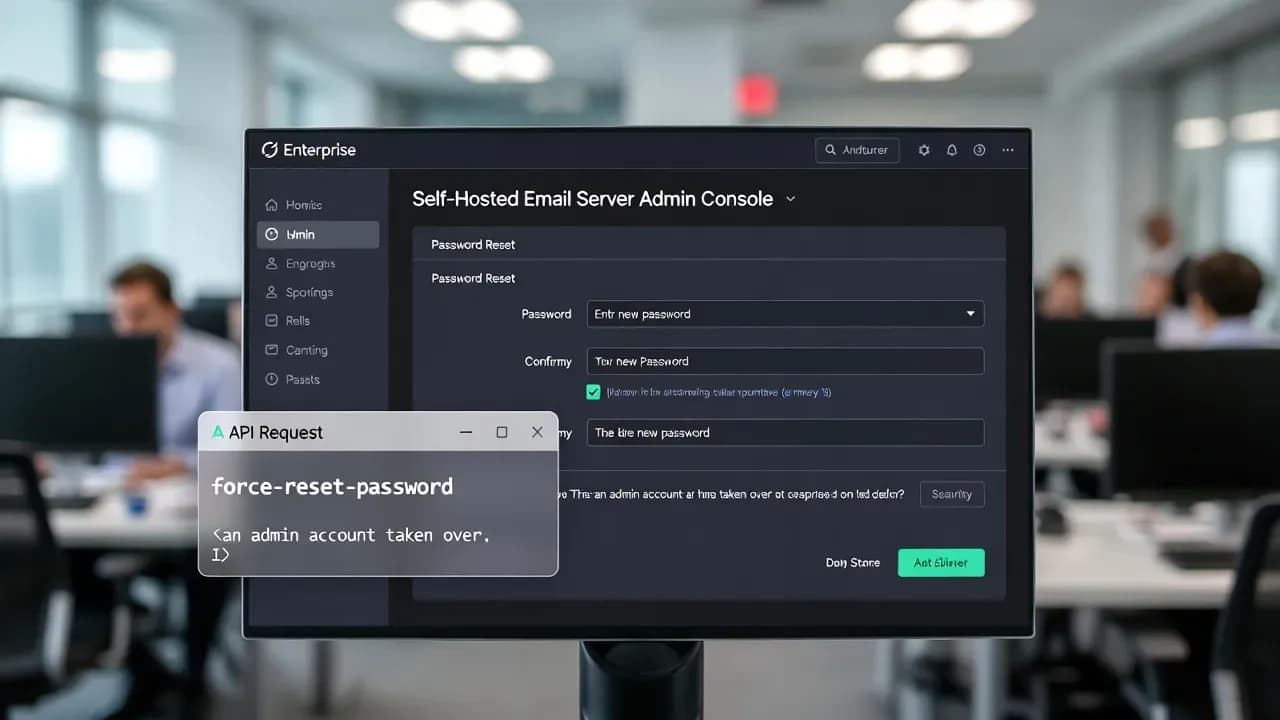
SmarterMail Auth Bypass Now Exploited to Reset Admin Passwords and Gain Full Server Control
A newly disclosed SmarterMail flaw is being exploited in the wild to take over administrator accounts by forcing password resets through an unauthenticated API endpoint. The compromise chain is short: target a known or guessed admin username, reset the password, log in with full privileges, then use administrative functionality to run OS commands. Here is the timeline, how the bypass works, what to hunt for in logs, and the hardening steps to apply now.

SmarterMail administrators are reporting active exploitation of an authentication bypass issue that enables attackers to reset system administrator passwords without prior authentication. The method abuses an intentionally exposed password reset API endpoint and allows a remote actor to seize full admin privileges if they know or can guess an admin username.
The impact is critical because administrator access in SmarterMail can be chained into operating system command execution, effectively converting an admin takeover into full control of the underlying host.
Why defenders should treat this as critical
Email servers are high value infrastructure. A successful SmarterMail admin takeover can enable:
- Full administrative control over domains, mailboxes, routing, and security settings
- Persistence via creation of additional privileged accounts and configuration changes
- Collection of mail data and metadata depending on tenant structure and access
- Host level compromise when administrative features can be abused to execute OS commands
For MSPs and hosting providers, the blast radius can expand quickly if shared management planes or clustered deployments are involved.
How the authentication bypass works
The flaw centers on the force-reset-password API endpoint, which is exposed without authentication as part of SmarterMail's password change and reset logic. The vulnerable behavior is that attacker controlled JSON input can influence administrative password reset logic.
In reported analysis, the endpoint accepts fields such as Username, OldPassword, NewPassword, and a boolean flag like IsSysAdmin. If the backend trusts that flag and does not properly validate the current password or other proof of authorization, an unauthenticated attacker can force an administrator password reset, then log in as that admin.
The practical requirement for attackers is low: identify or guess an admin username, then submit a crafted request that triggers the system administrator reset path.
From admin takeover to full remote code execution
This issue is more than "just" an admin account hijack. Once attackers authenticate as a system administrator, SmarterMail exposes functionality that can execute operating system commands. Public analysis describes a path through the administration interface where an attacker can configure a command field that is executed by the underlying OS, yielding full remote code execution on the host.
In other words, the auth bypass is the door, and SmarterMail's administrative features can become the lever to achieve server level compromise.
Timeline: disclosure, patch, exploitation
Researchers reported the issue publicly and to the vendor
SmarterMail shipped a fix in Build 9511 (no CVE at publication time)
Evidence surfaced suggesting exploitation attempts shortly after the patch release
Broader reporting confirmed active exploitation in the wild
This speed is consistent with patch diffing: threat actors reverse engineer updates, reconstruct the vulnerability, and weaponize it before many organizations complete patch cycles.
What to look for: detection and hunting
High confidence log signals
- Requests to the force-reset-password endpoint from unexpected IPs
- Audit log entries that reference force-reset-password events
- Admin logins from new geographies or hosting provider IP ranges
- Sudden admin password changes or unexpected lockouts
- Creation of new domains, test objects, or administrative changes immediately after an unusual login
Behavioral correlation worth alerting on
| Pattern | Priority |
|---|---|
| force-reset-password activity followed by a successful admin login within minutes | Critical |
| Admin login followed by security or configuration changes that enable command execution features | Critical |
| Multiple password reset attempts against different admin usernames from a single source | High |
Immediate mitigations (do these now)
1) Patch immediately
Upgrade SmarterMail to Build 9511 or later across all instances, including HA nodes.
2) Restrict exposure of the admin plane
- Remove direct internet exposure of admin and webmail interfaces where possible
- Allow management access only via VPN, jump host, or trusted IP allowlists
- Place admin endpoints behind a reverse proxy with strict access controls
3) Assume compromise if you see reset activity
If you identify suspicious force-reset-password events or unexplained admin password changes:
- Reset all system administrator credentials
- Review the full admin user list for new or modified privileged accounts
- Rotate credentials and secrets integrated with SmarterMail (directory services, outbound relays, API tokens) as applicable
- Inspect for configuration changes that could enable OS command execution or persistence
4) Add guardrails
Closing
This SmarterMail issue is high impact because it collapses the usual privilege boundary: an unauthenticated request can become an administrator session, and an administrator session can become host level code execution. The priority is straightforward: patch to Build 9511, reduce management surface area, and hunt for force-reset-password indicators and unexpected admin activity during the period immediately after January 15, 2026.
Frequently Asked Questions
The issue is tied to the force-reset-password API endpoint and how it processes attacker supplied JSON input, enabling an unauthorized administrator password reset path.
No. The exploitation described is pre authentication. Knowing or guessing an admin username is enough to attempt takeover.
Once an attacker is authenticated as a system administrator, SmarterMail administrative functionality can be abused to execute operating system commands on the host.
Upgrade to SmarterMail Build 9511 or later, then restrict admin access to trusted networks only. Treat any suspicious password reset activity as a potential compromise.
Review audit and web logs for force-reset-password requests, unexpected admin password resets, and new admin logins followed by configuration changes.



Comments
Want to join the discussion?
Create an account to unlock exclusive member content, save your favorite articles, and join our community of IT professionals.
New here? Create a free account to get started.