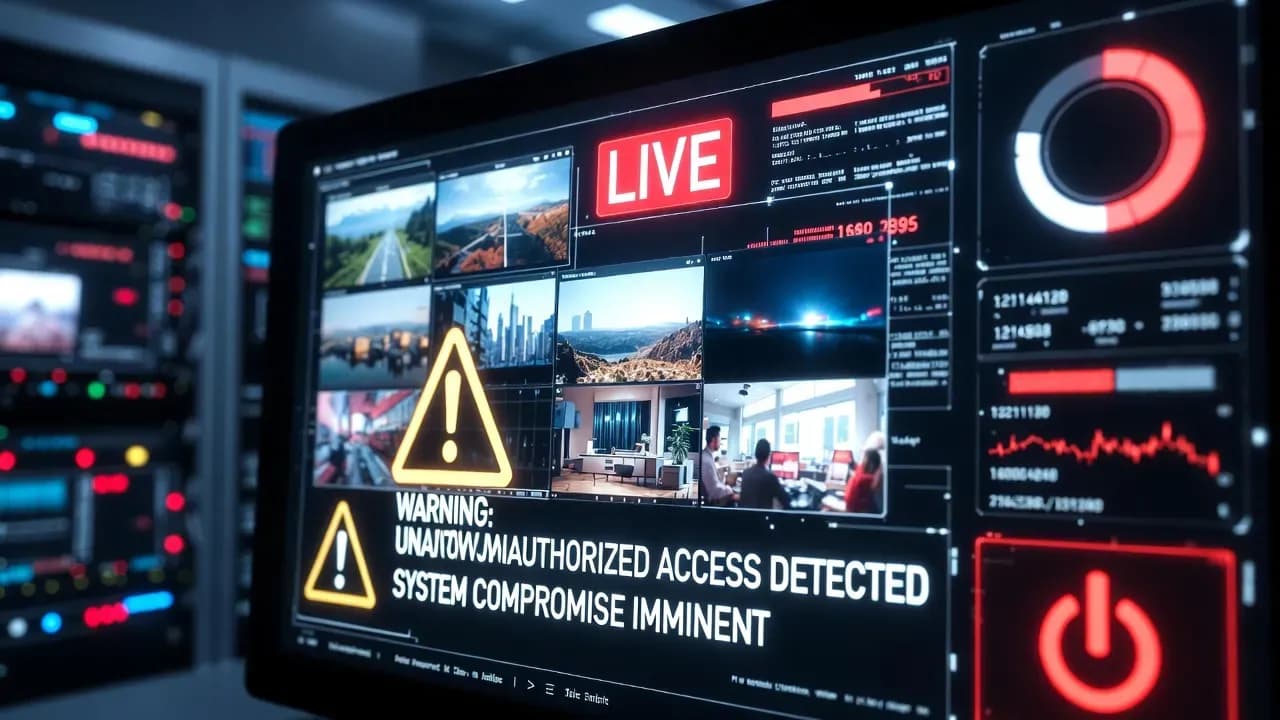
Streaming Platform Halts Live Streams After Content Injection Attack
A prominent live-streaming platform abruptly stopped all live broadcasts following a cyberattack that injected large volumes of inappropriate content into users’ streams. The disruption, which affected viewer experience and raised security questions, illustrates how content injection attacks can force major digital services into emergency shutdowns while mitigation and investigation continue.

Introduction
On the evening of December 22, 2025, a major streaming service reported a disruptive cyberattack that led to the suspension of all live broadcasts after unauthorized content flooded live feeds. Users began reporting the sudden appearance of inappropriate and explicit material being streamed across multiple channels, prompting the platform to take live services offline while investigating the incident and containing the disruptive effects. :contentReference[oaicite:2]{index=2}
What happened
According to reports, the attack appears to involve injection of unauthorized content directly into live broadcast streams. Users on the platform witnessed a surge of pornographic material during live sessions, with some broadcasts drawing up to 100,000 simultaneous viewers as the inappropriate content propagated rapidly before the platform intervened. :contentReference[oaicite:3]{index=3}
Faced with widespread disruption that violated terms of service and posed compliance and reputational risks, the streaming service opted for a full halt of live streaming functionality, initially blocking all live feeds before progressively restoring services after mitigation efforts. :contentReference[oaicite:4]{index=4}
Technical details
While the platform’s official statement did not disclose definitive technical details, initial analysis and industry commentary suggest the incident may involve content injection via an exploited vulnerability in the streaming or content moderation pipeline. Injection attacks of this nature often exploit weaknesses in:
- Input validation or authentication controls for broadcast content
- API endpoints that manage live stream metadata or insertion points
- Third-party integrations that allow user or editor uploads
The specifics of how the unauthorized material was inserted remain under investigation, with internal teams and external cybersecurity partners likely conducting forensic analysis.
Who is affected and why it matters
This incident impacted broadcaster accounts, viewers, and platform trust:
- Content creators were unable to stream their scheduled live broadcasts, undermining viewer engagement and revenue streams.
- Viewers were exposed to inappropriate content without warning, compromising user experience and raising compliance concerns.
- Platform operations faced a forced emergency shutdown, impacting uptime commitments and contractual obligations.
Content injection attacks can erode confidence in service integrity and expose platforms to regulatory scrutiny, particularly when harmful material bypasses moderation controls.
Active exploitation and threat landscape
Although the streaming service identified the event as a cyberattack, no specific threat actor has publicly claimed responsibility. Content injection attacks often fall within the broader category of infrastructure compromise or application layer exploitation, where attackers manipulate content delivery mechanisms for disruptive ends. :contentReference[oaicite:5]{index=5}
These types of attacks differ from classic data breaches or ransomware but still represent a serious security gap - particularly for platforms that rely on real-time content distribution and user-generated streams.
Recommended mitigations and best practices
To mitigate the risk of similar incidents, streaming platforms and real-time services should consider:
- Strengthening content validation and sanitization mechanisms to detect and block unauthorized inputs.
- Implementing robust authentication and authorization for content sources, especially for live broadcast APIs.
- Deploying real-time monitoring and anomaly detection that can flag abnormal content patterns quickly.
- Conducting regular code and architecture reviews to identify injection points or insecure integrations.
- Collaborating with cybersecurity response teams to prepare incident response plans specific to content platforms.
These measures are critical to protect live services from evolving attack vectors that target interactive platforms.
Vendor and security community response
The streaming platform issued a public acknowledgement of the attack, attributing it to unauthorized external actors described broadly as coming from the “black market” adult content sphere, but offered limited detail on the exploited vulnerability or attack vector. :contentReference[oaicite:6]{index=6}
Industry observers emphasize that content moderation layers and API protections must evolve alongside platform features to guard against manipulation and exploitation of broadcast systems.
Why this matters
Live streaming platforms represent a significant portion of modern digital media, with millions of concurrent users globally. A successful content injection attack not only disrupts service but also raises questions about content governance, platform safety, and trust - particularly when harmful or explicit material is broadcast without consent. :contentReference[oaicite:7]{index=7}
Such incidents highlight that real-time content services have distinct security challenges compared to traditional web services, requiring dedicated safeguards and continuous monitoring.
Conclusion
The streaming platform’s decision to halt live broadcasts following a content injection attack underscores the severity of the incident. While investigations continue, the event serves as a reminder that platforms with real-time content delivery must prioritize robust input validation and moderation infrastructure to prevent unauthorized content injection and protect user trust.
Frequently Asked Questions
The platform halted live broadcasts after unauthorized and inappropriate content was injected into streams, violating platform policies and disrupting service. :contentReference[oaicite:8]{index=8}
Early reports focus on content disruption rather than data breach; no confirmed reports indicate user credentials or personal data were compromised. :contentReference[oaicite:9]{index=9}
Implementing strict content validation, secure API controls, and real-time monitoring can reduce the risk of content injection and related exploitation.
Related Incidents
View All Critical
ShadowLeak and ZombieAgent: Critical ChatGPT Flaws Enable Zero-Click Data Exfiltration from Gmail, Outlook, and GitHub
Security researchers have disclosed critical vulnerabilities in ChatGPT that allowed attackers to silently exfiltrate se...
 High
HighMicrosoft Enforces Mandatory MFA for Microsoft 365 Admin Center as Credential Attacks Surge
Microsoft is now actively enforcing mandatory multi-factor authentication for all accounts accessing the Microsoft 365 A...
 Medium
Cisco ISE XXE Vulnerability Exposes Sensitive Files to Authenticated Attackers After Public PoC Release
Cisco has patched a medium-severity XML External Entity (XXE) vulnerability in Identity Services Engine that allows auth...
Comments
Want to join the discussion?
Create an account to unlock exclusive member content, save your favorite articles, and join our community of IT professionals.
New here? Create a free account to get started.