ANAVEM
Languagefr
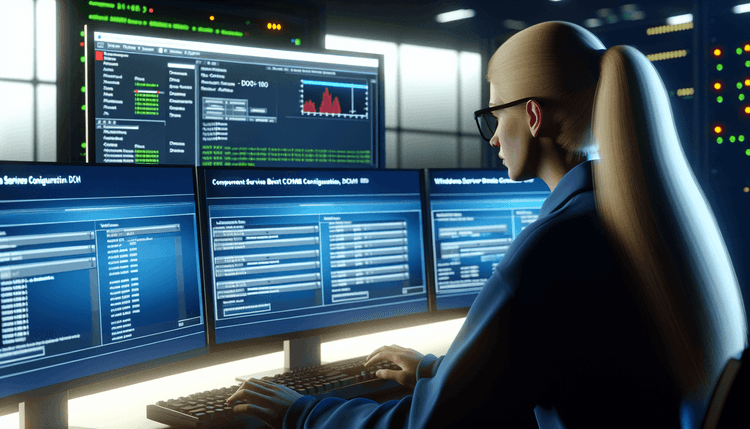
Windows Component Services console showing DCOM configuration management interface
Event ID 10010ErrorDistributedCOMWindows

Windows Event ID 10010 – DistributedCOM: DCOM Server Process Launcher Service Access Denied

Event ID 10010 indicates DCOM server process launcher access denied errors, typically caused by insufficient permissions for COM applications or services attempting to start DCOM server processes.

Emanuel DE ALMEIDAEmanuel DE ALMEIDA
18 March 20269 min read 1
Event ID 10010DistributedCOM 5 methods 9 min
Event Reference

What This Event Means

Windows Event ID 10010 represents a fundamental DCOM security violation where the system denies access to launch server processes for specific Component Object Model applications. DCOM serves as the foundation for inter-process communication in Windows environments, enabling applications to interact with components across process boundaries and network connections.

When this event occurs, Windows logs detailed information including the application identifier (APPID), the security identifier (SID) of the requesting user or service, and the authentication level required. The error typically stems from restrictive DCOM security configurations, corrupted user profiles, or insufficient privileges assigned to service accounts.

The impact extends beyond simple application failures. DCOM errors can cascade through dependent services, causing delayed startup times, reduced functionality in Windows features like search indexing, and potential stability issues in enterprise applications. Modern Windows versions have tightened DCOM security as part of enhanced security postures, making these events more common during system migrations or after security updates.

The event's technical context involves the Service Control Manager attempting to launch DCOM server processes on behalf of client applications. When the security subsystem evaluates the launch request against configured permissions and finds insufficient rights, it generates this event while denying the operation.


Applies to

Windows 10Windows 11Windows Server 2019/2022/2025
Analysis

Possible Causes

  • Insufficient DCOM launch and activation permissions for user accounts or services
  • Corrupted or missing DCOM application registrations in the Windows Registry
  • Service account password changes without updating DCOM configurations
  • Group Policy restrictions preventing DCOM server process launches
  • Windows security updates modifying default DCOM permission settings
  • Third-party application installations with improper DCOM security configurations
  • User Account Control (UAC) blocking DCOM operations for standard user accounts
  • Antivirus software interfering with DCOM component access
  • System file corruption affecting DCOM infrastructure components
Resolution Methods

Troubleshooting Steps

01

Identify the Failing DCOM Application

Start by examining the event details to identify which DCOM application is experiencing access issues.

  1. Open Event Viewer by pressing Win + R, typing eventvwr.msc, and pressing Enter
  2. Navigate to Windows LogsSystem
  3. Filter for Event ID 10010 by right-clicking the System log and selecting Filter Current Log
  4. Double-click on a recent Event ID 10010 entry to view details
  5. Note the CLSID or APPID mentioned in the event description
  6. Use PowerShell to identify the application associated with the CLSID:
Get-WinEvent -FilterHashtable @{LogName='System'; Id=10010} -MaxEvents 5 | ForEach-Object {
    $_.Message | Select-String -Pattern '{[A-F0-9-]+}'
}

Record the CLSID for use in subsequent troubleshooting steps. This identifier helps pinpoint the exact DCOM component causing issues.

02

Configure DCOM Permissions Using Component Services

Modify DCOM security settings to grant appropriate permissions to the affected user or service account.

  1. Press Win + R, type dcomcnfg.exe, and press Enter to open Component Services
  2. Navigate to Component ServicesComputersMy ComputerDCOM Config
  3. Locate the application corresponding to the CLSID from the event (you may need to search by name or CLSID)
  4. Right-click the application and select Properties
  5. Click the Security tab
  6. Under Launch and Activation Permissions, click Edit
  7. Add the user account or service experiencing the issue
  8. Grant Local Launch and Local Activation permissions
  9. Repeat for Access Permissions if necessary
  10. Click OK to apply changes
  11. Restart the affected service or reboot the system
Pro tip: Use the CLSID to search the registry at HKEY_CLASSES_ROOT\CLSID to find the application name if it's not obvious in DCOM Config.
03

Reset DCOM Permissions to Default

Restore default DCOM permissions when custom configurations cause widespread access issues.

  1. Open an elevated Command Prompt by pressing Win + X and selecting Command Prompt (Admin)
  2. Stop the DCOM Server Process Launcher service:
net stop DcomLaunch
  1. Reset DCOM permissions using the following PowerShell commands:
# Reset DCOM default authentication level
Set-ItemProperty -Path "HKLM:\SOFTWARE\Microsoft\Ole" -Name "DefaultAuthenticationLevel" -Value 2

# Reset DCOM default impersonation level
Set-ItemProperty -Path "HKLM:\SOFTWARE\Microsoft\Ole" -Name "DefaultImpersonationLevel" -Value 2

# Restart DCOM services
Restart-Service -Name "DcomLaunch" -Force
Restart-Service -Name "RpcSs" -Force
  1. Verify the services are running:
Get-Service -Name "DcomLaunch", "RpcSs" | Format-Table Name, Status
Warning: Resetting DCOM permissions may affect third-party applications that rely on custom DCOM configurations. Test thoroughly in non-production environments.
04

Investigate Service Account Issues

Examine and resolve service account-related DCOM access problems.

  1. Identify which service account is mentioned in the Event ID 10010 details
  2. Open Services by pressing Win + R, typing services.msc, and pressing Enter
  3. Locate services running under the problematic account
  4. Check service account configuration using PowerShell:
# List services and their logon accounts
Get-WmiObject -Class Win32_Service | Where-Object {$_.StartName -like "*username*"} | Select-Object Name, StartName, State
  1. Verify the service account has the necessary privileges:
# Check user rights assignments
secedit /export /cfg C:\temp\current_policy.inf
Select-String -Path "C:\temp\current_policy.inf" -Pattern "SeServiceLogonRight"
  1. Grant "Log on as a service" right if missing:
  2. Open Local Security Policy (secpol.msc)
  3. Navigate to Local PoliciesUser Rights Assignment
  4. Double-click Log on as a service
  5. Add the service account and click OK
  6. Restart the affected services

Clean up temporary files: Remove-Item C:\temp\current_policy.inf -Force

05

Advanced Registry and Group Policy Analysis

Perform comprehensive analysis of DCOM registry settings and Group Policy impacts.

  1. Export current DCOM configuration for backup:
# Backup DCOM registry keys
reg export "HKLM\SOFTWARE\Classes\AppID" "C:\temp\DCOM_AppID_backup.reg"
reg export "HKLM\SOFTWARE\Microsoft\Ole" "C:\temp\DCOM_Ole_backup.reg"
  1. Analyze Group Policy settings affecting DCOM:
# Generate Group Policy report
gpresult /h C:\temp\GPReport.html /f

# Check for DCOM-related policies
Get-ChildItem "HKLM:\SOFTWARE\Policies\Microsoft\Windows NT\DCOM" -Recurse -ErrorAction SilentlyContinue
  1. Examine DCOM error logs in detail:
# Detailed DCOM event analysis
Get-WinEvent -FilterHashtable @{LogName='System'; Id=10010; StartTime=(Get-Date).AddDays(-7)} | 
ForEach-Object {
    [PSCustomObject]@{
        TimeCreated = $_.TimeCreated
        Message = $_.Message
        ProcessId = $_.ProcessId
        ThreadId = $_.ThreadId
    }
} | Export-Csv -Path "C:\temp\DCOM_Events.csv" -NoTypeInformation
  1. Check for corrupted DCOM registrations:
# Verify DCOM application registrations
$DCOMApps = Get-ChildItem "HKLM:\SOFTWARE\Classes\AppID" | ForEach-Object {
    Get-ItemProperty $_.PSPath -ErrorAction SilentlyContinue
}
$DCOMApps | Where-Object {$_.PSChildName -match '{.*}'} | Select-Object PSChildName, '(default)'
  1. Re-register DCOM components if corruption is detected:
regsvr32 /s ole32.dll
regsvr32 /s oleaut32.dll
Pro tip: Use Process Monitor (ProcMon) to capture real-time DCOM access attempts and identify the exact registry keys being accessed during failures.

Overview

Event ID 10010 fires when the Distributed Component Object Model (DCOM) encounters access denied errors while attempting to start server processes. This event appears in the System log and indicates that a user account or service lacks the necessary permissions to launch a specific DCOM application. The error typically manifests when applications try to instantiate COM objects that require elevated privileges or when DCOM security settings are misconfigured.

This event commonly occurs during system startup, application launches, or when background services attempt to access DCOM components. The error can affect various Windows components including Windows Search, Windows Media Player Network Sharing Service, and third-party applications that rely on DCOM infrastructure. While not immediately critical, persistent 10010 events can indicate underlying permission issues that may impact application functionality and system performance.

The event details include the CLSID (Class Identifier) of the failing DCOM application, the user account experiencing the access denial, and the specific error code. Understanding these details helps administrators identify which applications are affected and implement targeted permission fixes.

Frequently Asked Questions

What does Event ID 10010 mean and why does it occur?+
Event ID 10010 indicates that the DCOM (Distributed Component Object Model) system has denied access to launch a server process for a specific application. This occurs when a user account or service lacks the necessary permissions to start DCOM components, or when DCOM security settings are misconfigured. The event is logged in the System event log and includes details about the failing application's CLSID and the user account experiencing the denial.
How can I identify which application is causing Event ID 10010?+
To identify the problematic application, examine the event details in Event Viewer where you'll find a CLSID (Class Identifier) in the event message. Use this CLSID to search the Windows Registry at HKEY_CLASSES_ROOT\CLSID or look it up in Component Services (dcomcnfg.exe) under DCOM Config. You can also use PowerShell to extract CLSIDs from recent events: Get-WinEvent -FilterHashtable @{LogName='System'; Id=10010} -MaxEvents 5 | ForEach-Object { $_.Message | Select-String -Pattern '{[A-F0-9-]+}' }
Is Event ID 10010 critical and will it affect system stability?+
Event ID 10010 is classified as an Error level event but is typically not critical to overall system stability. However, it can impact the functionality of specific applications or Windows features that depend on the failing DCOM component. For example, if Windows Search service experiences DCOM access issues, search functionality may be impaired. While the system will continue to operate, persistent 10010 events should be investigated to ensure optimal application performance and prevent potential cascading issues.
Can Group Policy settings cause Event ID 10010 errors?+
Yes, Group Policy settings can definitely cause Event ID 10010 errors. Policies that restrict DCOM permissions, modify default authentication levels, or limit service account rights can trigger these events. Common culprits include policies under Computer Configuration\Windows Settings\Security Settings\Local Policies\User Rights Assignment, particularly 'Log on as a service' restrictions. Additionally, DCOM-specific policies in Computer Configuration\Administrative Templates\System\Distributed COM can affect DCOM operations and generate access denied errors.
What's the difference between fixing DCOM permissions and resetting them to default?+
Fixing DCOM permissions involves granting specific rights to individual users or services for particular DCOM applications through Component Services (dcomcnfg.exe). This targeted approach maintains existing configurations while addressing specific access issues. Resetting to default removes all custom DCOM permissions and restores Windows default settings, which can resolve widespread permission problems but may break third-party applications that require custom DCOM configurations. The reset approach should be used cautiously and tested thoroughly, especially in production environments with complex application dependencies.
Documentation

References (2)

Emanuel DE ALMEIDA
Written by

Emanuel DE ALMEIDA

Senior IT Journalist & Cloud Architect

Microsoft MCSA-certified Cloud Architect | Fortinet-focused. I modernize cloud, hybrid & on-prem infrastructure for reliability, security, performance and cost control - sharing field-tested ops & troubleshooting.

Discussion

Share your thoughts and insights

You must be logged in to comment.

Loading comments...