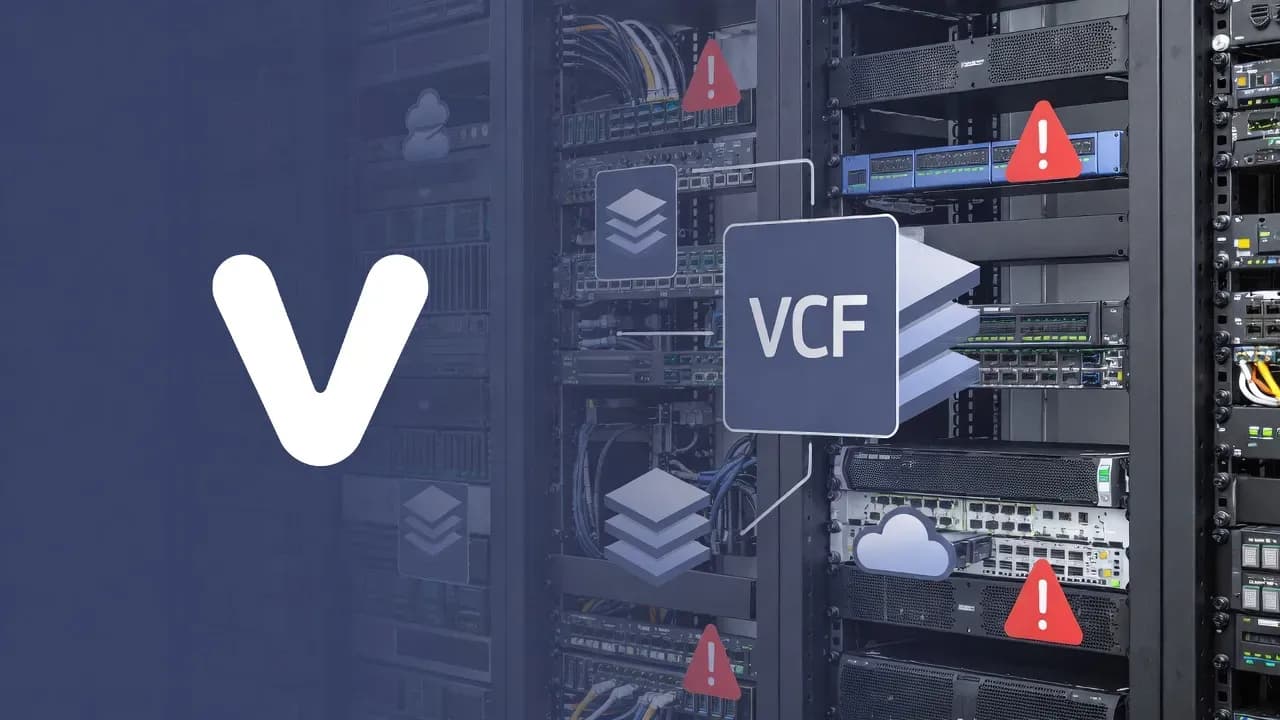
Broadcom Discontinues VMware vSphere Foundation Across EMEA
Broadcom has withdrawn VMware vSphere Foundation from parts of the EMEA region, signaling a shift toward more expensive private cloud suites. Smaller customers face rising costs and possible migration to alternatives, reshaping the virtualization landscape for infrastructure operators.

Executive Summary
Broadcom has officially discontinued the VMware vSphere Foundation offering in parts of the EMEA (Europe, Middle East, Africa) region, confirming the change to industry partners and resellers in December 2025.
This development represents a meaningful shift in VMware’s product availability following Broadcom’s 2023 acquisition. While vSphere Foundation enabled entry-level virtualization with compute, storage, and container support, its partial withdrawal accelerates the transition toward higher-tier, subscription-centric infrastructure stacks. Smaller customers, in particular, may face substantial cost increases or the need to evaluate alternative virtualization technologies.
Impact Assessment
The operational impact for organizations previously reliant on vSphere Foundation ranges from planning disruptions to financial strain. One cited customer reported that losing access to VVF could raise their virtualization expenditure by a factor of ten - from approximately $130,000 to $1.3 million annually - if they must migrate to VMware Cloud Foundation. :contentReference[oaicite:3]{index=3}
This cost delta is significant for mid-market enterprises and smaller IT environments that operate on fixed or constrained budgets. The lack of a clear direct replacement at comparable price points forces many decision-makers to consider alternative hypervisors or cloud-oriented solutions that align with organizational risk, budget, and strategic cloud ambitions.
Who is affected
The change primarily affects:
- Small and mid-sized enterprises using VMware as their primary hypervisor
- Organizations with predictable, non-cloud-native workloads
- IT teams relying on vSphere Foundation as a cost-controlled private virtualization stack
Larger enterprises already standardized on VCF may experience minimal disruption, while cost-sensitive customers face immediate licensing and budgeting challenges.
Business Impact
Several resellers report dramatic cost increases for customers forced to migrate from vSphere Foundation to VMware Cloud Foundation. In extreme cases, annual licensing expenses may increase by an order of magnitude.
This shift has triggered renewed interest in alternative platforms such as Hyper-V, Nutanix, and open-source hypervisors, particularly among organizations prioritizing long-term cost predictability over vendor lock-in.
Technical Analysis
VMware vSphere Foundation (VVF) historically served as the accessible virtualization bundle combining essential compute, storage, and networking features. With Cloud Foundation (VCF) positioned as the more comprehensive private cloud offering, Broadcom’s deprecation of VVF aligns with a broader strategy to simplify VMware’s product lineup and emphasize subscription-based revenue models.
According to multiple EMEA resellers, the VVF product is no longer available in certain countries within the region, although availability persists in other markets pending local partner inventories. Customers must engage with sales representatives or authorized partners to verify product availability on a case-by-case basis. :contentReference[oaicite:2]{index=2}
The implicit intent behind this move appears dual: to increase adoption of VCF and to phase out low-margin or lower-tier virtualization bundles - even if that strategy risks alienating smaller organizations that previously relied on an affordable entry point into the VMware ecosystem.
Recommendations
Infrastructure operators and virtualization architects should take the following actions:
-
Verify Product Availability
Engage with local VMware or Broadcom channel partners to confirm vSphere Foundation availability in your country or region. -
Evaluate Licensing Impact
Calculate the financial implications of upgrading from VVF to VCF, including subscription term commitments and support costs. -
Assess Alternatives
Consider alternative hypervisors or virtualization platforms - such as Microsoft Hyper-V, Nutanix HCI, or open-source options like Proxmox - based on feature requirements and total cost of ownership. -
Plan Migration Pathways
If remaining on VMware infrastructure, develop a phased migration strategy to higher-tier bundles or hybrid cloud offerings that balance cost, performance, and support. -
Update Procurement Strategies
Incorporate flexibility into vendor contracts to avoid lock-in and recalibrate renewal cycles in light of shifting product portfolios.
Comments
Want to join the discussion?
Create an account to unlock exclusive member content, save your favorite articles, and join our community of IT professionals.
New here? Create a free account to get started.