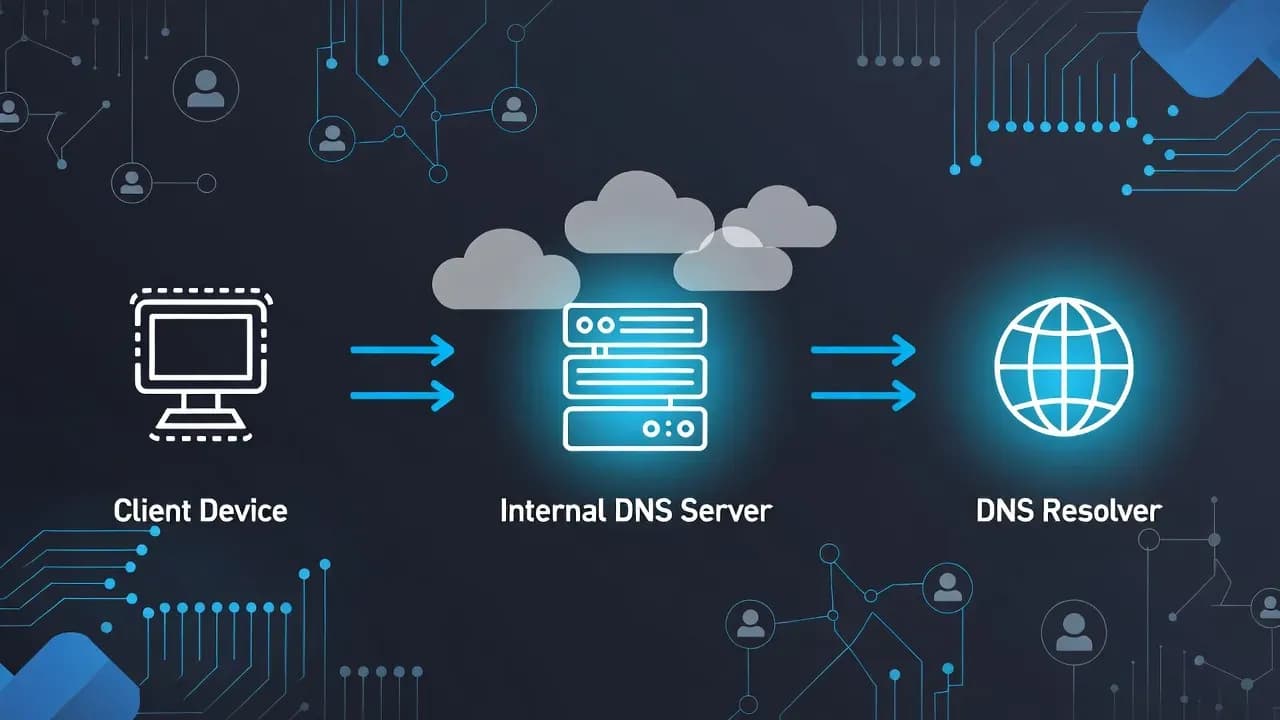
What Is DNS Forwarding and How It Works
DNS forwarding is a core concept in network and server administration, yet it is often misunderstood. Used to control how DNS queries are resolved, it plays a key role in performance, security, and hybrid environments. This explanation clarifies what DNS forwarding is, how it works, the different forwarding models, and why it is commonly deployed in enterprise and hybrid IT infrastructures.

What Is DNS Forwarding?
DNS forwarding is a configuration where a DNS server passes queries it cannot resolve locally to another DNS server. Instead of responding directly to a client, the server forwards the request to an upstream resolver and relays the response back to the client.
DNS forwarding is commonly used in enterprise networks to centralize name resolution, control outbound DNS traffic, and integrate on-premises environments with external or cloud-based DNS services.
Why DNS Forwarding Exists
Without forwarding, a DNS server must either resolve queries using its own records or perform recursive lookups on the internet. In large or managed environments, this is not always desirable.
DNS forwarding allows administrators to:
- Centralize DNS resolution logic
- Reduce external DNS traffic
- Enforce security and filtering policies
- Integrate internal and external name resolution
It is especially useful in environments with multiple DNS servers or hybrid architectures.
How DNS Forwarding Works
When a DNS server receives a query, it follows a resolution process.
If the requested record exists locally, the server responds directly. If it does not, and DNS forwarding is configured, the server sends the query to a designated forwarder.
The forwarder resolves the query and returns the response. The original DNS server then forwards the answer back to the client.
From the client’s perspective, the process is transparent.
Types of DNS Forwarding
DNS forwarding can be implemented in different ways depending on network design.
Conditional Forwarding
Conditional forwarding sends DNS queries for specific domains to designated DNS servers. For example, queries for a partner or cloud domain can be forwarded to a specific resolver.
This method is commonly used in hybrid environments, mergers, and multi-domain architectures.
Default (Recursive) Forwarding
Default forwarding sends all unresolved queries to one or more upstream DNS servers. These servers handle internet name resolution on behalf of internal DNS servers.
This approach simplifies DNS configuration and centralizes control over external resolution.
DNS Forwarding vs Recursive Resolution
DNS forwarding and recursive resolution are often confused.
With recursive resolution, a DNS server queries root, top-level, and authoritative servers directly on the internet. With forwarding, the server delegates that responsibility to another DNS server.
Forwarding reduces complexity and allows administrators to enforce consistent policies, while recursive resolution offers direct control at the cost of increased exposure and management overhead.
Common Use Cases for DNS Forwarding
DNS forwarding is widely used in scenarios such as:
- Active Directory environments
- Hybrid cloud deployments
- Network segmentation and security
- Performance optimization
- DNS filtering and inspection
In many enterprise networks, internal DNS servers forward queries to dedicated resolvers or security appliances.
DNS Forwarding in Hybrid and Cloud Environments
In hybrid architectures, DNS forwarding is often used to connect on-premises DNS with cloud-based name resolution services. This enables seamless access to cloud resources while maintaining control over internal DNS infrastructure.
Proper forwarding configuration is critical to avoid resolution loops, delays, or inconsistent responses.
Security Considerations
DNS forwarding can improve security by limiting which servers communicate directly with external DNS infrastructure. It also allows inspection, logging, and filtering at a central point.
However, misconfigured forwarding can expose internal networks to risks or cause resolution failures. Forwarders must be trusted and properly secured.
Why DNS Forwarding Matters
DNS forwarding is a foundational DNS design pattern in enterprise IT. It improves scalability, security, and manageability of name resolution across complex environments.
Understanding DNS forwarding is essential for administrators managing Windows Server, Active Directory, and hybrid cloud networks.
Frequently Asked Questions
DNS forwarding is used to pass unresolved DNS queries to another server, centralizing and controlling name resolution.
DNS forwarding sends queries to another DNS server, while recursion resolves queries directly by contacting root and authoritative servers.
Conditional forwarding forwards queries for specific domains to designated DNS servers, commonly used in hybrid or multi-domain environments.
No, but it is commonly used in Active Directory environments to manage external and hybrid DNS resolution.
Yes. DNS forwarding can limit external DNS access, enable filtering, and centralize logging and inspection.


Comments
Want to join the discussion?
Create an account to unlock exclusive member content, save your favorite articles, and join our community of IT professionals.
New here? Create a free account to get started.