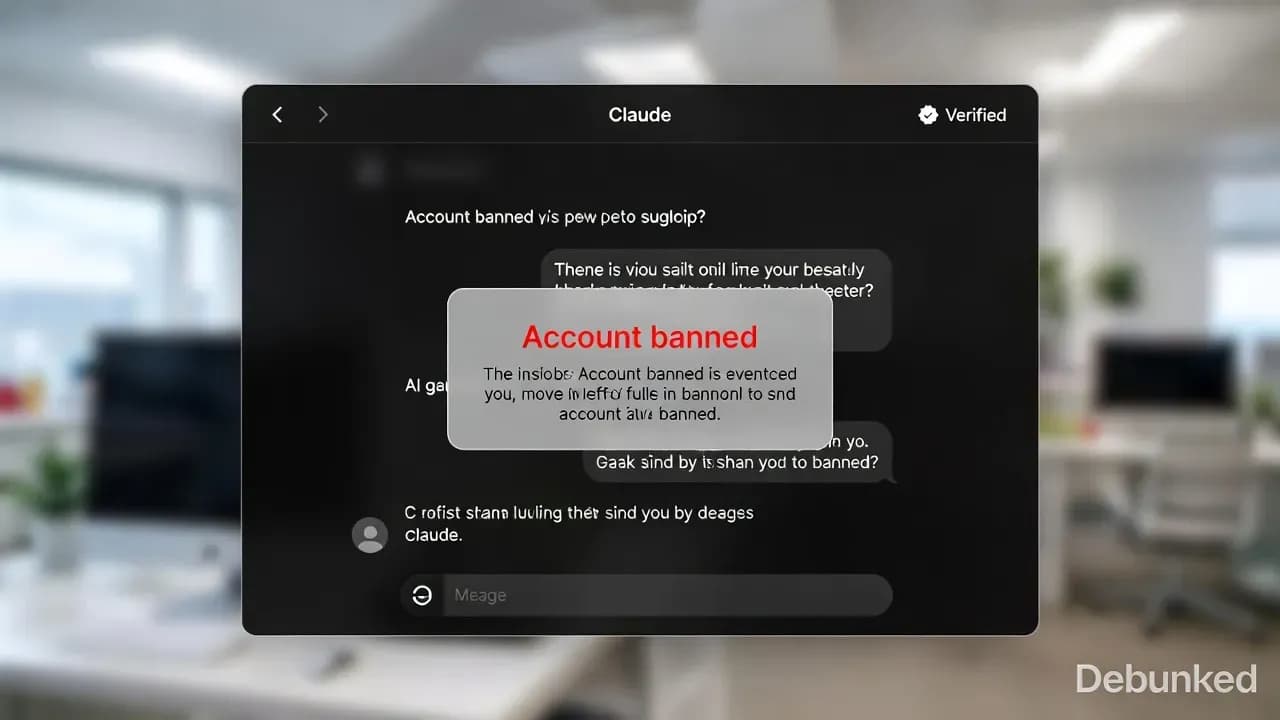
Anthropic debunks viral "Claude banned and reported" screenshot as a fake
A viral screenshot on X claims Anthropic's Claude permanently bans accounts and shares details with local authorities. Anthropic says the message is not real and does not match any official Claude notice. The incident highlights how easily fake "ban" screens spread, especially as coding agents like Claude Code gain traction.

What Happened
A screenshot spreading on X claims Claude permanently banned a user and shared account details with local authorities. It is designed to look official and intimidating, and it is circulating fast enough to create doubt about how Anthropic enforces its rules. Anthropic has now pushed back: the company says the message is not genuine and does not match anything Claude actually displays to users.
The story is less about a single fake image and more about a predictable pattern in AI platforms: as these tools become mainstream, misinformation and "gotcha" screenshots become part of the threat landscape.
Why the Hoax Was Believable
The confusion is understandable because account restrictions do happen across the industry. Anthropic, like other AI providers, operates a safeguards and enforcement function that can warn users, limit features, suspend access, or terminate accounts when policies are violated. That real enforcement backdrop makes fake screenshots more believable, especially when the platform is popular and emotions run high around bans and false positives.
The viral traction is partly a product story. Claude's coding agent experience, including Claude Code, has become a daily tool for many developers, which increases attention to anything that looks like a sudden enforcement escalation. In parallel, social platforms reward fear and outrage, and a scary "you were reported" screen is optimized for reposting even when it lacks corroboration.
What Is True About Claude Enforcement
Debunking the screenshot does not mean safeguards are lax or nonexistent. Anthropic documents that accounts can face restrictions for policy violations, and it provides an appeals pathway for users who believe enforcement was incorrect. The platform also publishes transparency-oriented material that describes how it approaches detection, monitoring, and enforcement at scale.
Security and Trust Implications
For users, fake enforcement screenshots are not harmless. They can drive unsafe behaviors such as phishing, scam "unban services," and credential theft campaigns that exploit panic. A believable ban screen is an effective pretext for an attacker to offer "account recovery" help, ask for payment, or trick a user into sharing sensitive account details.
Key Takeaway
Anthropic's position is clear: the viral "banned and reported to authorities" screenshot is not real, and it does not reflect the company's actual user messaging. The broader lesson is that as AI agents become critical productivity tools, trust and safety narratives become an attack surface.
The best defense is basic verification hygiene: rely on official policy pages, official support guidance, and direct in-product prompts rather than viral posts that cannot be validated.


Comments
Want to join the discussion?
Create an account to unlock exclusive member content, save your favorite articles, and join our community of IT professionals.
New here? Create a free account to get started.