Illinois Department of Human Services Data Breach Exposed 700K in Years-Long Map Misconfiguration
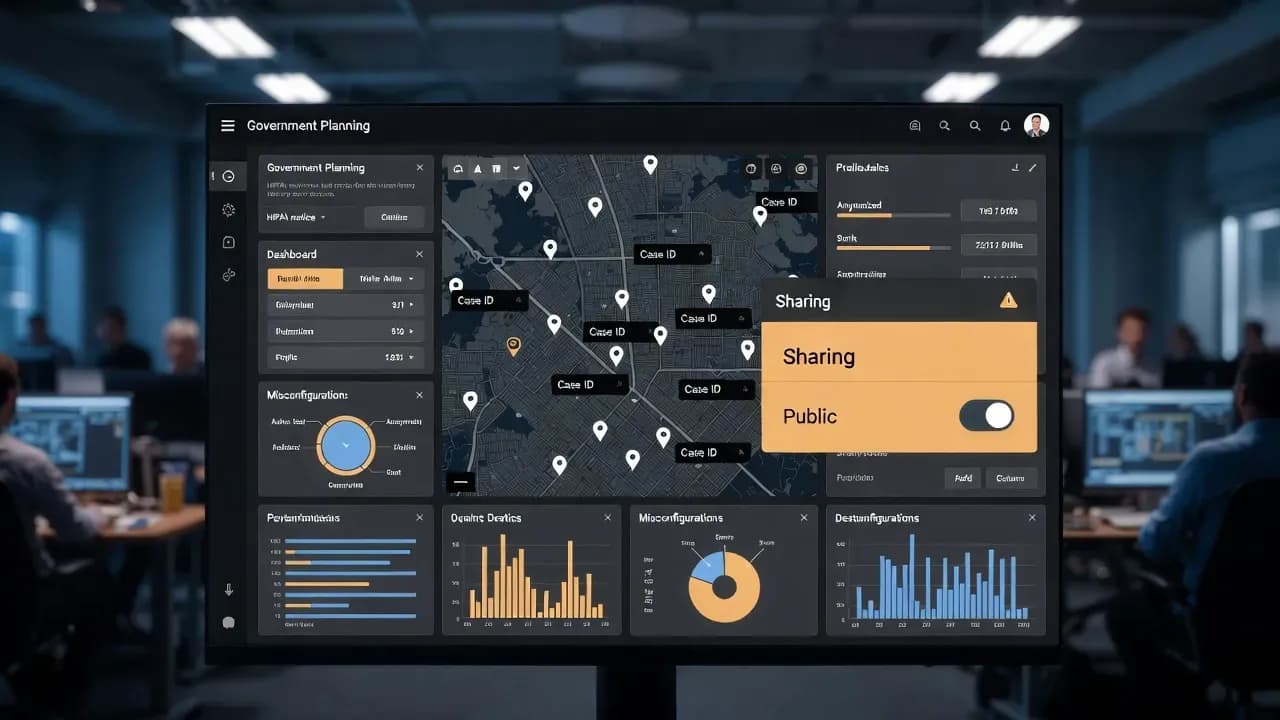
The Illinois Department of Human Services data breach is a case study in how a single configuration error can turn an internal planning tool into a statewide exposure event affecting roughly 700,000 individuals tied to Medicaid, Medicare savings programs, and disability services.

The Illinois Department of Human Services Data Breach
The Illinois Department of Human Services data breach is a case study in how a single configuration error can turn an internal planning tool into a statewide exposure event. In this incident, privacy settings on internal maps were misconfigured, leaving sensitive, customer-linked data publicly viewable for years. The scale is significant, affecting roughly 700,000 individuals tied to Medicaid, Medicare savings programs, and disability services. While there is no indication of confirmed misuse, the data types involved are well suited for targeted fraud and social engineering, especially when paired with information from other sources. For security leaders, the lesson is direct: misconfiguration risk is not theoretical, and "non-traditional" platforms like mapping and analytics tooling need the same governance and continuous monitoring as core cloud infrastructure.
What Happened: The Technical Breakdown
IDHS disclosed that internal planning maps created for resource allocation decisions were inadvertently made publicly accessible due to incorrect privacy settings on a mapping website. The maps were intended strictly for internal use, supporting decisions such as where to open local offices and how to allocate services. Instead, they became externally viewable for extended periods, spanning multiple years before the issue was identified.
The exposure was discovered on September 22, 2025. Following discovery, IDHS changed privacy settings on all maps over several days to restrict access to authorized employees, completing those changes by September 26, 2025. The agency also performed a review to identify what data was present in each map and to determine which notifications were required under applicable state and federal requirements. IDHS then issued a public media notice dated January 2, 2026, and began preparing notices to affected individuals and relevant regulatory authorities.
This was not described as a ransomware incident, intrusion, or malware deployment. It is best characterized as a data exposure event caused by misconfiguration and inadequate guardrails around where customer-level data could be stored and how it could be published.
Illinois Department of Human Services Data Breach: What Data Was Exposed
IDHS grouped impacted individuals into two categories with different exposure windows and different data elements.
The first group includes approximately 32,401 Division of Rehabilitation Services customers. For this group, maps were publicly accessible from April 2021 through September 2025. The exposed fields included names and addresses, along with case numbers and additional case-related context such as case status, referral source information, region and office information, and the individual's status as a DRS recipient. From a risk standpoint, this is a richer dataset for impersonation and targeted outreach because it combines direct identifiers with program participation context.
The second and larger group includes approximately 672,616 Medicaid and Medicare Savings Program recipients. For this population, maps were publicly accessible from January 2022 through September 2025. The exposed fields included addresses, case numbers, demographic information, and the name of medical assistance plans. Notably, IDHS stated that recipient names were not included for this group. Even without names, address-level and case-level identifiers can still enable downstream abuse, including targeted scams that leverage the credibility of a case reference, particularly if attackers can correlate addresses with publicly available identity data.
IDHS stated it could not determine who viewed the maps, and the agency said it was not aware of actual or attempted misuse at the time of its notice.
Timeline, Reporting, and Why the Delay Matters
In data exposure incidents, time is an amplifier: the longer information is public, the harder it is to confidently scope access, and the higher the probability that data has been indexed, copied, or integrated into secondary datasets. Here, the exposure windows extended for years, but the formal discovery date was September 22, 2025.
The timing of public disclosure is also operationally meaningful. IDHS's media notice is dated January 2, 2026, which is 102 days after the agency says it discovered the exposure. Separate reporting noted that federal HIPAA breach notification requirements generally require notification without unreasonable delay and no later than 60 days following discovery, including media notification when a breach affects 500+ residents in a jurisdiction. Reporting also noted that IDHS did not publicly explain why notification took more than 100 days after discovery.
For security and compliance teams, the practical takeaway is not to litigate intent but to recognize process risk. Delayed public notification can compress the timeframe for affected individuals to take protective steps and can increase downstream harm if bad actors learn of the exposure before the public does. It also highlights the need for incident response playbooks that explicitly cover misconfiguration exposures, not only adversary-driven intrusions.
Impact Assessment: What This Enables for Attackers
Even when an organization reports no evidence of misuse, defenders should analyze "abuse potential" based on data elements and real-world attacker behavior.
For affected individuals, the most likely near-term risk is social engineering rather than direct account takeover. Fraudsters frequently exploit healthcare and benefits themes because victims are accustomed to interacting with agencies, receiving notices, and responding to administrative requests. Address data combined with case numbers and program context can be used to craft highly believable pretexts, including phone calls, SMS messages, or mail-based scams that reference a "case update," "eligibility verification," "benefit recertification," or "plan change." In a subset of cases where names were exposed, the attacker's job becomes even easier, as personalization improves conversion rates for scams.
For the agency and its ecosystem, there is a longer-term trust and integrity risk. Once scammers can convincingly impersonate an agency at scale, the indirect impact includes increased call-center volume, higher support costs, and erosion of confidence in legitimate communications. These second-order effects often outlast the initial technical remediation.
How Organizations Can Respond: Prevention and Detection Strategies
This incident reinforces a simple point: configuration and data governance failures can produce breach-scale outcomes. The response needs both technical and organizational controls.
First, implement hard prohibitions on publishing customer-level data to platforms that have any public sharing capability, even if the intended usage is "internal only." If a workflow requires mapping or analytics, build a sanitization layer that removes direct identifiers and replaces them with aggregated or tokenized values. In many planning scenarios, a heat map or block-level aggregation is sufficient and materially reduces exposure risk.
Second, treat mapping and analytics platforms as first-class assets in your security program. That includes centralized identity and access management, strict role-based access control, and periodic access reviews. It also includes configuration baselines and continuous policy checks for "publicly accessible" flags or anonymous access settings. The same category of controls used to prevent public exposure of cloud storage buckets should be adapted for SaaS GIS and BI tools.
Third, improve monitoring for high-risk configuration drift. The most effective approach is to combine asset inventory with automated checks that validate sharing permissions and alert on changes. Where the platform supports it, retain audit logs that can show when content was accessed, by whom, and from where. Where the platform cannot provide that level of detail, that limitation must be reflected in your risk model, because it directly affects forensic certainty.
Fourth, strengthen incident response for exposure events. Misconfiguration incidents require rapid containment, but they also require parallel workstreams: forensic assessment, legal and compliance triage, customer communications, and downstream scam monitoring. In public-sector contexts, it is prudent to coordinate with fraud prevention partners and publish clear guidance on how legitimate agency outreach is conducted, so recipients can more easily recognize impersonation.
For individuals who receive a notification, the most practical steps are to treat unsolicited benefit-related outreach as suspicious, verify requests through official channels, and consider protective measures such as fraud alerts or security freezes when appropriate. Even if the exposed dataset does not include Social Security numbers, scams can still succeed through persuasion and plausible context. IDHS stated that affected individuals would receive a notice including a toll-free contact number and information about resources such as consumer reporting agencies and the Federal Trade Commission.
Frequently Asked Questions
This incident is described as an exposure caused by incorrect privacy settings on internal planning maps. There is no public indication that malware, ransomware, or a network intrusion was required to access the data. The risk comes from the fact that data was publicly viewable, not from a confirmed external compromise.
For approximately 672,616 Medicaid and Medicare Savings Program recipients, the exposed fields included addresses, case numbers, demographic information, and the name of medical assistance plans. The agency stated that names were not included for this group. Even without names, these data elements can still support targeted scams when correlated with other information.
For approximately 32,401 DRS customers, the exposed fields included names and addresses, plus case numbers and other program-related details such as case status and referral source information. This combination is more directly usable for impersonation and tailored social engineering.
IDHS said the mapping website could not identify who viewed the maps and stated it was not aware of actual or attempted misuse at the time of its notice. Absence of evidence is not proof of absence, but it does mean no confirmed misuse has been reported publicly to date. Organizations and individuals should still treat the exposure as a meaningful risk event.
The first step is to watch for an official notification letter and follow the instructions and contact paths in that notice. More broadly, treat unsolicited calls, texts, or emails referencing benefits or "case updates" with caution and verify requests through official channels. Consider fraud alerts or security freezes where appropriate, especially if you receive suspicious outreach that references your address or a case identifier.
The most reliable approach is data minimization plus continuous configuration enforcement. Do not store customer-level data on platforms that can be made public, and implement automated checks that detect and block anonymous/public sharing. Ensure audit logging is enabled where available, and include SaaS mapping and analytics tooling in routine security reviews.
Related Incidents
View All High
HighBreachForums Database Leak Exposes 324,000 Accounts and Reignites Honeypot Fears
BreachForums, one of the most influential hubs for trading stolen data and criminal services, has now become the victim...
 High
HighInstagram Data Leak Reportedly Exposes 17.5 Million Accounts as Attackers Pivot to Password Reset Abuse
A reported Instagram data leak is being treated by threat analysts as a "high leverage" exposure: not because passwords...
 High
HighBlack Axe Arrests in Spain: 34 Suspects Tied to Long-Running BEC and Man-in-the-Middle Fraud Network
Black Axe arrests in Spain are a timely reminder that the most expensive cyber incidents do not always begin with ransom...
Comments
Want to join the discussion?
Create an account to unlock exclusive member content, save your favorite articles, and join our community of IT professionals.
New here? Create a free account to get started.