ANAVEM
Languagefr
Windows Event Viewer showing system event logs on a monitoring dashboard
Event ID 1066InformationWinLogonWindows

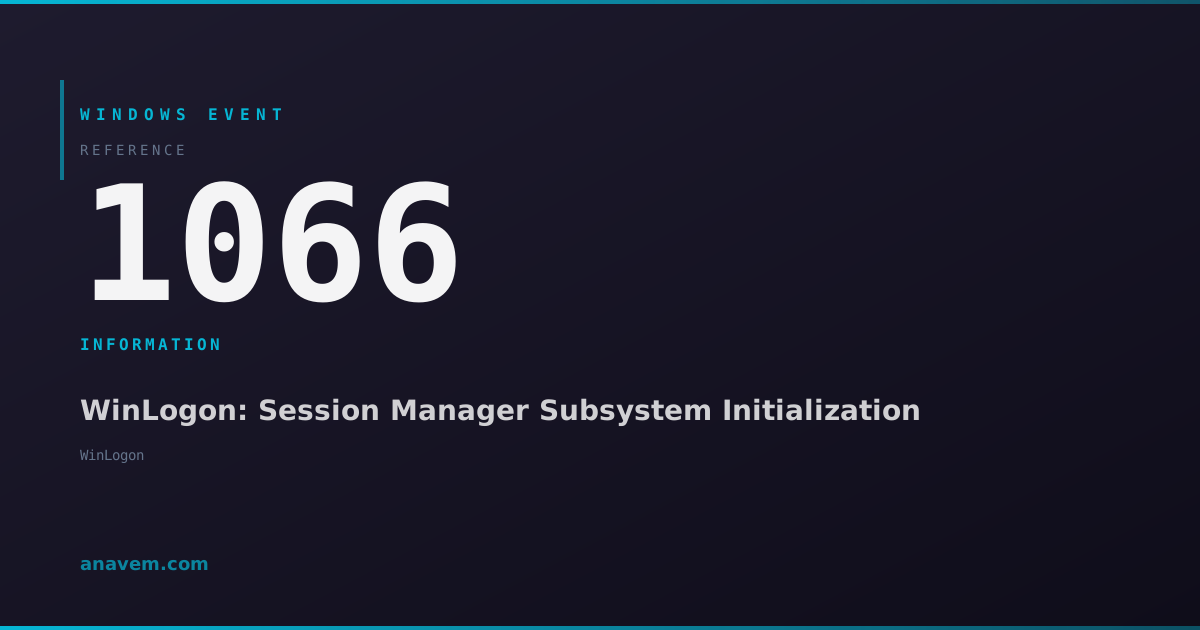
Windows Event ID 1066 – WinLogon: Session Manager Subsystem Initialization

Event ID 1066 indicates the Windows Session Manager subsystem has successfully initialized during system startup, marking a critical milestone in the boot process.

Emanuel DE ALMEIDAEmanuel DE ALMEIDA
18 March 20269 min read 0
Event ID 1066WinLogon 5 methods 9 min
Event Reference

What This Event Means

Event ID 1066 represents the successful completion of the Windows Session Manager (SMSS.exe) initialization process, a fundamental component of the Windows boot architecture. The Session Manager serves as the first user-mode process started by the Windows kernel during system initialization, making this event a critical indicator of boot health.

During the initialization phase that triggers Event ID 1066, the Session Manager performs several essential tasks: it creates the initial system processes including CSRSS.exe (Client/Server Runtime Subsystem), initializes the Windows registry by loading system hives, establishes the Windows subsystem environment, and prepares the foundation for subsequent logon processes. The successful completion of these operations results in the generation of Event ID 1066.

The timing of this event is crucial for performance analysis. In healthy Windows systems running on modern hardware, Event ID 1066 typically appears within 10-30 seconds of the initial boot event (Event ID 12). Delays in this event can indicate hardware issues, driver problems, or registry corruption affecting the Session Manager's ability to complete initialization.

From a troubleshooting perspective, the absence of Event ID 1066 or significant delays in its appearance often correlate with boot failures, system hangs during startup, or critical service initialization problems. System administrators use this event as a benchmark for measuring boot performance improvements after system optimizations or hardware upgrades.

Applies to

Windows 10Windows 11Windows Server 2019/2022/2025
Analysis

Possible Causes

  • Normal Windows system startup and Session Manager initialization completion
  • System recovery after unexpected shutdown or power loss
  • Boot following system updates, driver installations, or registry modifications
  • Restart after hardware changes or BIOS/UEFI configuration updates
  • Recovery from hibernation or sleep states in some configurations
  • System startup after maintenance operations or disk checks
Resolution Methods

Troubleshooting Steps

01

Verify Event Details in Event Viewer

Start by examining the complete Event ID 1066 details to understand the initialization context and timing.

  1. Open Event Viewer by pressing Win + R, typing eventvwr.msc, and pressing Enter
  2. Navigate to Windows LogsSystem
  3. Filter the log by clicking Filter Current Log in the Actions pane
  4. Enter 1066 in the Event IDs field and click OK
  5. Double-click the most recent Event ID 1066 entry to view detailed information
  6. Note the timestamp, computer name, and any additional data in the event description
  7. Compare the timestamp with other boot events like Event ID 12 (kernel boot) to assess initialization timing

Use PowerShell to retrieve recent Event ID 1066 occurrences:

Get-WinEvent -FilterHashtable @{LogName='System'; Id=1066} -MaxEvents 10 | Select-Object TimeCreated, Id, LevelDisplayName, Message
02

Analyze Boot Performance Using Event Correlation

Correlate Event ID 1066 with other boot events to assess overall system startup performance and identify potential bottlenecks.

  1. Use PowerShell to gather comprehensive boot event data:
# Get boot sequence events including Event ID 1066
$BootEvents = @(12, 1066, 6005, 6009)
Get-WinEvent -FilterHashtable @{LogName='System'; Id=$BootEvents; StartTime=(Get-Date).AddDays(-7)} | Sort-Object TimeCreated | Select-Object TimeCreated, Id, LevelDisplayName, Message
  1. Calculate the time difference between kernel boot (Event ID 12) and Session Manager initialization (Event ID 1066):
# Calculate Session Manager initialization time
$KernelBoot = Get-WinEvent -FilterHashtable @{LogName='System'; Id=12} -MaxEvents 1
$SessionMgr = Get-WinEvent -FilterHashtable @{LogName='System'; Id=1066} -MaxEvents 1
$InitTime = ($SessionMgr.TimeCreated - $KernelBoot.TimeCreated).TotalSeconds
Write-Host "Session Manager initialization took: $InitTime seconds"
  1. Review the calculated timing against baseline performance metrics
  2. Document any significant delays (typically over 60 seconds indicates issues)
03

Monitor Session Manager Process Health

Examine the Session Manager process (SMSS.exe) and related system processes to ensure proper initialization and ongoing health.

  1. Verify SMSS.exe process status using PowerShell:
# Check Session Manager process details
Get-Process -Name "smss" -ErrorAction SilentlyContinue | Select-Object Name, Id, StartTime, WorkingSet, PagedMemorySize
  1. Examine critical system processes created by Session Manager:
# Verify essential processes initialized by Session Manager
$CriticalProcesses = @("csrss", "wininit", "winlogon")
foreach ($proc in $CriticalProcesses) {
    Get-Process -Name $proc -ErrorAction SilentlyContinue | Select-Object Name, Id, StartTime
}
  1. Check Session Manager registry configuration:
# Examine Session Manager registry settings
Get-ItemProperty -Path "HKLM:\SYSTEM\CurrentControlSet\Control\Session Manager" | Select-Object BootExecute, PendingFileRenameOperations
  1. Review system event logs for any Session Manager related errors or warnings
  2. Use Task ManagerDetails tab to verify SMSS.exe is running with appropriate privileges
04

Investigate Boot Performance Issues

When Event ID 1066 appears delayed or is missing, perform comprehensive boot analysis to identify underlying causes.

  1. Enable boot logging to capture detailed startup information:
# Enable boot logging (requires restart)
bcdedit /set bootlog yes
  1. Use Windows Performance Analyzer (WPA) or built-in tools to analyze boot performance:
# Generate boot performance report
xperf -on PROC_THREAD+LOADER+PROFILE -stackwalk Profile -BufferSize 1024 -MaxFile 256 -FileMode Circular
  1. Check for pending file operations that might delay Session Manager:
# Check for pending file rename operations
$PendingOps = Get-ItemProperty -Path "HKLM:\SYSTEM\CurrentControlSet\Control\Session Manager" -Name "PendingFileRenameOperations" -ErrorAction SilentlyContinue
if ($PendingOps) {
    Write-Host "Pending file operations detected:"
    $PendingOps.PendingFileRenameOperations
}
  1. Examine system file integrity:
# Run system file checker
sfc /scannow
  1. Review hardware event logs for potential issues affecting boot performance
  2. Disable boot logging after analysis:
# Disable boot logging
bcdedit /set bootlog no
Warning: Boot performance analysis may require multiple restarts and can temporarily impact system performance during data collection.
05

Advanced Session Manager Troubleshooting

Perform advanced diagnostics when Event ID 1066 issues persist or indicate deeper system problems.

  1. Create a comprehensive boot event timeline:
# Create detailed boot analysis script
$StartTime = (Get-Date).AddHours(-2)
$BootEvents = Get-WinEvent -FilterHashtable @{LogName='System'; StartTime=$StartTime} | Where-Object {$_.Id -in @(12, 13, 1066, 6005, 6009, 6013)} | Sort-Object TimeCreated

foreach ($event in $BootEvents) {
    Write-Host "$($event.TimeCreated) - Event ID $($event.Id): $($event.LevelDisplayName)"
}
  1. Examine Session Manager memory dumps if available:
# Check for memory dump files
Get-ChildItem -Path "C:\Windows\Minidump\" -Filter "*.dmp" | Sort-Object LastWriteTime -Descending | Select-Object -First 5
  1. Analyze registry hive loading performance:
# Check registry hive sizes and modification times
$HiveFiles = @("SYSTEM", "SOFTWARE", "SECURITY", "SAM", "DEFAULT")
foreach ($hive in $HiveFiles) {
    $hivePath = "C:\Windows\System32\config\$hive"
    if (Test-Path $hivePath) {
        $hiveInfo = Get-Item $hivePath
        Write-Host "$hive hive: Size=$([math]::Round($hiveInfo.Length/1MB,2))MB, Modified=$($hiveInfo.LastWriteTime)"
    }
}
  1. Enable Session Manager debug logging (advanced):
# Enable Session Manager debugging (requires restart)
Set-ItemProperty -Path "HKLM:\SYSTEM\CurrentControlSet\Control\Session Manager\Debug" -Name "DebugFlags" -Value 0x00000001 -Type DWord -Force
  1. Review Windows Error Reporting for Session Manager crashes:
# Check for Session Manager related error reports
Get-WinEvent -FilterHashtable @{LogName='Application'; ProviderName='Windows Error Reporting'} -MaxEvents 50 | Where-Object {$_.Message -like "*smss*"}
Pro tip: Session Manager issues often correlate with registry corruption or hardware problems. Consider running memory diagnostics and disk checks if Event ID 1066 timing becomes consistently abnormal.

Overview

Event ID 1066 from the WinLogon source fires during the Windows boot sequence when the Session Manager subsystem (SMSS.exe) completes its initialization phase. This event represents a normal and expected part of the Windows startup process, occurring after the kernel loads but before user logon services become available.

The Session Manager is responsible for creating system processes, initializing the registry, starting the Windows subsystem, and preparing the environment for user sessions. When you see Event ID 1066 in your System log, it confirms that this critical boot phase completed successfully. The event typically appears within the first few seconds of system startup, alongside other boot-related events like Event ID 12 (kernel boot) and Event ID 6005 (Event Log service start).

This event is particularly valuable for boot performance analysis and troubleshooting startup issues. System administrators monitoring boot times or investigating slow startup problems often reference Event ID 1066 timestamps to measure Session Manager initialization duration. The event also serves as a checkpoint for automated monitoring systems tracking successful system starts in enterprise environments.

Frequently Asked Questions

What does Windows Event ID 1066 mean and is it normal?+
Event ID 1066 indicates that the Windows Session Manager subsystem (SMSS.exe) has successfully completed its initialization during system startup. This is completely normal and expected behavior - you should see this event every time Windows boots successfully. The Session Manager is responsible for creating essential system processes, initializing the registry, and preparing the environment for user logon. The presence of Event ID 1066 confirms that this critical boot phase completed without errors.
How long should it take for Event ID 1066 to appear after system boot?+
On modern hardware with SSDs, Event ID 1066 typically appears within 10-30 seconds after the kernel boot event (Event ID 12). Traditional hard drives may see this extend to 30-60 seconds. If Event ID 1066 consistently takes longer than 60 seconds to appear, or if there's a significant increase in timing compared to previous boots, this may indicate hardware issues, driver problems, registry corruption, or pending file operations delaying the Session Manager initialization process.
What should I do if Event ID 1066 is missing from my System log?+
If Event ID 1066 is missing, it suggests the Session Manager failed to complete initialization, which is a serious boot problem. First, check if the system actually completed booting successfully - missing Event ID 1066 often correlates with boot failures or hangs. Run System File Checker (sfc /scannow), check for hardware issues, examine the registry for corruption, and review other system events around boot time. You may need to boot from recovery media to repair the system if Session Manager initialization is consistently failing.
Can I use Event ID 1066 to measure boot performance improvements?+
Yes, Event ID 1066 is excellent for boot performance analysis. Measure the time difference between Event ID 12 (kernel boot) and Event ID 1066 (Session Manager initialization) to track Session Manager performance. You can use PowerShell to calculate these intervals and establish baselines. After system optimizations, hardware upgrades, or configuration changes, compare new Event ID 1066 timings against your baseline to quantify boot performance improvements. This metric is particularly valuable for enterprise environments monitoring system health.
Are there any registry settings that affect Event ID 1066 timing?+
Yes, several registry settings under HKLM\SYSTEM\CurrentControlSet\Control\Session Manager can impact Event ID 1066 timing. The 'PendingFileRenameOperations' value can delay Session Manager initialization if many file operations are queued. The 'BootExecute' value controls programs that run during Session Manager initialization. Large registry hives (SYSTEM, SOFTWARE, etc.) also affect loading times. Additionally, third-party software that integrates with the boot process through Session Manager registry keys can introduce delays. Always backup the registry before making changes to these critical system settings.
Documentation

References (2)

Emanuel DE ALMEIDA
Written by

Emanuel DE ALMEIDA

Senior IT Journalist & Cloud Architect

Microsoft MCSA-certified Cloud Architect | Fortinet-focused. I modernize cloud, hybrid & on-prem infrastructure for reliability, security, performance and cost control - sharing field-tested ops & troubleshooting.

Discussion

Share your thoughts and insights

You must be logged in to comment.

Loading comments...