ANAVEM
Languagefr
Windows Event Viewer showing system event logs on a monitoring dashboard
Event ID 302InformationUnknownWindows

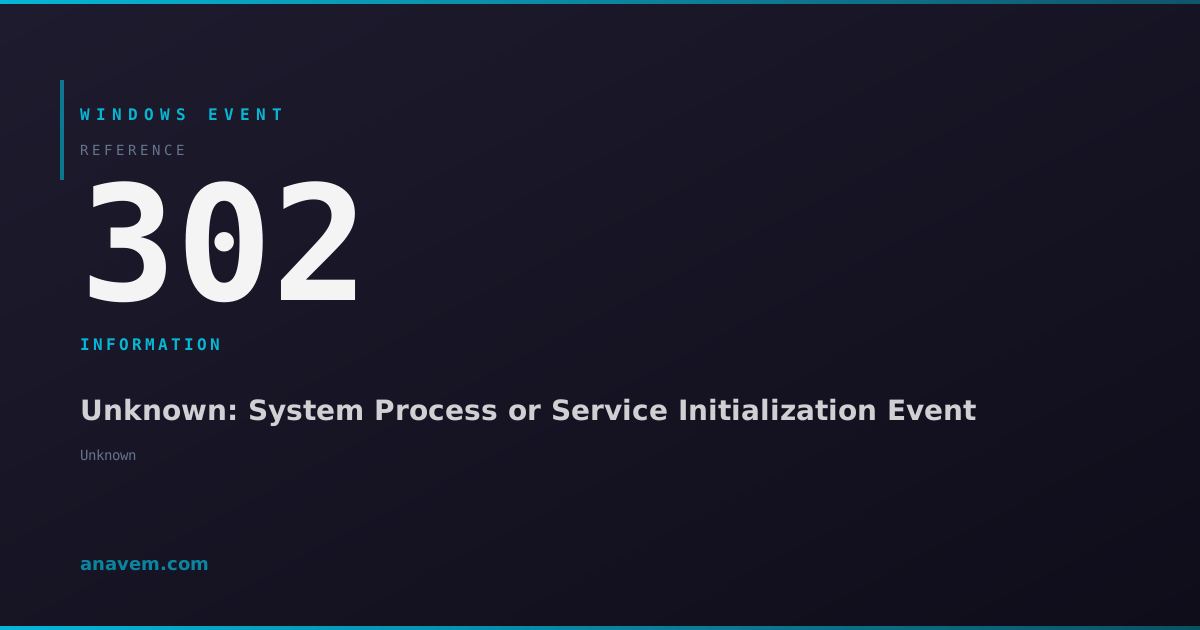
Windows Event ID 302 – Unknown: System Process or Service Initialization Event

Event ID 302 indicates a system process or service initialization event that occurs during Windows startup or service management operations, typically logged when core system components begin their initialization sequence.

Emanuel DE ALMEIDAEmanuel DE ALMEIDA
18 March 20269 min read 0
Event ID 302Unknown 5 methods 9 min
Event Reference

What This Event Means

Event ID 302 represents a fundamental Windows system event that occurs during critical initialization phases of the operating system. When Windows boots or when significant system services restart, various components must initialize in a specific sequence to ensure proper system operation. This event marks key milestones in that initialization process, serving as a breadcrumb trail for administrators tracking system startup behavior.

The 'Unknown' source designation typically occurs when the logging component hasn't yet established its proper identity with the Windows Event Log service. This situation is common during early boot phases when the Event Log service itself is still initializing, or when legacy system components that predate modern Windows logging standards attempt to write events. The event can also appear when third-party drivers or services integrate with Windows logging mechanisms during their initialization routines.

From a system administration perspective, Event ID 302 serves as an important diagnostic tool for understanding system behavior patterns. When systems experience slow boot times, service startup failures, or intermittent performance issues, analyzing the frequency and timing of these events can reveal underlying problems. The event often correlates with other system events that provide more specific information about which components are initializing, making it valuable for comprehensive system analysis.

In enterprise environments running Windows Server 2025 and modern Windows 11 deployments, this event helps administrators maintain visibility into system health across large server farms and workstation deployments, particularly when integrated with centralized logging solutions.

Applies to

Windows 10Windows 11Windows Server 2019/2022/2025
Analysis

Possible Causes

  • Normal Windows system startup and initialization processes
  • Service Control Manager initializing core system services
  • Legacy system components or drivers registering with Event Log service
  • Third-party software or drivers integrating with Windows logging infrastructure
  • System recovery operations after unexpected shutdowns or crashes
  • Windows Update installations requiring service restarts
  • Group Policy changes triggering service reconfigurations
  • Hardware driver initialization during system startup
  • Security subsystem initialization during boot process
  • Network service initialization in domain-joined environments
Resolution Methods

Troubleshooting Steps

01

Analyze Event Timing and Frequency

Start by examining when and how frequently Event ID 302 occurs to establish baseline behavior patterns.

  1. Open Event Viewer by pressing Win + R, typing eventvwr.msc, and pressing Enter
  2. Navigate to Windows LogsSystem
  3. Right-click in the log pane and select Filter Current Log
  4. In the Event IDs field, enter 302 and click OK
  5. Review the timestamps to identify patterns - normal systems show these events primarily during startup
  6. Use PowerShell for detailed analysis:
Get-WinEvent -FilterHashtable @{LogName='System'; Id=302} -MaxEvents 50 | 
Select-Object TimeCreated, Id, LevelDisplayName, Message | 
Format-Table -AutoSize

Look for clustering of events outside normal boot times, which may indicate service restart issues or system instability.

02

Correlate with System Boot Events

Cross-reference Event ID 302 with other boot-related events to understand the initialization sequence context.

  1. In Event Viewer, create a custom view by clicking Create Custom View in the Actions pane
  2. Set the time range to Last 24 hours
  3. In Event IDs, enter: 302, 6005, 6006, 6009, 6013
  4. Click OK and name the view "Boot Analysis"
  5. Examine the sequence of events around each Event ID 302 occurrence
  6. Use PowerShell to analyze boot correlation:
# Get boot events with Event ID 302 context
$bootEvents = @(302, 6005, 6006, 6009, 6013)
Get-WinEvent -FilterHashtable @{LogName='System'; Id=$bootEvents} -MaxEvents 100 | 
Sort-Object TimeCreated | 
Select-Object TimeCreated, Id, LevelDisplayName, Message

Normal patterns show Event ID 302 occurring shortly after Event ID 6005 (Event Log service start) and before Event ID 6013 (system uptime).

03

Investigate Service Dependencies

Examine service startup dependencies that might be related to Event ID 302 occurrences.

  1. Open Services console by running services.msc
  2. Look for services with startup type Automatic that may be slow to initialize
  3. Check service dependencies by right-clicking services and selecting PropertiesDependencies tab
  4. Use PowerShell to analyze service startup times:
# Check service startup performance
Get-WinEvent -FilterHashtable @{LogName='System'; Id=7036} -MaxEvents 50 | 
Where-Object {$_.TimeCreated -gt (Get-Date).AddHours(-2)} | 
Select-Object TimeCreated, Message | 
Sort-Object TimeCreated
  1. Cross-reference service start times with Event ID 302 timestamps
  2. Identify services that consistently start around the same time as Event ID 302
  3. Check the Registry for service configuration:
# Review service startup configuration
Get-ItemProperty -Path "HKLM:\SYSTEM\CurrentControlSet\Services\*" | 
Where-Object {$_.Start -eq 2} | 
Select-Object PSChildName, Start, Type

Focus on services that show delayed startup patterns correlating with Event ID 302 clusters.

04

Enable Advanced Logging for Root Cause Analysis

Configure enhanced logging to capture more detailed information about system initialization processes.

  1. Enable verbose service control logging by modifying the Registry:
# Enable detailed service logging (requires admin privileges)
Set-ItemProperty -Path "HKLM:\SYSTEM\CurrentControlSet\Control" -Name "ServiceControlManagerDebugLevel" -Value 1 -Type DWord
  1. Configure Event Log service for maximum detail:
# Increase Event Log buffer sizes
Set-ItemProperty -Path "HKLM:\SYSTEM\CurrentControlSet\Services\EventLog\System" -Name "MaxSize" -Value 0x6400000 -Type DWord
Set-ItemProperty -Path "HKLM:\SYSTEM\CurrentControlSet\Services\EventLog\System" -Name "Retention" -Value 0 -Type DWord
  1. Enable boot logging for comprehensive startup analysis:
# Enable boot logging
bcdedit /set bootlog yes
  1. Restart the system and monitor the enhanced logging output
  2. After reboot, analyze the boot log file:
# Analyze boot log (typically located at C:\Windows\ntbtlog.txt)
Get-Content C:\Windows\ntbtlog.txt | Select-String -Pattern "Loaded\|Did not load"
Warning: Enhanced logging increases system overhead and log file sizes. Disable verbose logging after troubleshooting by setting ServiceControlManagerDebugLevel to 0.
05

Performance Analysis and System Optimization

Conduct comprehensive performance analysis to optimize system initialization and reduce Event ID 302 frequency issues.

  1. Use Windows Performance Toolkit to analyze boot performance:
# Install Windows Performance Toolkit if not present
# Then capture boot trace
wpr -start GeneralProfile -start CPU
  1. Monitor system initialization with Performance Monitor:
# Create custom performance counter set
$counterSet = @(
    "\System\Processes",
    "\System\Threads", 
    "\Processor(_Total)\% Processor Time",
    "\Memory\Available MBytes"
)
Get-Counter -Counter $counterSet -SampleInterval 5 -MaxSamples 60
  1. Analyze startup programs that may contribute to initialization delays:
# Review startup programs
Get-CimInstance Win32_StartupCommand | 
Select-Object Name, Command, Location, User | 
Format-Table -AutoSize
  1. Check for driver issues that might cause initialization problems:
# Identify problematic drivers
Get-WinEvent -FilterHashtable @{LogName='System'; Level=2,3} -MaxEvents 50 | 
Where-Object {$_.TimeCreated -gt (Get-Date).AddDays(-1)} | 
Select-Object TimeCreated, Id, LevelDisplayName, Message
  1. Optimize system startup by disabling unnecessary services:
# Identify services safe to disable (review carefully)
Get-Service | Where-Object {$_.StartType -eq "Automatic" -and $_.Status -eq "Stopped"} | 
Select-Object Name, Status, StartType
Pro tip: Use Windows 11's Fast Startup feature and ensure SSD optimization is enabled for systems experiencing frequent Event ID 302 clusters during boot.

Overview

Event ID 302 fires during Windows system initialization phases, particularly when core system processes or services begin their startup sequence. This event commonly appears in the System log during boot processes, service restarts, or when Windows components initialize after system changes. The event source being listed as 'Unknown' typically indicates that the logging component hasn't properly identified itself to the Event Log service, which can occur during early boot phases or when legacy components interact with modern Windows logging infrastructure.

This event is generally informational and indicates normal system operation, though its appearance can sometimes signal timing issues during startup or service dependency problems. System administrators often encounter this event when investigating boot performance, service startup sequences, or when troubleshooting systems that experience delayed startup times. The event becomes significant when it appears in clusters or when accompanied by warning or error events that suggest initialization problems.

Understanding Event ID 302 helps administrators track system initialization patterns and identify potential bottlenecks in the Windows startup process, making it valuable for performance optimization and system health monitoring.

Frequently Asked Questions

What does Event ID 302 with Unknown source mean in Windows?+
Event ID 302 with an Unknown source indicates that a system process or service is initializing during Windows startup, but the component hasn't properly identified itself to the Event Log service. This commonly occurs during early boot phases when the Event Log service is still initializing, or when legacy components interact with modern Windows logging infrastructure. The event is typically informational and represents normal system operation, though clustering of these events may indicate timing issues during system initialization.
Is Event ID 302 dangerous or does it indicate a system problem?+
Event ID 302 is generally not dangerous and represents normal system initialization processes. However, excessive frequency of these events, particularly outside of normal boot times, can indicate underlying issues such as service restart problems, driver conflicts, or system instability. The event becomes concerning when it appears in large clusters, is accompanied by error events, or occurs repeatedly during normal system operation rather than just during startup sequences.
How can I reduce the frequency of Event ID 302 events?+
To reduce Event ID 302 frequency, focus on optimizing system startup performance: disable unnecessary startup programs using Task Manager's Startup tab, ensure Windows and drivers are updated to the latest versions, run disk cleanup and defragmentation on traditional hard drives, enable Fast Startup in Power Options, and review services for any that can be safely set to Manual startup. Additionally, check for hardware issues like failing hard drives or insufficient RAM that might cause initialization delays.
Should I be concerned about Event ID 302 appearing during normal operation?+
Event ID 302 appearing during normal operation (not during startup or restart) warrants investigation. This pattern suggests that services are restarting unexpectedly, which could indicate application crashes, driver issues, or system instability. Monitor the timing of these events and correlate them with other system events, user activities, or scheduled tasks. Check for recent software installations, Windows updates, or hardware changes that might be causing services to restart during normal operation.
How do I troubleshoot Event ID 302 in a Windows Server environment?+
In Windows Server environments, troubleshoot Event ID 302 by first establishing baseline behavior across multiple servers to identify if the issue is isolated or widespread. Use centralized logging solutions to correlate events across the server farm, check for Group Policy changes that might affect service startup behavior, and monitor server roles and features that might be initializing. Pay special attention to domain controllers, where Event ID 302 might relate to Active Directory service initialization, and ensure proper service dependencies are configured for custom applications and server roles.
Documentation

References (2)

Emanuel DE ALMEIDA
Written by

Emanuel DE ALMEIDA

Senior IT Journalist & Cloud Architect

Microsoft MCSA-certified Cloud Architect | Fortinet-focused. I modernize cloud, hybrid & on-prem infrastructure for reliability, security, performance and cost control - sharing field-tested ops & troubleshooting.

Discussion

Share your thoughts and insights

You must be logged in to comment.

Loading comments...