ANAVEM
Languagefr
Windows Event Viewer displaying Event ID 6005 system startup logs on a professional monitoring dashboard
Event ID 6005InformationEventLogWindows

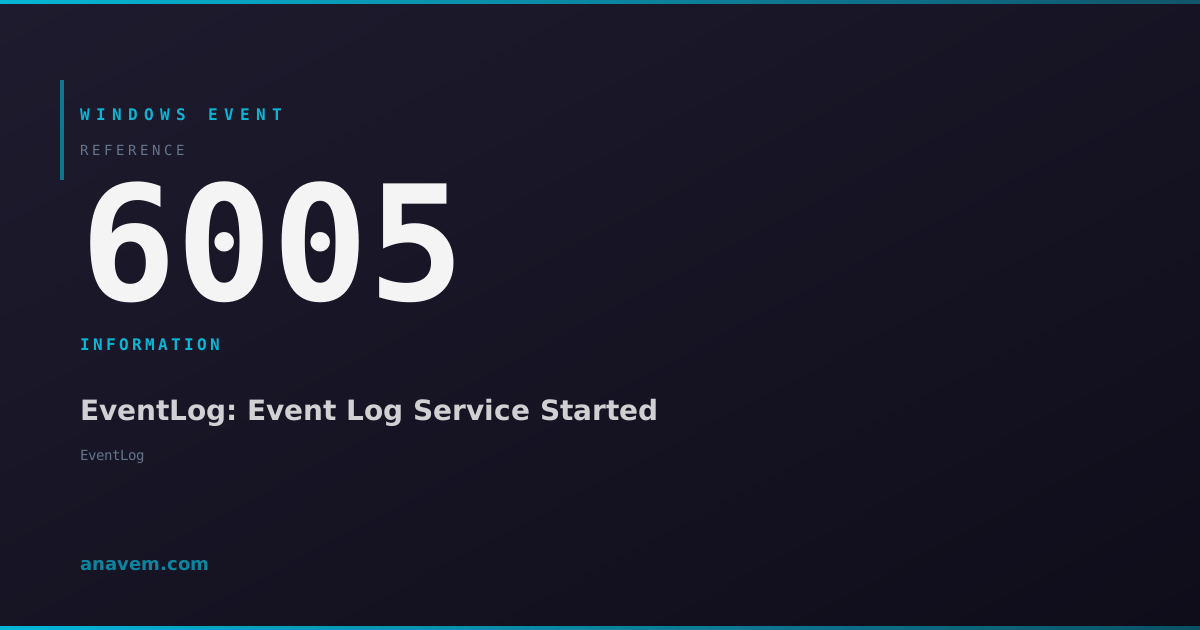
Windows Event ID 6005 – EventLog: Event Log Service Started

Event ID 6005 indicates the Windows Event Log service has successfully started. This informational event appears in the System log during system boot and service restarts.

Emanuel DE ALMEIDAEmanuel DE ALMEIDA
18 March 20269 min read 0
Event ID 6005EventLog 5 methods 9 min
Event Reference

What This Event Means

Event ID 6005 represents a fundamental Windows system event that signals the successful initialization of the Event Log service. This service, running as Eventlog, is responsible for managing all Windows event logging functionality across the operating system. When this event appears, it confirms that Windows has successfully loaded the event logging infrastructure and is ready to receive, process, and store events from various system components, applications, and services.

The Event Log service is one of the core Windows services that must start early in the boot process. It manages multiple event logs including System, Application, Security, and various application-specific logs. The service handles event buffering, log rotation, security permissions for log access, and integration with Windows Management Instrumentation (WMI) for remote log access.

From a technical perspective, Event ID 6005 indicates that the service has successfully initialized its internal data structures, opened existing log files, verified log file integrity, and established communication channels with other system components. The event appears in the System log because it represents a system-level service operation rather than an application-specific activity.

In Windows Server environments and domain controllers, this event is particularly significant because event logging is essential for security auditing, Group Policy processing logs, and Active Directory diagnostic events. The absence of Event ID 6005 during expected startup times could indicate serious system issues preventing proper service initialization.

Applies to

Windows 10Windows 11Windows Server 2019/2022/2025
Analysis

Possible Causes

  • Normal system startup and boot process completion
  • Manual restart of the Windows Event Log service through Services console
  • System recovery after unexpected shutdown or power loss
  • Service restart triggered by Windows Update installations
  • Administrative restart via PowerShell or command line tools
  • System resume from hibernation or sleep states
  • Service recovery actions after temporary service failures
  • Group Policy refresh operations that restart dependent services
Resolution Methods

Troubleshooting Steps

01

Verify Event Log Service Status

Check the current status and configuration of the Event Log service to ensure it's running properly.

  1. Open Services console by pressing Win + R, typing services.msc, and pressing Enter
  2. Locate Windows Event Log service in the list
  3. Verify the service status shows Running and startup type is Automatic
  4. Right-click the service and select Properties to check recovery settings
  5. Use PowerShell to get detailed service information:
Get-Service -Name "EventLog" | Format-List *
Get-WmiObject -Class Win32_Service -Filter "Name='EventLog'" | Select-Object Name, State, StartMode, ProcessId

Check recent Event ID 6005 occurrences to identify restart patterns:

Get-WinEvent -FilterHashtable @{LogName='System'; Id=6005} -MaxEvents 20 | Format-Table TimeCreated, Id, LevelDisplayName, Message -AutoSize
02

Analyze System Boot and Service Dependencies

Examine system startup events and service dependencies to understand Event ID 6005 context within the boot sequence.

  1. Open Event ViewerWindows LogsSystem
  2. Filter events around the time of Event ID 6005 to see related startup events
  3. Look for Event ID 6009 (system startup) and Event ID 6013 (system uptime) in the same timeframe
  4. Check service dependencies using PowerShell:
# Check services that depend on Event Log
Get-Service | Where-Object {$_.ServicesDependedOn -contains (Get-Service EventLog)} | Select-Object Name, Status

# Check what Event Log depends on
(Get-Service EventLog).ServicesDependedOn | Select-Object Name, Status
  1. Review system boot performance using built-in tools:
# Get last boot time
(Get-CimInstance -ClassName Win32_OperatingSystem).LastBootUpTime

# Check boot duration
Get-WinEvent -FilterHashtable @{LogName='System'; Id=100} -MaxEvents 5
03

Monitor Event Log Service Performance and Health

Implement monitoring to track Event Log service health and identify potential issues affecting logging reliability.

  1. Create a PowerShell script to monitor Event ID 6005 frequency:
# Monitor Event Log service restarts over the last 30 days
$StartDate = (Get-Date).AddDays(-30)
$Events = Get-WinEvent -FilterHashtable @{LogName='System'; Id=6005; StartTime=$StartDate}

Write-Host "Event Log Service Starts in Last 30 Days: $($Events.Count)"
$Events | Group-Object {$_.TimeCreated.Date} | Sort-Object Name | Format-Table Name, Count -AutoSize
  1. Check Event Log service memory usage and performance:
# Get Event Log service process information
$EventLogProcess = Get-Process | Where-Object {$_.ProcessName -eq "svchost" -and $_.Modules.ModuleName -contains "wevtsvc.dll"}
$EventLogProcess | Select-Object Id, ProcessName, WorkingSet, PagedMemorySize
  1. Verify event log file integrity and sizes:
# Check system event log properties
Get-WinEvent -ListLog System | Select-Object LogName, FileSize, MaximumSizeInBytes, RecordCount, IsEnabled
  1. Set up automated monitoring using Windows Task Scheduler to alert on unexpected service restarts
04

Investigate Unexpected Service Restarts

When Event ID 6005 appears unexpectedly, investigate potential causes and system issues that might trigger service restarts.

  1. Check for corresponding Event ID 6006 (Event Log service stopped) events:
# Find Event Log stop/start pairs
$StopEvents = Get-WinEvent -FilterHashtable @{LogName='System'; Id=6006} -MaxEvents 10
$StartEvents = Get-WinEvent -FilterHashtable @{LogName='System'; Id=6005} -MaxEvents 10

Write-Host "Recent Event Log Service Stops:"
$StopEvents | Format-Table TimeCreated, Message -AutoSize
Write-Host "Recent Event Log Service Starts:"
$StartEvents | Format-Table TimeCreated, Message -AutoSize
  1. Examine system event logs for errors preceding Event ID 6005:
# Look for system errors in the hour before each Event ID 6005
foreach ($StartEvent in $StartEvents) {
    $SearchStart = $StartEvent.TimeCreated.AddHours(-1)
    $SearchEnd = $StartEvent.TimeCreated
    $Errors = Get-WinEvent -FilterHashtable @{LogName='System'; Level=2; StartTime=$SearchStart; EndTime=$SearchEnd} -ErrorAction SilentlyContinue
    if ($Errors) {
        Write-Host "Errors before Event Log restart at $($StartEvent.TimeCreated):"
        $Errors | Format-Table TimeCreated, Id, LevelDisplayName, Message -AutoSize
    }
}
  1. Check Windows Update and maintenance activities:
# Check recent Windows Updates
Get-HotFix | Sort-Object InstalledOn -Descending | Select-Object -First 10

# Check Windows Update log for service restarts
Get-WinEvent -FilterHashtable @{LogName='Setup'; StartTime=(Get-Date).AddDays(-7)} -ErrorAction SilentlyContinue | Where-Object {$_.Message -like "*restart*"}
  1. Review system reliability history in Control PanelSystem and SecuritySecurity and MaintenanceReliability Monitor
05

Configure Advanced Event Log Monitoring and Alerting

Implement comprehensive monitoring for Event ID 6005 and related events to maintain system visibility and proactive issue detection.

  1. Create a custom Windows Event Forwarding subscription for centralized monitoring:
<Subscription xmlns="http://schemas.microsoft.com/2006/03/windows/events/subscription">
  <SubscriptionId>EventLogServiceMonitoring</SubscriptionId>
  <SubscriptionType>SourceInitiated</SubscriptionType>
  <Query>
    <![CDATA[
    <QueryList>
      <Query Id="0">
        <Select Path="System">*[System[(EventID=6005 or EventID=6006)]]</Select>
      </Query>
    </QueryList>
    ]]>
  </Query>
</Subscription>
  1. Configure registry settings for enhanced event logging:
# Enable detailed service control manager logging
Set-ItemProperty -Path "HKLM:\SYSTEM\CurrentControlSet\Control\ServiceControlManagerDebug" -Name "EnableLogging" -Value 1 -Type DWord -Force

# Increase System log size for better retention
Limit-EventLog -LogName System -MaximumSize 100MB
  1. Create a PowerShell scheduled task for automated monitoring:
# Create monitoring script
$ScriptBlock = {
    $RecentStarts = Get-WinEvent -FilterHashtable @{LogName='System'; Id=6005; StartTime=(Get-Date).AddHours(-1)} -ErrorAction SilentlyContinue
    if ($RecentStarts.Count -gt 1) {
        Write-EventLog -LogName Application -Source "Custom Monitor" -EventId 1001 -EntryType Warning -Message "Multiple Event Log service starts detected: $($RecentStarts.Count)"
    }
}

# Register scheduled task
$Action = New-ScheduledTaskAction -Execute "PowerShell.exe" -Argument "-WindowStyle Hidden -Command $ScriptBlock"
$Trigger = New-ScheduledTaskTrigger -Once -At (Get-Date) -RepetitionInterval (New-TimeSpan -Hours 1)
Register-ScheduledTask -TaskName "EventLogServiceMonitor" -Action $Action -Trigger $Trigger -User "SYSTEM"
  1. Implement WMI event monitoring for real-time service status changes:
# Register WMI event for Event Log service changes
Register-WmiEvent -Query "SELECT * FROM Win32_ServiceChangeEvent WHERE ServiceName='EventLog'" -Action {
    $Event = $Event.SourceEventArgs.NewEvent
    Write-Host "Event Log service state changed at $(Get-Date): $($Event.ServiceName)"
}

Overview

Event ID 6005 from the EventLog source fires whenever the Windows Event Log service (Eventlog) successfully starts. This is a standard informational event that appears in the System log during normal system operations, particularly during boot sequences and when the Event Log service is manually restarted. The event confirms that Windows can properly initialize its logging subsystem, which is critical for system monitoring, troubleshooting, and compliance requirements.

This event typically appears alongside other service startup events during system initialization. While generally benign, monitoring Event ID 6005 patterns can help administrators track system restart frequency, identify unexpected service restarts, and verify that logging capabilities are functioning correctly after maintenance operations. The event contains minimal additional data beyond the timestamp and basic service information, making it primarily useful for operational tracking rather than detailed diagnostics.

In enterprise environments, Event ID 6005 serves as a reliable indicator that event logging is operational, which is essential for security monitoring, audit compliance, and automated log collection systems that depend on consistent event generation.

Frequently Asked Questions

What does Event ID 6005 mean and is it normal to see this event?+
Event ID 6005 indicates that the Windows Event Log service has successfully started. This is completely normal and expected during system boot, after service restarts, or following system maintenance. The event appears in the System log as an informational message confirming that Windows event logging capabilities are operational. You should see this event every time your system starts up, and its presence indicates healthy event logging functionality.
How often should I expect to see Event ID 6005 in my system logs?+
Under normal circumstances, you should see Event ID 6005 primarily during system startups, which means once per boot cycle for most systems. However, you might see additional occurrences after Windows Updates that restart services, manual service restarts, or system recovery operations. If you're seeing Event ID 6005 multiple times per day without corresponding system restarts, this could indicate service instability that warrants investigation.
Can Event ID 6005 help me troubleshoot system boot issues?+
Yes, Event ID 6005 serves as a valuable marker in boot sequence analysis. Since the Event Log service starts relatively early in the boot process, the presence and timing of this event can help you understand boot performance and identify delays. If Event ID 6005 appears significantly later than expected after other boot events, it might indicate resource contention or dependency issues. Conversely, if this event is missing entirely, it suggests serious system problems preventing core services from starting.
What should I do if Event ID 6005 appears frequently without system restarts?+
Frequent Event ID 6005 events without corresponding system restarts indicate the Event Log service is restarting unexpectedly. First, check for corresponding Event ID 6006 (service stopped) events to identify when and why the service is stopping. Look for system errors, memory issues, or application conflicts in the time periods before each restart. Check Windows Update history, examine system reliability reports, and monitor system resources. Consider reviewing service recovery settings and dependencies to ensure proper service stability.
How can I use Event ID 6005 for system monitoring and compliance reporting?+
Event ID 6005 provides excellent data for system uptime tracking and compliance reporting. You can query these events to determine system restart frequency, create automated reports showing system availability, and establish baselines for normal restart patterns. Use PowerShell to extract Event ID 6005 timestamps and calculate system uptime periods. For compliance environments requiring audit trails, this event confirms that event logging was operational during specific time periods, which is crucial for demonstrating continuous monitoring capabilities and log integrity.
Documentation

References (2)

Emanuel DE ALMEIDA
Written by

Emanuel DE ALMEIDA

Senior IT Journalist & Cloud Architect

Microsoft MCSA-certified Cloud Architect | Fortinet-focused. I modernize cloud, hybrid & on-prem infrastructure for reliability, security, performance and cost control - sharing field-tested ops & troubleshooting.

Discussion

Share your thoughts and insights

You must be logged in to comment.

Loading comments...