What Is Agentic AI and How It Differs from Traditional AI
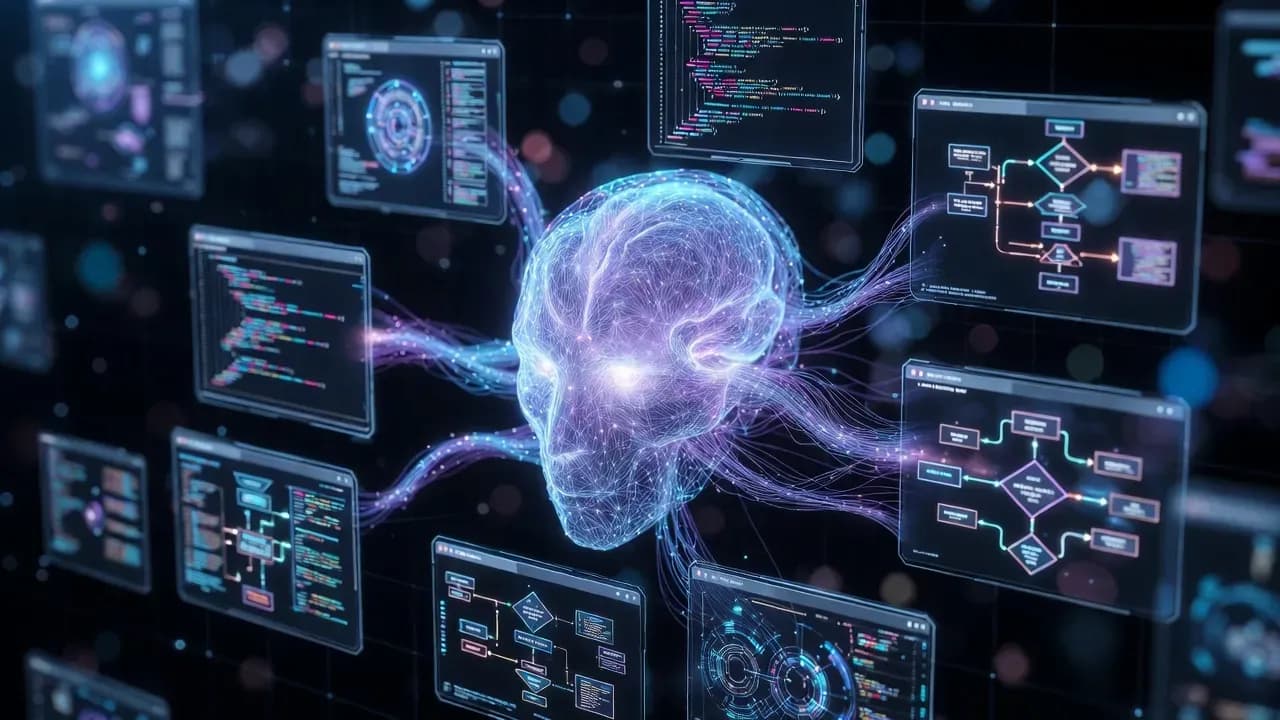
Agentic AI represents a fundamental shift from reactive chatbots to autonomous systems that plan, execute, and adapt without constant human input. Here's what IT professionals need to understand about this transformative technology.

productivity gains reported by organizations deploying AI agents for software development tasks like code generation, testing, and debugging
The AI landscape is undergoing a fundamental shift. We are moving from AI as a question-answering tool to AI as an autonomous actor. Traditional Large Language Models respond to individual prompts. Agentic AI systems pursue goals across multiple steps, using tools, making decisions, and adapting to results.
This is not incremental progress. Agentic AI represents a new paradigm where AI systems:
- Plan sequences of actions to achieve goals
- Execute those actions using tools and APIs
- Observe results and adapt strategies
- Persist context across long-running tasks
- Collaborate with humans and other agents
| Traditional LLM | Agentic AI |
|---|---|
| Single prompt → single response | Goal → multi-step execution |
| Stateless interaction | Maintains context and memory |
| Human orchestrates steps | Agent orchestrates steps |
| Limited to text generation | Uses tools, writes code, browses web |
| Human interprets output | Agent evaluates and iterates |
What Makes AI "Agentic"
The term "agent" has specific meaning in AI systems. Understanding the components clarifies what makes systems truly agentic.
Core Agent Components
| Component | Function | Example |
|---|---|---|
| Goal | What the agent is trying to achieve | "Deploy this feature to production" |
| Planning | Breaking goals into executable steps | Identify changes → test → review → deploy |
| Memory | Retaining context across interactions | Conversation history, task state |
| Tools | External capabilities the agent can invoke | Code execution, web search, APIs |
| Reasoning | Deciding what action to take next | Which tool to use, how to handle errors |
Agent Architecture Patterns
Multiple architectural approaches exist for building agentic systems, each with different trade-offs.
ReAct: Reasoning + Acting
The foundational pattern combining reasoning traces with actions.
Thought: I need to find the current stock price of AAPL
Action: web_search("AAPL stock price today")
Observation: AAPL is trading at $185.50
Thought: Now I need to calculate the portfolio value
Action: calculate(1000 * 185.50)
Observation: 185500
Answer: Your portfolio value is $185,500
Plan-and-Execute
Separate planning from execution for complex tasks.
| Phase | Function |
|---|---|
| Planning | Generate complete task decomposition |
| Execution | Execute each step, handle failures |
| Replanning | Adjust plan based on results |
Multi-Agent Systems
Multiple specialized agents collaborating on tasks.
| Pattern | Description | Use Case |
|---|---|---|
| Supervisor | One agent coordinates others | Complex workflows |
| Peer-to-peer | Agents communicate as equals | Debate, review |
| Hierarchical | Nested teams of agents | Large-scale tasks |
Tool-Augmented Generation
LLMs enhanced with tool-calling capabilities.
| Tool Type | Examples |
|---|---|
| Information retrieval | Web search, RAG, databases |
| Computation | Calculator, code interpreter |
| External APIs | Weather, stocks, calendars |
| System actions | File operations, deployments |
Tool Use: Extending Agent Capabilities
Tools transform LLMs from text generators into capable actors. Understanding tool design is essential for effective agents.
Tool Definition
Tools require structured definitions the agent can understand:
{
  "name": "search_database",
  "description": "Search the customer database by name or email",
  "parameters": {
    "query": {"type": "string", "description": "Search term"},
    "field": {"type": "string", "enum": ["name", "email", "id"]}
  }
}
Common Tool Categories
| Category | Tools | Purpose |
|---|---|---|
| Search | Web search, RAG, database queries | Information retrieval |
| Compute | Code interpreter, calculator | Calculations, data processing |
| Communication | Email, Slack, notifications | Human interaction |
| System | File I/O, shell commands | System operations |
| APIs | Any external service | Specialized functionality |
Tool Calling Mechanisms
| Approach | Description | Example Models |
|---|---|---|
| Native function calling | Model outputs structured tool calls | GPT-4, Claude, Gemini |
| Prompt-based | Parse tool calls from text output | Any LLM with parsing |
| Fine-tuned | Model trained specifically for tools | Open-source tool models |
Tool Safety Considerations
| Risk | Mitigation |
|---|---|
| Destructive actions | Require confirmation, dry-run mode |
| Data exfiltration | Restrict network access |
| Resource exhaustion | Implement timeouts, quotas |
| Prompt injection | Validate tool inputs, sanitize outputs |
Memory: Maintaining Context Over Time
Memory distinguishes agents from simple chatbots. Effective memory enables learning, adaptation, and long-running tasks.
Memory Types
| Type | Duration | Purpose |
|---|---|---|
| Working memory | Current task | Active context, recent actions |
| Short-term memory | Session | Conversation history, task state |
| Long-term memory | Persistent | User preferences, learned patterns |
| Episodic memory | Retrievable | Past experiences, similar situations |
Implementation Approaches
| Approach | Strengths | Limitations |
|---|---|---|
| Context window | Simple, immediate | Limited size, no persistence |
| Vector store | Scalable, semantic search | Setup complexity |
| Database | Structured, queryable | Integration effort |
| Knowledge graph | Relationships, reasoning | Complex to build |
Memory Management Challenges
| Challenge | Solution |
|---|---|
| Context window limits | Summarization, selective inclusion |
| Relevance degradation | Embedding-based retrieval |
| Stale information | Timestamp-based expiry |
| Privacy concerns | Selective forgetting, anonymization |
Practical Memory Patterns
User: Schedule a meeting with John next Tuesday at 2pm

Agent Memory Updates:
- Short-term: Current task is scheduling
- Working: Need John's availability, calendar access
- Long-term: User prefers afternoon meetings (pattern)
Planning and Reasoning
Effective agents don't just react - they plan. Planning capabilities determine what complexity of tasks agents can handle.
Planning Approaches
| Approach | Description | Best For |
|---|---|---|
| Single-shot | Generate complete plan upfront | Well-defined tasks |
| Iterative | Plan step-by-step, adapt | Uncertain environments |
| Hierarchical | High-level goals → sub-goals → actions | Complex tasks |
| Tree of Thoughts | Explore multiple reasoning paths | Problems with alternatives |
Reasoning Patterns
| Pattern | Description | Use Case |
|---|---|---|
| Chain of Thought | Step-by-step reasoning | Complex problems |
| Self-reflection | Evaluate own outputs | Quality improvement |
| Debate | Multiple agents argue positions | Controversial decisions |
| Verification | Separate generation and checking | High-stakes outputs |
Handling Uncertainty
Agents face uncertainty constantly. Robust agents handle it gracefully.
| Uncertainty Type | Strategy |
|---|---|
| Missing information | Ask clarifying questions |
| Multiple valid options | Present options with trade-offs |
| Conflicting requirements | Surface conflicts, seek resolution |
| Tool failures | Retry, fallback, escalate |
Planning Quality Metrics
| Metric | What It Measures |
|---|---|
| Task completion rate | Does the agent achieve goals? |
| Step efficiency | Minimum steps to completion? |
| Error recovery | How well are failures handled? |
| Human escalation rate | When does the agent ask for help? |
Agent Frameworks and Platforms
Building agents from scratch is unnecessary. Frameworks accelerate development.
Major Frameworks (2025)
| Framework | Strengths | Considerations |
|---|---|---|
| LangChain/LangGraph | Comprehensive, large ecosystem | Complexity, abstraction overhead |
| AutoGPT/AgentGPT | Goal-oriented autonomy | Reliability challenges |
| CrewAI | Multi-agent orchestration | Newer, evolving |
| Microsoft Semantic Kernel | Enterprise integration | Microsoft ecosystem focus |
| Anthropic Tool Use | Native Claude integration | Claude-specific |
| OpenAI Assistants | Managed infrastructure | OpenAI-specific |
Build vs Buy
| Approach | When to Choose |
|---|---|
| Framework | Standard use cases, faster development |
| Custom | Unique requirements, maximum control |
| Managed | Production reliability, less maintenance |
Key Framework Components
| Component | Purpose |
|---|---|
| Agent loop | Orchestrate reasoning and action |
| Tool integration | Connect external capabilities |
| Memory management | Maintain context |
| Prompt templates | Structure agent communication |
| Evaluation | Measure agent performance |
Production Considerations
| Consideration | Questions to Ask |
|---|---|
| Scalability | Can it handle production load? |
| Observability | Can you debug agent behavior? |
| Security | How are tools sandboxed? |
| Cost | Token usage, API costs? |
Agentic AI Use Cases
Agents excel in specific scenarios. Understanding ideal use cases helps set appropriate expectations.
High-Value Agent Applications
of software development tasks could be automated with agentic AI according to McKinsey, making it one of the highest-impact application areas
| Use Case | Why Agents Excel |
|---|---|
| Code generation and debugging | Multi-step: understand, code, test, iterate |
| Research synthesis | Search, read, compare, summarize |
| Data analysis | Query, compute, visualize, interpret |
| Customer support | Understand, research, respond, escalate |
| Process automation | Multi-system orchestration |
| Content creation | Research, draft, revise, format |
Software Development Agents
| Task | Agent Capability |
|---|---|
| Feature implementation | Understand spec → write code → test → iterate |
| Bug fixing | Reproduce → diagnose → fix → verify |
| Code review | Analyze → identify issues → suggest fixes |
| Documentation | Read code → generate docs → update |
| Refactoring | Identify patterns → transform → verify |
Research and Analysis Agents
| Task | Agent Workflow |
|---|---|
| Literature review | Search → filter → read → synthesize |
| Competitive analysis | Gather data → compare → summarize |
| Report generation | Collect → analyze → write → format |
Customer-Facing Agents
| Task | Requirements |
|---|---|
| Support triage | Classify, route, escalate |
| FAQ automation | Retrieve, respond, learn |
| Appointment scheduling | Understand, check availability, book |
Challenges and Limitations
Agentic AI faces significant challenges that limit current capabilities.
Reliability Challenges
| Challenge | Impact |
|---|---|
| Reasoning errors | Wrong conclusions, bad decisions |
| Tool selection mistakes | Using wrong tool, missing better option |
| Hallucination | Fabricated information, fake tool calls |
| Infinite loops | Agent gets stuck, wastes resources |
| Context loss | Forgetting earlier information |
Cost Considerations
| Factor | Impact |
|---|---|
| Token usage | Complex tasks require many LLM calls |
| Iteration | Failed attempts still incur costs |
| Tool calls | External APIs have their own costs |
| Compute | Code execution requires infrastructure |
Security Concerns
| Risk | Description |
|---|---|
| Prompt injection | Malicious inputs hijack agent behavior |
| Tool misuse | Agent causes unintended damage |
| Data leakage | Sensitive information exposed |
| Unauthorized actions | Agent exceeds intended permissions |
Evaluation Difficulties
| Challenge | Why It's Hard |
|---|---|
| Non-determinism | Same input → different outputs |
| Complex success criteria | What does "good" mean? |
| Long-running tasks | Hard to test at scale |
| Edge cases | Infinite possible scenarios |
Safety and Alignment
As agents gain autonomy, safety becomes paramount. Poorly designed agents can cause significant harm.
Guardrails and Constraints
| Layer | Implementation |
|---|---|
| Input validation | Filter malicious prompts |
| Output filtering | Block harmful content |
| Action approval | Human confirmation for risky actions |
| Resource limits | Budgets for time, tokens, API calls |
| Monitoring | Real-time behavior tracking |
| Kill switch | Immediate termination capability |
Human-in-the-Loop Patterns
| Pattern | When to Use |
|---|---|
| Approval required | Destructive or irreversible actions |
| Notification | Important but safe actions |
| Override available | Any time during execution |
| Periodic review | Long-running autonomous tasks |
Alignment Considerations
| Concern | Mitigation |
|---|---|
| Goal misinterpretation | Clear, specific goals with examples |
| Instrumental convergence | Limit resource acquisition capabilities |
| Reward hacking | Multiple evaluation criteria |
| Deception | Transparency requirements, auditing |
Responsible Deployment
Building Your First Agent
Practical guidance for implementing agentic systems.
Start Simple
Basic Agent Implementation
def agent_loop(goal, max_steps=10):
    context = {"goal": goal, "history": []}

    for step in range(max_steps):
        # Decide next action
        action = llm_decide(context)

        if action.type == "complete":
            return action.result

        # Execute action
        result = execute_tool(action.tool, action.args)

        # Update context
        context["history"].append({
            "action": action,
            "result": result
        })

    return "Max steps reached"
Tool Design Principles
| Principle | Implementation |
|---|---|
| Single responsibility | One tool does one thing well |
| Clear naming | Tool name describes function |
| Detailed description | Include when and how to use |
| Structured inputs | Schema with types and descriptions |
| Informative outputs | Include success/failure, relevant data |
| Error handling | Return useful error messages |
Testing Agents
| Test Type | Purpose |
|---|---|
| Unit tests | Individual tool functionality |
| Integration tests | Tool + LLM interaction |
| Scenario tests | Full task completion |
| Adversarial tests | Malicious inputs, edge cases |
| Regression tests | Maintain quality over changes |
Production Deployment
Moving agents from development to production introduces significant challenges.
Observability
| What to Log | Why |
|---|---|
| Every LLM call | Debugging, cost tracking |
| Tool invocations | Audit trail, debugging |
| Decision reasoning | Understanding agent behavior |
| Errors and retries | Identifying failure patterns |
| Latency metrics | Performance optimization |
| Token usage | Cost management |
Scalability Patterns
| Challenge | Solution |
|---|---|
| Concurrent users | Stateless agent design, external state store |
| Long-running tasks | Background workers, progress tracking |
| Rate limits | Queue management, backoff strategies |
| Cost at scale | Caching, model selection, budget controls |
Error Handling
| Error Type | Strategy |
|---|---|
| LLM errors | Retry with backoff, fallback models |
| Tool failures | Retry, alternative tools, graceful degradation |
| Timeout | Checkpointing, resumption |
| Budget exhaustion | Graceful termination, notification |
Versioning and Updates
| Component | Versioning Strategy |
|---|---|
| Prompts | Version control, A/B testing |
| Tools | Semantic versioning, deprecation |
| Models | Track model versions, test before upgrade |
| Agent logic | Feature flags, gradual rollout |
Compliance and Governance
| Requirement | Implementation |
|---|---|
| Audit trails | Comprehensive logging, retention |
| Access control | Permission scopes per user/agent |
| Data handling | PII detection, redaction |
| Explainability | Reasoning traces, decision logs |
The Future of Agentic AI
Agentic AI is evolving rapidly. Understanding trends helps prepare for what's coming.
Near-Term Evolution (2025-2026)
| Trend | Impact |
|---|---|
| Better tool use | More reliable action execution |
| Longer context | More complex task handling |
| Multimodal agents | Vision, audio, video understanding |
| Improved planning | More sophisticated task decomposition |
| Lower costs | Agents become economically viable for more tasks |
Medium-Term Horizon (2026-2028)
growth in enterprise AI agent deployments expected between 2025 and 2028 according to industry analysts
| Development | Implication |
|---|---|
| Persistent agents | Always-on agents monitoring and acting |
| Agent ecosystems | Agents discovering and using other agents |
| Embodied agents | Physical world interaction |
| Specialized agents | Domain-expert agents for specific fields |
Emerging Capabilities
| Capability | Current State | Future State |
|---|---|---|
| Reliability | 60-90% task success | 95%+ expected |
| Autonomy | Hours of independent work | Days to weeks |
| Collaboration | Basic multi-agent | Complex team dynamics |
| Learning | Limited adaptation | Continuous improvement |
Implications for Work
| Role | Agent Impact |
|---|---|
| Software developers | Agents as coding partners, reviewers |
| Knowledge workers | Research automation, draft generation |
| Support teams | First-line automation, human escalation |
| Analysts | Data processing, report generation |
Conclusion: The Agentic Era
Agentic AI represents the next major step in AI capability. Moving from AI as a tool to AI as an actor changes what's possible.
Key Takeaways
| Takeaway | Detail |
|---|---|
| Agents are different | Goal-directed, multi-step, tool-using |
| Start simple | Add complexity incrementally |
| Reliability is paramount | Each step compounds failure |
| Safety requires engineering | Don't trust the model alone |
| The field is evolving fast | Stay current, expect change |
Getting Started
- Experiment - Build simple agents to understand capabilities
- Identify use cases - Where would autonomy help most?
- Implement guardrails - Safety from the start
- Measure results - Quantify agent performance
- Iterate - Improve based on real-world feedback
The agents of today are primitive compared to what's coming. But the patterns, challenges, and approaches being developed now will shape how AI agents integrate into our work and lives.
For hands-on implementation guides, see our companion resources on Building Your First AI Agent, Agent Safety Best Practices, and Multi-Agent System Design.
Frequently Asked Questions
Generative AI creates content (text, images, code) in response to prompts. Agentic AI uses generative capabilities as one tool among many to accomplish goals autonomously. A generative AI writes an email when asked; an agentic AI decides an email needs to be written, drafts it, sends it, and follows up if there's no response - all without being explicitly instructed for each step.
Standard ChatGPT is conversational AI, not agentic AI. However, OpenAI has introduced agentic features through plugins, GPTs with actions, and the Operator agent announced in 2025. The line is blurring as vendors add agentic capabilities to existing products.
AI agents are software systems that perceive their environment, make decisions, and take actions to achieve specific goals. They combine large language models with tool use, memory, and planning capabilities to operate with varying degrees of autonomy.
RPA follows pre-programmed scripts - if X happens, do Y. Agentic AI reasons about situations and decides what to do dynamically. RPA breaks when processes change; agentic AI can adapt. However, the two can complement each other, with agents orchestrating RPA bots for specific execution tasks.
Agentic AI introduces new risks that require careful management. Safety depends on implementation: bounded autonomy, human oversight, comprehensive logging, and appropriate access controls. Fully autonomous agents with broad system access in production environments require significant safeguards.
Common components include: a capable LLM (GPT-4, Claude, Gemini), an orchestration framework (LangGraph, AutoGen, CrewAI), tool integrations (APIs, databases, browsers), vector databases for memory (Pinecone, Weaviate, Chroma), and observability tools to monitor agent behavior.
Agentic AI will automate routine tasks and transform roles rather than eliminate them entirely. IT professionals will shift toward supervising agents, handling exceptions, designing automation workflows, and managing the AI systems themselves. New roles focused on AI operations are already emerging.
Agents can improve through several mechanisms: fine-tuning on successful task completions, retrieval-augmented generation (RAG) from accumulated experience, reinforcement learning from human feedback (RLHF), and in-context learning from examples provided in prompts. Most current systems rely primarily on the latter two.
MCP is an open protocol developed by Anthropic to standardize how AI agents connect to external data sources and tools. It defines a common interface for tool discovery, invocation, and result handling, enabling interoperability between different agent frameworks and tool providers.
Use traditional automation (scripts, RPA, workflows) for well-defined, stable processes where the steps are known in advance. Use agentic AI for tasks requiring judgment, adaptation to varying inputs, or multi-step reasoning where the exact path isn't predictable. Many implementations combine both approaches.

Comments
Want to join the discussion?
Create an account to unlock exclusive member content, save your favorite articles, and join our community of IT professionals.
New here? Create a free account to get started.