What Is Cloud Computing and How It Works
Cloud computing has transformed how organizations deploy, manage, and scale IT resources. Instead of relying on local infrastructure, computing power and services are delivered on demand over the internet. This explanation outlines what cloud computing is, how it operates, the main service and deployment models, and why it has become a core foundation of modern IT environments.

What Is Cloud Computing?
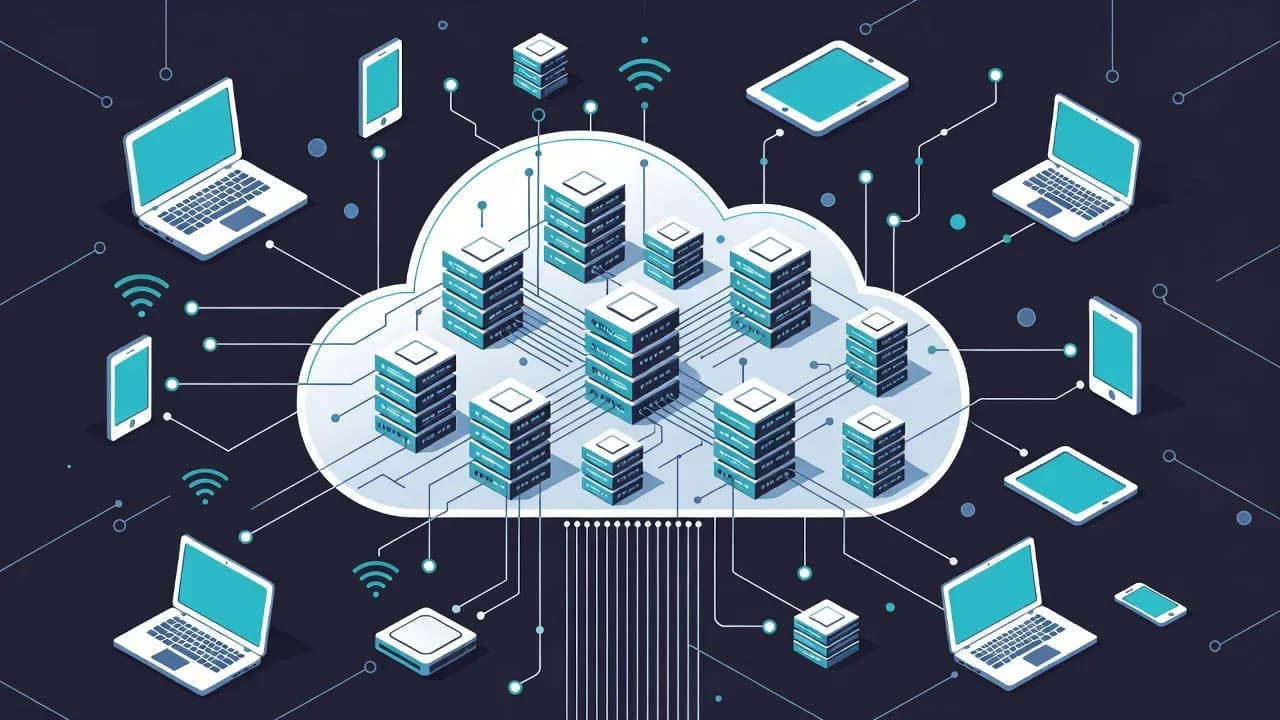
Cloud computing is a model for delivering computing resources such as servers, storage, databases, networking, and software over the internet. Instead of owning and maintaining physical infrastructure, organizations consume these resources on demand from cloud providers.
Cloud services are designed to be scalable, flexible, and accessible from anywhere with an internet connection. This model is used by businesses, public institutions, and individuals to support applications, data storage, and digital services.
How Cloud Computing Works
Cloud computing relies on large-scale data centers operated by cloud providers. These data centers host physical servers that are virtualized and shared across multiple customers.
Virtualization and Resource Pooling
Virtualization technology allows physical hardware to be divided into multiple isolated environments. Computing resources are pooled and dynamically allocated based on demand. This enables efficient utilization and rapid scaling.
On-Demand Access
Cloud resources can be provisioned or released quickly through management consoles or APIs. Users pay only for what they consume, rather than investing in fixed infrastructure.
Global Network Infrastructure
Cloud platforms operate across multiple geographic regions. This allows services to be delivered with low latency, redundancy, and built-in fault tolerance.
Cloud Service Models
Cloud computing is commonly categorized into three main service models.
Infrastructure as a Service (IaaS)
IaaS provides virtualized computing resources such as virtual machines, storage, and networking. Customers manage operating systems and applications while the provider manages the underlying hardware.
Platform as a Service (PaaS)
PaaS delivers a managed platform for application development and deployment. The provider handles infrastructure, runtime environments, and scaling, allowing developers to focus on code.
Software as a Service (SaaS)
SaaS delivers fully managed applications accessible through a web browser or client. Users do not manage infrastructure or platforms, as the provider handles maintenance and updates.
Cloud Deployment Models
Cloud environments can be deployed in different ways depending on security, compliance, and operational needs.
Public Cloud
Public cloud services are operated by third-party providers and shared across multiple customers. They offer high scalability and cost efficiency.
Private Cloud
Private clouds are dedicated to a single organization. They may be hosted on-premises or by a provider and offer greater control over security and compliance.
Hybrid Cloud
Hybrid cloud combines public and private environments. Organizations can move workloads between environments based on performance, cost, or regulatory requirements.
Multi-Cloud
Multi-cloud strategies involve using services from multiple cloud providers. This approach can improve resilience and reduce dependency on a single vendor.
Benefits of Cloud Computing
Cloud computing offers several advantages:
- Scalability based on demand
- Reduced upfront infrastructure costs
- Faster deployment of applications
- Global availability and redundancy
- Managed security and updates
These benefits make cloud computing suitable for both small organizations and large enterprises.
Security and Shared Responsibility
Cloud security follows a shared responsibility model. Cloud providers secure the underlying infrastructure, while customers are responsible for securing data, identities, configurations, and applications.
Misconfigurations, weak access controls, and poor monitoring remain common sources of cloud security incidents.
Why Cloud Computing Matters Today
Cloud computing underpins many modern technologies, including remote work platforms, data analytics, and artificial intelligence services. Its flexibility and scalability have made it a core component of digital transformation strategies.
Understanding how cloud computing works is essential for evaluating risk, designing secure architectures, and operating modern IT systems.
Frequently Asked Questions
Cloud computing is the delivery of computing resources such as servers, storage, and software over the internet instead of running them on local hardware.
IaaS provides virtual infrastructure, PaaS offers managed platforms for application development, and SaaS delivers fully managed software accessible online.
Cloud computing can be secure when properly configured. Providers secure the infrastructure, while customers are responsible for securing data, access controls, and configurations.
Public cloud services are shared across multiple customers, while private cloud environments are dedicated to a single organization and offer greater control.
Organizations use cloud computing for scalability, cost efficiency, faster deployment, and global availability without maintaining physical infrastructure.

Comments
Want to join the discussion?
Create an account to unlock exclusive member content, save your favorite articles, and join our community of IT professionals.
New here? Create a free account to get started.