What Is Ransomware and How to Protect Against It
Ransomware has evolved from a billion-dollar criminal enterprise that can cripple organizations in minutes. Here's how these attacks work, why they succeed, and what actually stops them.

average total cost per ransomware incident in 2025 - and the ransom payment is only 18% of that figure
The attack begins weeks before you see the ransom note. An employee clicks a convincing phishing link. Or attackers exploit an unpatched VPN vulnerability. Or a compromised password from a previous breach grants access to a forgotten admin account.
For 5 to 21 days, nothing visible happens. The attackers explore your network, identify critical systems, compromise backup infrastructure, and exfiltrate sensitive data. They map your organization like burglars casing a house, identifying every pressure point.
Then, at 2 AM on a Friday before a long weekend, the encryption begins.
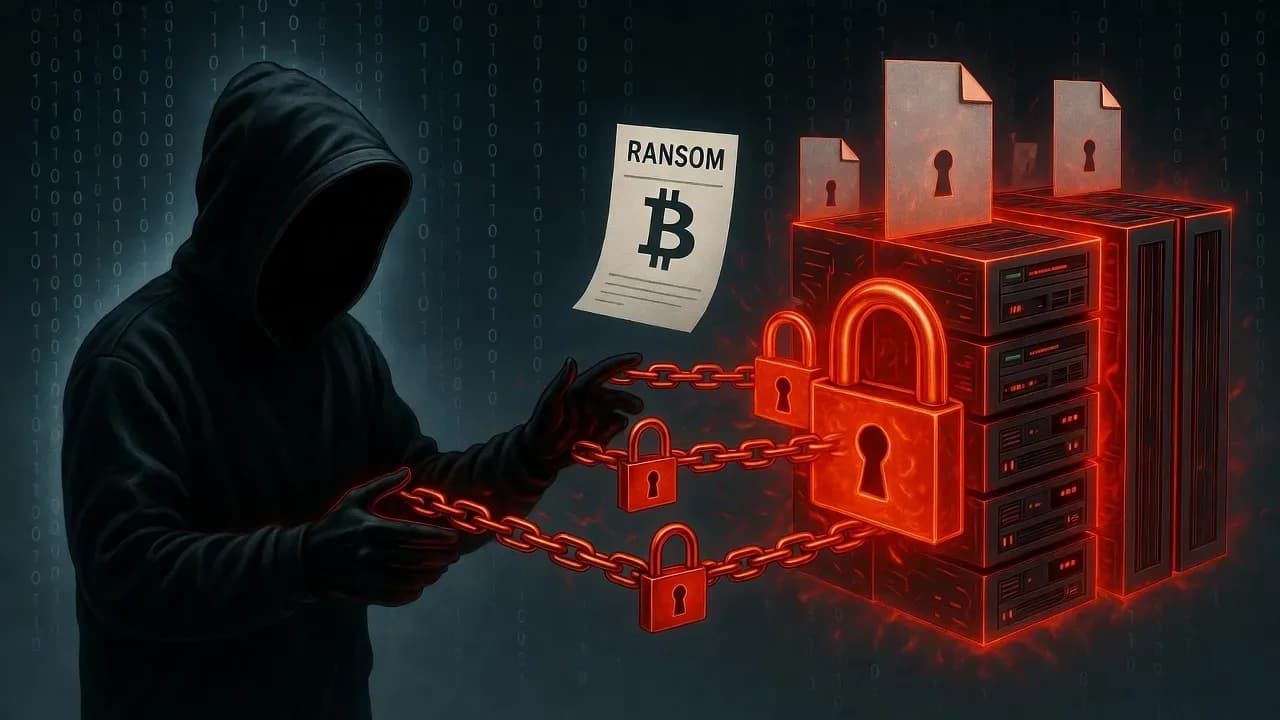
By Monday morning, every file server is locked. The ERP system refuses to start. Email is down. Customer databases are encrypted. Workstations display a single message: "Your files have been encrypted. Pay 50 Bitcoin within 72 hours or your data will be published and permanently destroyed."
The Evolution from Nuisance to Existential Threat
Ransomware in 2025 bears no resemblance to the amateur attacks of a decade ago that encrypted a single laptop for $300. Modern ransomware is operated by organized criminal enterprises with customer service departments, professional negotiators, and quarterly revenue targets.
| Era | Tactic | Typical Demand |
|---|---|---|
| 2015 | Simple encryption | $300-500 |
| 2018 | Targeted enterprise attacks | $10,000-50,000 |
| 2020 | Double extortion (encrypt + steal) | $100,000-500,000 |
| 2023 | Triple extortion (+ DDoS + customer contact) | $1-10 million |
| 2025 | Quadruple extortion (+ regulatory reporting threats) | $2-50 million |
The most sophisticated groups have published their ransom calculation formulas: typically 0.5% to 5% of annual revenue, with minimum floors based on company size. They research victims using financial databases, calculate demands based on what organizations can afford, and employ professional negotiators who understand corporate decision-making.
How Ransomware Enters Your Network
Understanding initial access vectors is essential because this is where prevention has the most leverage. Once attackers establish a foothold, stopping them becomes exponentially harder.
of ransomware infections begin with phishing or social engineering - humans remain the primary attack surface
| Attack Vector | Prevalence | Why It Succeeds |
|---|---|---|
| Phishing/Social Engineering | 68% | Humans are the weakest link |
| Exploited Vulnerabilities | 22% | Patching is too slow |
| Compromised Credentials | 8% | Password reuse is rampant |
| Supply Chain Compromise | 2% | Trust relationships exploited |
Phishing: Still the Dominant Vector
Despite years of security awareness training, phishing accounts for roughly two-thirds of ransomware infections. Modern phishing has nothing in common with the Nigerian prince emails of 2005. Attackers now research targets using LinkedIn and company websites, impersonate real colleagues with accurate signatures and writing styles, time attacks to coincide with real business events like acquisitions or compliance deadlines, and increasingly use AI-generated content that is nearly indistinguishable from legitimate communication.
The Patching Race
When vulnerabilities are discovered in internet-facing systems, a race begins. Defenders average 60 to 150 days to patch critical vulnerabilities. Attackers average 15 days to weaponize and exploit. The MOVEit vulnerability in 2023-2024 exemplified this pattern - within days of disclosure, the Cl0p ransomware group was exploiting it at scale, ultimately compromising over 2,700 organizations in a single campaign.
Inside a Ransomware Attack: The Kill Chain
Once attackers gain initial access, the attack unfolds through predictable phases. Understanding this kill chain reveals where detection and response can disrupt the attack before encryption begins.
typical dwell time between initial compromise and ransomware deployment - this window is your best opportunity to detect and stop the attack
Phase-by-Phase Breakdown
Day 0: Initial Access
Attackers establish their first foothold through phishing, exploited vulnerability, or stolen credentials. Automated tools immediately begin installing backdoors for persistent access.
Days 1-3: Persistence and Discovery
During this phase, attackers install multiple backdoors for redundancy, create new administrative accounts, enumerate Active Directory structure, map the entire network topology, and most critically, identify backup systems which become their priority target.
Days 4-7: Privilege Escalation
Attackers harvest credentials from memory using tools like Mimikatz, exploit vulnerabilities for administrative access, target domain administrator credentials, and compromise backup administrator accounts.
Days 8-14: Lateral Movement and Staging
Attackers spread across the network systematically, install ransomware components on all accessible systems, position for maximum simultaneous impact, and continue compromising backup infrastructure to eliminate recovery options.
Days 15-20: Data Exfiltration
In preparation for double extortion, attackers identify sensitive files including customer data, financial records, and intellectual property. They compress and encrypt this data for transfer to attacker-controlled infrastructure.
Encryption Day: Usually Friday Night
Attackers deliberately trigger encryption when IT teams are minimal - typically 2 AM on a Friday before a holiday weekend. By the time anyone responds, hours of encryption have completed. The psychological impact of returning Monday to total devastation increases payment likelihood.
The $30 Billion Criminal Industry
Modern ransomware is not the work of lone hackers in basements. It is a professionalized criminal industry with specialized roles, franchise models, affiliate programs, and customer service departments.
Ransomware-as-a-Service: The Criminal Franchise
The most successful ransomware families operate as Ransomware-as-a-Service (RaaS) platforms. The structure resembles a legitimate franchise business.
| Role | Function | Revenue Share |
|---|---|---|
| Core Developers | Build and maintain ransomware code, payment infrastructure, negotiation portals | 20-30% |
| Affiliates | Conduct actual attacks using the platform | 70-80% |
| Access Brokers | Sell initial network access to affiliates | Fixed fee per access |
| Negotiators | Handle victim communications and payment | Percentage or salary |
2024-2025 RaaS Revenue Leaders
| Operation | Est. Annual Revenue | Notable Victims |
|---|---|---|
| LockBit | $100M+ | Boeing, ICBC, Royal Mail |
| BlackCat/ALPHV | $75M+ | MGM Resorts, Change Healthcare |
| Cl0p | $50M+ | MOVEit (2,700+ organizations) |
| Play | $30M+ | Rackspace, City of Oakland |
| Akira | $25M+ | Stanford University, Nissan |
The Access Broker Marketplace
Initial Access Brokers (IABs) form a critical piece of the ecosystem. They specialize solely in gaining access to corporate networks, then sell that access to ransomware affiliates.
| Access Type | Typical Price |
|---|---|
| Basic VPN credentials | $500-2,000 |
| RDP access to single workstation | $1,000-5,000 |
| Domain user credentials | $5,000-15,000 |
| Domain admin access | $20,000-100,000 |
| Access to Fortune 500 company | $50,000-500,000 |
Why Ransomware Keeps Winning
With organizations spending billions on cybersecurity, why does ransomware continue to thrive? The answer lies in fundamental asymmetries that favor attackers.
of ransomware intrusions are detected during the dwell time window - most organizations only discover the attack when encryption begins
The Asymmetry Problem
Asymmetry 1: Infinite Attack Surface
Every internet-facing system, every email address, every employee is a potential entry point. Attackers need to succeed once. Defenders need to succeed every time. Shadow IT, forgotten systems, third-party connections, and cloud sprawl create gaps that attackers probe constantly with automated tools.
Asymmetry 2: Detection Is Genuinely Hard
Modern attackers use legitimate tools that IT teams use daily: PowerShell, WMI, PsExec, RDP. Distinguishing malicious activity from normal administration requires sophisticated detection capabilities and skilled analysts. Most organizations lack both.
| Tool | Legitimate Use | Malicious Use |
|---|---|---|
| PowerShell | System administration | Payload execution, credential theft |
| PsExec | Remote management | Lateral movement |
| RDP | Remote access | Persistence, data theft |
| WMI | System queries | Reconnaissance, execution |
Asymmetry 3: Your Backups Probably Will Not Save You
Attackers specifically target backup systems because they know it is your last defense. Their playbook includes deleting backup catalogs so you cannot find what to restore, encrypting backup repositories along with production data, compromising backup administrator credentials during lateral movement, and destroying cloud backup connections before triggering encryption.
The Pressure to Pay
When an organization is hemorrhaging $250,000 to $5 million per day in downtime, a $2 million ransom starts looking rational - even though the data shows it usually does not work.
| Payment Outcome | Percentage |
|---|---|
| Full data recovery | 8% |
| Partial recovery with issues | 57% |
| Significant data loss despite payment | 35% |
| Attacked again within 12 months | 80% |
The True Cost of a Ransomware Attack
The ransom payment, when made, is often the smallest component of total cost. Understanding the full financial impact helps justify security investments.
of total ransomware costs come from the ransom payment itself - the other 82% is business disruption, recovery, legal fees, and reputational damage
Enterprise Cost Breakdown
| Cost Category | Typical Amount | Percentage |
|---|---|---|
| Business interruption | $4.5M | 44% |
| Ransom payment (if paid) | $1.85M | 18% |
| Recovery and remediation | $1.2M | 12% |
| Reputational damage | $1.1M | 11% |
| Legal, regulatory, compliance | $800K | 8% |
| Incident response and forensics | $750K | 7% |
| Total Average | $10.2M | 100% |
Hidden Costs Nobody Discusses
Customer Trust Erosion
Studies show 65% of consumers lose trust in a company after a publicized breach. Customer acquisition costs increase, churn accelerates, and enterprise deals require extensive security audits that were not previously needed.
Regulatory Consequences
| Regulation | Potential Penalty |
|---|---|
| GDPR | Up to 4% of global annual revenue |
| HIPAA | $100 to $50,000 per violation |
| SEC (public companies) | Personal executive liability |
| State breach laws | Varies, often $1,000+ per affected individual |
Talent Impact
Key employees may leave after a major incident due to stress or loss of confidence in leadership. Recruiting becomes harder as candidates research company security history.
Protection That Actually Works
Defending against ransomware requires layered controls that address each phase of the attack chain. No single tool or practice provides immunity, but the right combination makes you an unattractive target. Attackers, like water, follow the path of least resistance.
Preventing Initial Access
Multi-Factor Authentication
of account compromises occur on accounts without MFA enabled according to Microsoft data - universal MFA deployment is the single highest-impact security control
| MFA Implementation | Risk Reduction |
|---|---|
| No MFA | Baseline vulnerability |
| SMS-based MFA | 76% reduction |
| Authenticator app | 96% reduction |
| Hardware keys (FIDO2) | 99.9% reduction |
MFA should be mandatory for all remote access, administrative accounts, and cloud services with no exceptions.
Patch Management
The window between vulnerability disclosure and exploitation has shrunk to days. Your patching speed determines your exposure.
| Patching Speed | Risk Level |
|---|---|
| Within 24-48 hours | Minimal |
| Within 7 days | Low |
| Within 30 days | Moderate |
| Over 30 days | Extremely High |
Detection: Finding Attackers Before Encryption
When prevention fails, detection becomes your lifeline. Remember the 5-21 day dwell time window.
Endpoint Detection and Response
Modern EDR platforms monitor for behavioral indicators rather than just known malware signatures. They detect unusual process execution chains, credential dumping tools, lateral movement patterns, and mass file modification.
The Monitoring Reality
| Option | Annual Cost | Coverage Quality |
|---|---|---|
| In-house 24/7 SOC | $1-3M | Full control, expensive |
| Managed Detection and Response | $50-300K | Expert monitoring, cost-effective |
| No dedicated monitoring | $0 | Blind to intrusions |
Protecting Backups: Your Last Line of Defense
of ransomware attacks specifically target backup infrastructure - attackers know that destroying backups forces payment
Your backup strategy is not an IT function. It is a survival strategy that determines whether a ransomware attack is a recoverable incident or a business-ending catastrophe.
The Immutability Imperative
Immutable storage is storage that physically cannot be modified or deleted for a defined retention period, even by administrators with root access. If attackers cannot modify it, they cannot encrypt it.
| Solution Type | How It Works | Best For |
|---|---|---|
| WORM storage | Write-once physical media | Compliance-heavy industries |
| S3 Object Lock | Cloud-enforced immutability | Cloud-first organizations |
| Air-gapped systems | Physically disconnected storage | Maximum security requirements |
| Immutable snapshots | Storage-level protection | Hybrid environments |
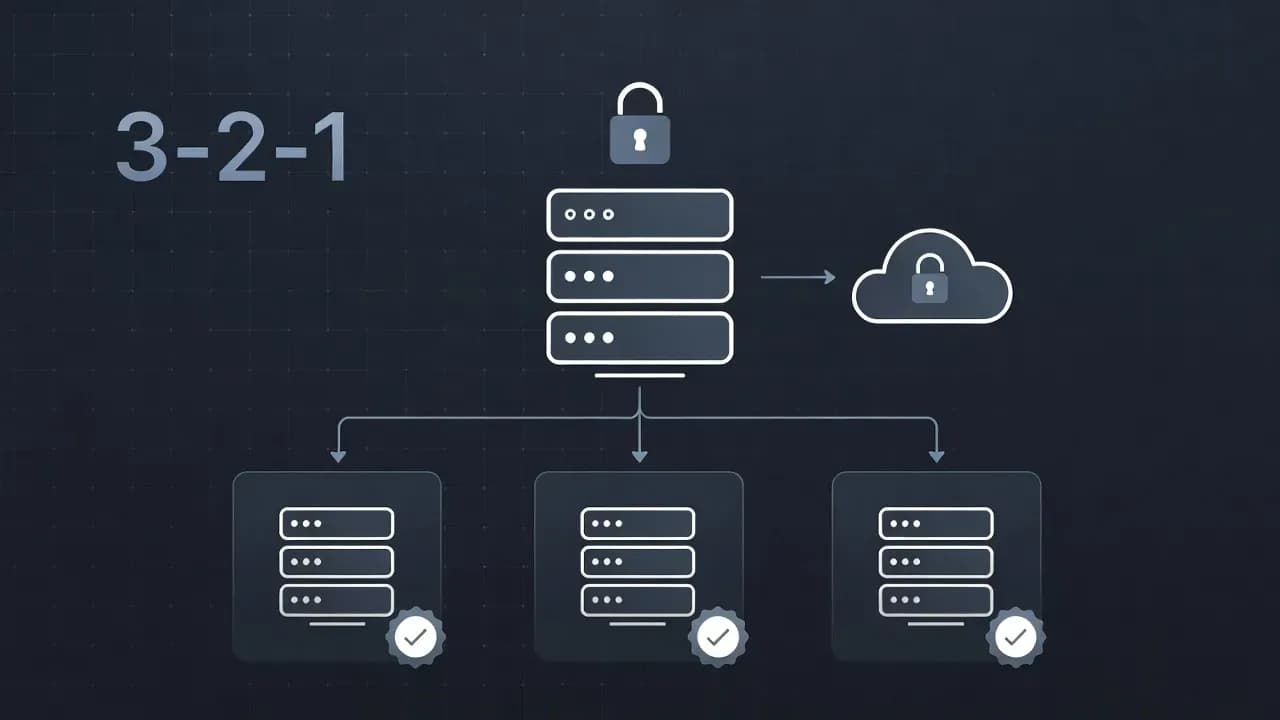
The 3-2-1-1-0 Rule
The classic backup rule has evolved for the ransomware era:
| Rule | Meaning | Purpose |
|---|---|---|
| 3 | Three copies of data | Redundancy against single failure |
| 2 | Two different media types | Protection against media issues |
| 1 | One copy offsite | Disaster recovery |
| 1 | One copy immutable or offline | Ransomware-proof recovery |
| 0 | Zero errors in restoration tests | Verified recoverability |
Testing Is Everything
Quarterly Testing Checklist:
- Restore a critical server and verify data integrity
- Measure actual restoration time versus RTO requirements
- Test restoration without Active Directory access
- Verify backup credentials are separate from production credentials
- Confirm immutable backups cannot be modified even with admin access
When Prevention Fails: Incident Response
Even well-defended organizations get compromised. Having a tested incident response plan is the difference between a manageable incident and an existential crisis. The time to build your response capability is not during an attack.
Preparation Before the Crisis
Response Team Structure
| Role | Responsibility | Critical Because |
|---|---|---|
| Incident Commander | Overall coordination and decisions | Single point of authority |
| Technical Lead | Containment and investigation | Technical expertise |
| Communications Lead | Internal and external messaging | Reputation management |
| Legal Counsel | Regulatory and contractual obligations | Liability management |
| Executive Sponsor | Resource authorization | Budget and priority decisions |
The First 60 Minutes
When ransomware is detected, the first hour is critical. Every minute of delay allows more encryption.
Immediate Actions (Minutes 1-15):
- Isolate affected systems from the network physically if necessary
- Disable compromised accounts immediately
- Preserve evidence before any recovery attempts
- Alert the response team via pre-established communication channels
Assessment Actions (Minutes 15-60):
- Determine scope: how many systems are affected
- Identify the ransomware variant
- Check backup availability and integrity
- Assess data exfiltration indicators
The Payment Decision
You will face a difficult decision: pay the ransom or recover without payment.
| Factor | Pay Ransom | Do Not Pay |
|---|---|---|
| Recovery time | Hours to days | Days to weeks |
| Data recovery rate | ~65% complete | 100% if backups work |
| Cost certainty | Uncertain | Predictable |
| Future targeting | 80% attacked again | No direct incentive |
| Legal risk | Potential OFAC violations | None |
| Criminal funding | Yes | No |
Legal and Regulatory Landscape
Ransomware incidents trigger legal obligations that many organizations do not fully understand until they are in crisis mode. The regulatory landscape has evolved rapidly, and non-compliance can multiply the damage.
Notification Requirements
| Regulation | Who Reports | Deadline | Penalty |
|---|---|---|---|
| GDPR (EU) | Any org with EU citizen data | 72 hours | Up to 4% global revenue |
| HIPAA | Healthcare providers | 60 days | $100-50,000 per violation |
| SEC | Public companies | 4 business days | Executive liability |
| CCPA | Companies serving CA residents | Without unreasonable delay | $7,500 per intentional violation |
| State laws | Varies | 30-90 days typically | Varies |
The OFAC Complication
The U.S. Treasury's Office of Foreign Assets Control maintains sanctions lists. Paying ransom to a sanctioned entity can result in civil penalties regardless of knowledge, criminal prosecution if payment was knowing, and facilitation of terrorism charges in extreme cases.
| Sanctioned Groups | Known Operations |
|---|---|
| Evil Corp | WastedLocker, Hades |
| Various Russian entities | Multiple RaaS connections |
| North Korean groups | WannaCry and others |
Cyber Insurance: The Changing Landscape
| Requirement | 2022 | 2025 |
|---|---|---|
| MFA | Often recommended | Mandatory |
| EDR | Rarely required | Often required |
| Backup verification | Self-attestation | Third-party verification |
| Premium increases | 25-30% annually | Stabilizing at 10-15% |
The Evolving Threat Landscape
Ransomware continues to evolve, and understanding the trajectory helps inform defense strategies.
Emerging Attack Vectors (2025-2027)
| Threat | Likelihood | Impact | Defense Priority |
|---|---|---|---|
| AI-generated phishing | Very High | High | Advanced email security, user training |
| Supply chain compromises | High | Critical | Third-party risk management |
| Cloud-native ransomware | High | High | Cloud security posture management |
| IoT/OT targeting | Medium-High | Critical for some industries | Network segmentation |
| Deepfake social engineering | Medium | High | Verification protocols |
The Professionalization Trend
Ransomware groups are becoming more sophisticated:
AI-Assisted Attacks - Automated target selection, personalized phishing content, and adaptive evasion techniques are becoming standard.
Supply Chain Focus - Targeting managed service providers to reach hundreds of victims simultaneously through a single compromise.
Intermittent Encryption - Encrypting portions of files to evade detection while ensuring damage, making recovery more complex.
Destructive Pivots - When payment seems unlikely, some groups simply destroy data rather than negotiate, particularly if they have already exfiltrated valuable information.
Conclusion: A Winnable Battle
Ransomware is not an inevitable catastrophe. Organizations that implement fundamental controls dramatically reduce both the likelihood and impact of attacks. The economics favor defense when done correctly.
The Investment That Pays Back
| Security Investment | Cost | Risk Reduction |
|---|---|---|
| Universal MFA | Low | 95%+ |
| Patch automation | Medium | 70-80% |
| EDR with monitoring | Medium-High | 60-70% |
| Immutable backups | Medium | Recovery assured |
| Incident response planning | Low | 70% faster recovery |
A comprehensive security program costs a fraction of a single ransomware incident. The average attack costs $4.54 million. Preventing even one attack pays for years of security investment.
The organizations that treat ransomware as a business risk - not just an IT problem - and invest accordingly are the ones sleeping soundly. The question is not whether attackers will try. The question is whether you have made yourself hard enough to breach that they will look for easier targets.
Statistics sourced from IBM Cost of a Data Breach Report, Sophos State of Ransomware, Verizon DBIR, Coveware Quarterly Ransomware Reports, and Microsoft Digital Defense Report.
Frequently Asked Questions
Ransomware is malicious software that encrypts your files and demands payment for the key to unlock them. Modern attacks also steal data before encrypting, threatening to publish it if you don't pay. It's digital extortion conducted by organized criminal groups with sophisticated operations.
The most common entry points are phishing emails containing malicious attachments or links (about 68% of attacks), exploited vulnerabilities in internet-facing systems like VPNs (22%), compromised credentials from password reuse or weak passwords (8%), and supply chain attacks through compromised software vendors (2%).
There's no universal answer. Payment funds criminals, doesn't guarantee full recovery, may violate sanctions laws, and invites repeat attacks. But for some organizations facing existential downtime, payment may be the least-bad option. The decision should involve legal counsel and incident response experts.
Full recovery typically takes three to six weeks, even for organizations that pay ransoms. Decryption is slow, systems must be validated, and trust in the environment must be rebuilt. Organizations with tested backups and practiced incident response plans recover significantly faster.
Traditional signature-based antivirus catches known ransomware variants but struggles with new or customized attacks. Endpoint Detection and Response (EDR) provides better protection by detecting malicious behaviors rather than just known signatures. No single tool provides complete protection—defense in depth is required.
No single control is sufficient, but if forced to prioritize: maintain tested, immutable backups that can actually restore your critical systems. This doesn't prevent attacks, but it ensures recovery is possible without paying ransoms. After that, MFA on all remote access and rapid patching of internet-facing systems.
Yes, frequently. Small and medium businesses often have weaker security, less ability to recover without paying, and more pressure from downtime. Ransomware-as-a-service has made attacks scalable enough to target organizations of any size profitably. About 60% of small businesses that suffer attacks close within six months.
Many policies cover ransomware-related costs including incident response, business interruption, and sometimes ransom payments. However, insurers increasingly require specific security controls (MFA, EDR, offline backups) as conditions of coverage. Some policies now exclude or cap ransomware payments.
Clear signs include ransom notes on systems, files with changed extensions that won't open, systems that won't boot normally, and mass encryption of network shares. Less obvious signs during early attack phases include disabled security tools, unexpected account creations, and unusual network traffic at odd hours.
Report attacks to relevant authorities (FBI/CISA in the US, national cybersecurity agencies elsewhere). They may have decryption keys from previous investigations, can provide threat intelligence, and your report helps track criminal operations. However, they typically cannot recover your encrypted data directly.

Comments
Want to join the discussion?
Create an account to unlock exclusive member content, save your favorite articles, and join our community of IT professionals.
New here? Create a free account to get started.