

4 of 50 explainers tagged “Cryptography”
More 154

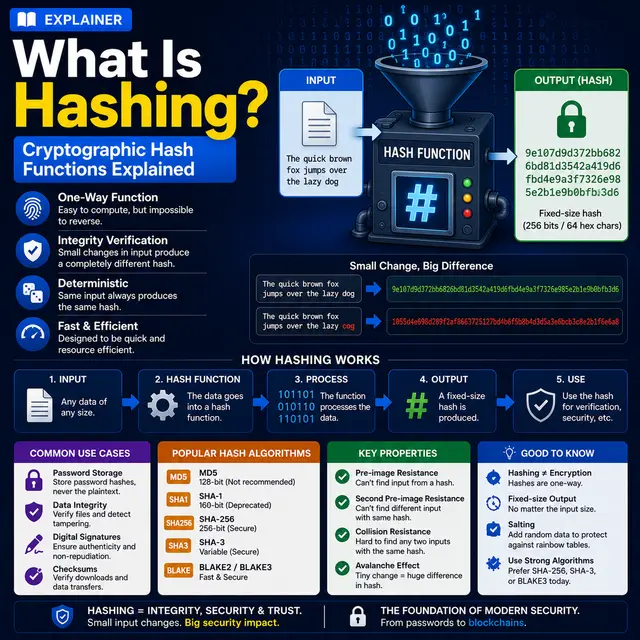
What Is Hashing? Cryptographic Hash Functions Explained
Hashing converts data into a fixed-length fingerprint using a one-way function. It's used for password storage, file integrity, digital signatures, and deduplication. This guide covers SHA-256, bcrypt, Argon2, and common attacks like rainbow tables.
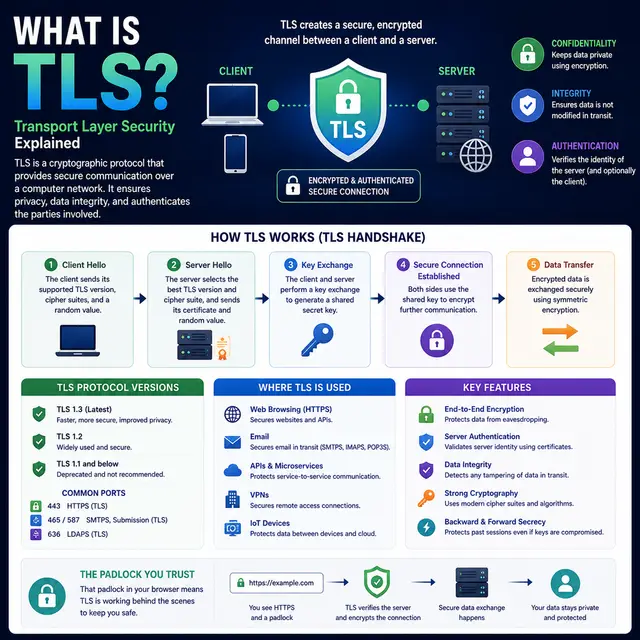
What Is TLS? Transport Layer Security Explained
TLS encrypts communication between clients and servers. It protects HTTPS, email, and VPNs. Covers the TLS handshake, certificates, TLS 1.2 vs 1.3, cipher suites, and why SSL is deprecated. Per NIST, disable TLS 1.0 and 1.1 in all environments.

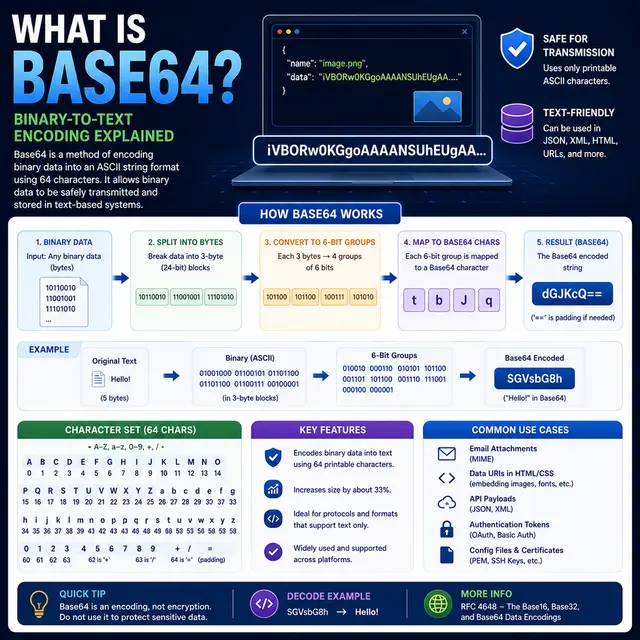
What Is Base64? Binary-to-Text Encoding Explained
Base64 encodes binary data as ASCII text for safe transport over text protocols. Used in email attachments (MIME), data URIs, JWT tokens, and API payloads. Per RFC 4648, it increases data size by ~33%. Base64 is encoding, not encryption.

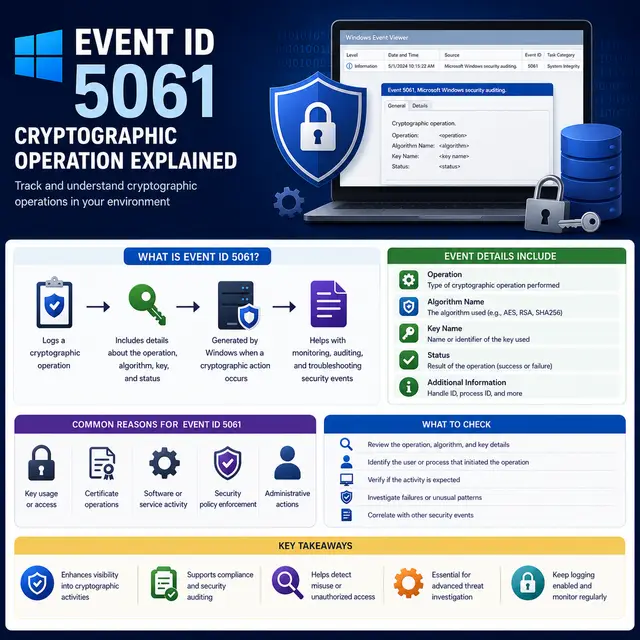
Event ID 5061: Cryptographic Operation Explained
Event ID 5061 is a Windows security audit event that logs cryptographic operations performed through a Key Storage Provider. This explainer covers what triggers it, how to read its fields, the common 0x80090016 failure, and when it signals a real security concern.